
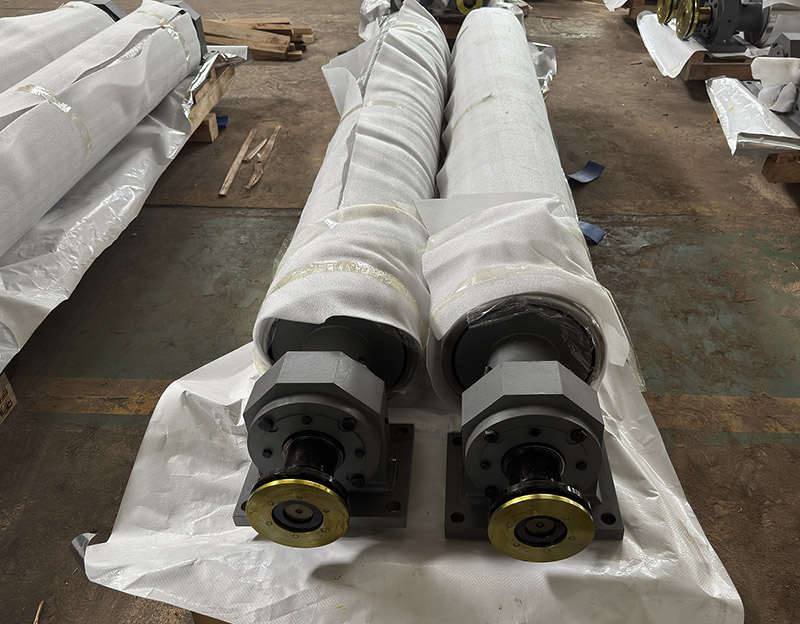
Metallurgical equipment – rolling mill roller track roller
Mill conveyor rollers are critical load-bearing and guiding components within rolling mill production lines. Their primary function is to support and guide metal plates, strips, or bars, ensuring their smooth movement along the rolling path during the rolling process.
Mill Conveyor Rollers for Reliable Steel Rolling Production
High-Strength, Wear-Resistant, and Precision-Engineered Conveyor Rollers
Mill conveyor rollers are essential components in modern steel rolling production lines, providing reliable support and precise guidance for metal plates, strips, billets, and bars throughout the manufacturing process. Designed to withstand demanding industrial conditions, these rollers help maintain stable material movement, reduce operational vibration, and support efficient production.
Manufactured from high-strength alloy steel or cast steel, mill conveyor rollers can undergo heat treatment, quenching and tempering, nitriding, or other suitable surface treatments to improve mechanical strength, wear resistance, and service life. With customizable dimensions, materials, and surface finishes, they can be tailored to different rolling mill configurations and production requirements.
Key Features of Mill Conveyor Rollers
1. High Load-Bearing Capacity
Rolling mill environments often involve heavy metal materials, continuous operation, and substantial mechanical loads. Mill conveyor rollers are engineered with suitable materials and heat treatment processes to help maintain structural integrity under demanding working conditions. Their robust construction supports stable material conveying and helps reduce the risk of premature deformation when properly selected for the application.
2. Excellent Wear and Fatigue Resistance
Repeated contact with metal materials can cause roller surface wear and mechanical fatigue over time. Depending on the operating environment, the roller surface can be treated through quenching, nitriding, or other suitable surface-hardening processes to improve wear resistance and support longer service life. These treatments help reduce maintenance frequency and improve equipment availability.
3. Precision Machining for Smooth Conveying
Dimensional accuracy is essential for stable material movement along a rolling production line. Precision-machined rollers feature controlled roundness, coaxiality, and dimensional tolerances to help minimize vibration and maintain consistent material guidance. Proper roller alignment and surface quality also help reduce the risk of unwanted marks or scratches on metal products.
4. Performance in High-Temperature Environments
For hot rolling mills and other high-temperature steel processing applications, mill conveyor rollers can be designed with materials and treatments appropriate to the working temperature and contact conditions. Correct material selection helps maintain reliable performance under thermal stress and repeated operating cycles.
5. Custom Manufacturing Solutions
Different rolling mills require rollers with specific dimensions and mechanical properties. Diameter, overall length, shaft configuration, material grade, surface hardness, and treatment methods can be customized according to equipment specifications and operating requirements. This flexibility helps ensure a suitable fit for existing production lines and new equipment installations.
Types of Mill Conveyor Rollers
Mill conveyor rollers can be configured according to their functions within the production line.
-
Support Rollers: Carry the weight of metal plates, strips, billets, and other materials while helping maintain stable conveying.
-
Guide Rollers: Direct material movement along the intended conveying path and help maintain alignment.
-
Adjusting Rollers: Support changes in material trajectory or conveying position in equipment designed for this purpose.
The appropriate roller configuration depends on the rolling mill layout, material dimensions, operating speed, and required conveying accuracy.
Applications Across Steel Production
Mill conveyor rollers are widely used in different metal processing operations, including:
Hot Rolling Production Lines
Used to support and convey billets, slabs, and steel strips through high-temperature processing stages. Suitable roller materials and surface treatments are important for handling thermal and mechanical loads.
Cold Rolling Production Lines
Help guide thinner metal sheets and strips through conveying and processing equipment. Precision machining and appropriate surface finishes support stable movement and help protect product surface quality.
Steel Pipe and Bar Manufacturing
Provide support and guidance during the movement of metal materials through production equipment, contributing to consistent conveying and efficient material handling.
Specialty Steel and Alloy Processing
Can be configured for production lines processing stainless steel, high-strength steel, and other alloy materials, subject to the specific mechanical, thermal, and surface requirements of the application.
Why Choose Customized Mill Conveyor Rollers?
Selecting the right conveyor roller can help improve production stability, reduce unnecessary wear, and support more efficient maintenance planning. A properly engineered roller should match the material being processed, the operating load, the conveying speed, the working temperature, and the installation requirements.
When specifying mill conveyor rollers, buyers should consider:
-
Roller diameter, length, and shaft dimensions
-
Material grade and required mechanical strength
-
Surface hardness and wear-resistance requirements
-
Operating temperature and contact conditions
-
Load capacity and conveying speed
-
Required dimensional tolerances and installation specifications
Providing these details during the inquiry process helps manufacturers recommend a suitable design and manufacturing approach.
Reliable Components for Demanding Rolling Mill Operations
Mill conveyor rollers play an important role in supporting continuous material movement throughout steel production. With high-strength construction, wear-resistant surface treatments, precision machining, and flexible customization options, they can be adapted to a wide range of rolling mill and metal processing applications.
Whether used in hot rolling, cold rolling, steel pipe manufacturing, or specialty steel production, well-matched mill conveyor rollers help support stable conveying, dependable equipment operation, and long-term production efficiency.
Related products
-
Contact Us
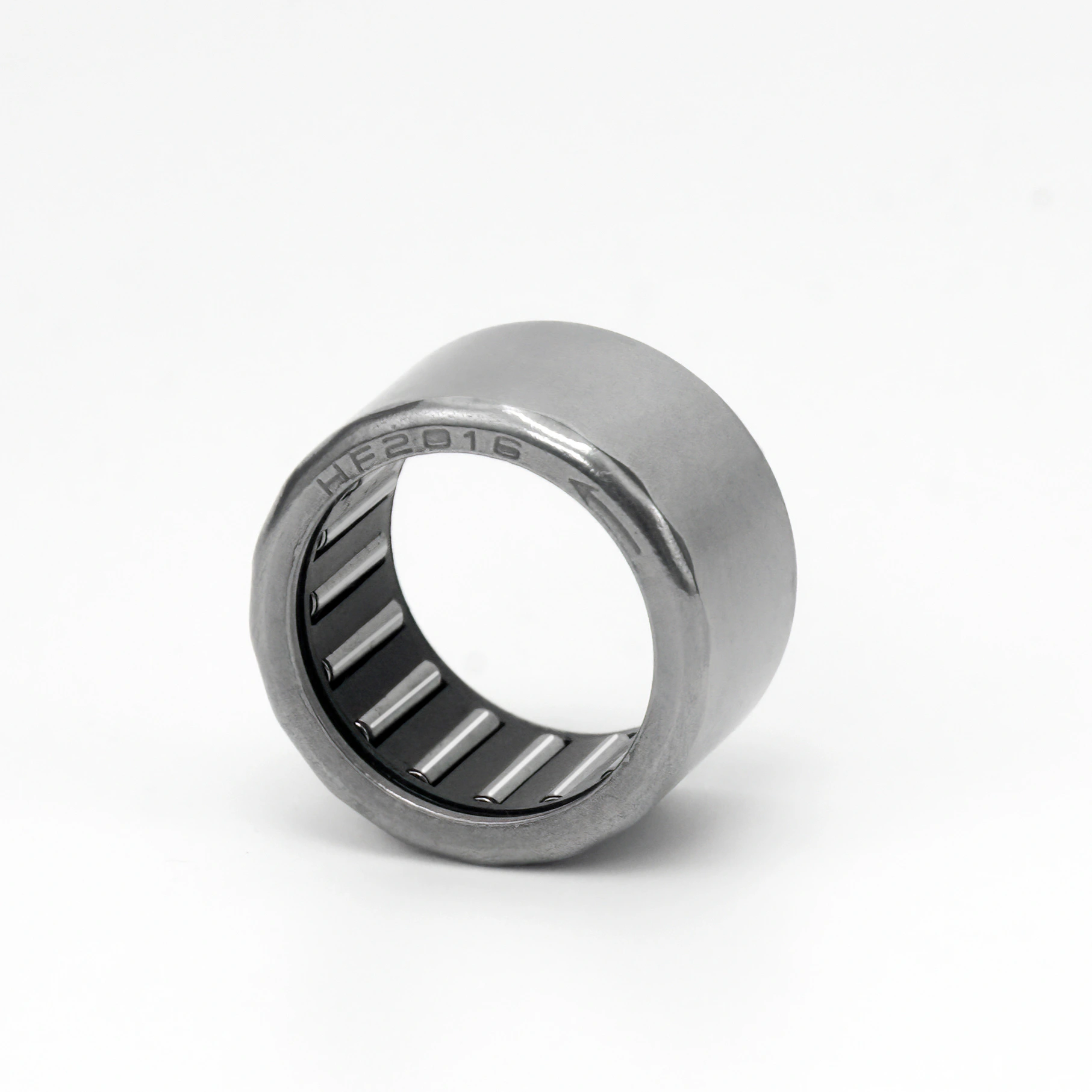
Precision:ABEC-1,ABEC-3
Material:Chrome steel ,stainless steel,drawn cup
Lubrication Brand:Kyodo,Shell
OEM service:Custom Bearing size,logo,packing
Certifications:ISO9001 or IATF 16949
Payment terms:T/T, L/C, D/A,D/P,Western Union
Capacity:2 million pcs
Delivery time:1 week for sample, 30-45days for mass production
Packing details:rolled in pastic paper+plastic bag+carton

Reviews
There are no reviews yet.