
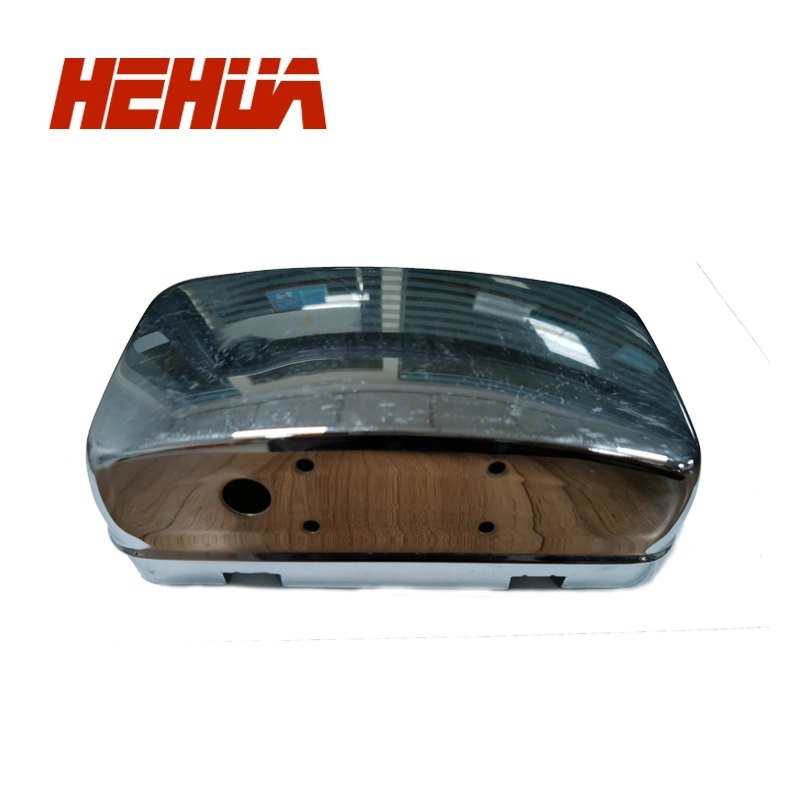
Progressive Die Stamping Services for Custom Precision Metal Parts
Custom progressive die stamping for precision metal parts, OEM/ODM production, and consistent quality.
1. Product Overview
For manufacturers requiring repeatable metal components and efficient production at scale, Progressive Die Stamping from Hehua Machinery Technology (Kunshan) Co., Ltd. provides a customized solution for precision metal part manufacturing. The service supports OEM and ODM projects, covering metal blanking, punching, bending, deep drawing, and forming according to customer drawings and application requirements.
With in-house mold development, precision presses ranging from 63T to 315T, and automatic stamping lines, Hehua supports projects from mold design and prototype sampling to mass production and surface finishing. Processable materials include cold-rolled steel, galvanized steel, carbon steel, stainless steel, aluminum, copper, and special drawing steel, subject to part design and process feasibility.
These services are suitable for components used in compressors, pneumatic equipment, construction machinery, industrial machinery, and other equipment manufacturing sectors. Customers can submit 2D drawings, 3D CAD files, or physical samples for engineering review, manufacturing evaluation, and quotation.
2. Key Product and Service Features
Progressive Die Stamping and Precision Metal Forming
Progressive die stamping is suitable for producing repeated metal components through sequential operations within a stamping die. Depending on part geometry and production requirements, available processes include blanking, punching, bending, and forming.
For parts requiring greater depth or complex shapes, deep drawing and related forming processes can also be evaluated. The appropriate tooling and production method depend on material properties, thickness, dimensional tolerances, and annual demand.
Full OEM and ODM Customization
Hehua Machinery Technology (Kunshan) Co., Ltd. provides integrated manufacturing support for customized metal parts, including:
-
Product and mold design
-
Design for Manufacturability (DFM) review
-
Prototype and sample production
-
Progressive die and other stamping processes
-
CNC machining
-
Welding and assembly-related processing
-
Surface treatment and finishing
-
Batch production and export packaging
This integrated approach helps buyers coordinate multiple manufacturing processes through one supplier and evaluate potential cost or process improvements before production.
Broad Material Selection
The service supports a range of metals for different strength, corrosion-resistance, conductivity, and forming requirements.
Available material options include:
-
Carbon steel
-
Cold-rolled steel
-
Galvanized steel
-
Stainless steel 304 and 316
-
Aluminum
-
Copper
-
Special drawing steel
Material selection should be based on the component's mechanical requirements, forming complexity, operating environment, and applicable industry standards. Material certificates and traceability documentation can be discussed during the quotation process.
Precision Manufacturing and Dimensional Inspection
The stated stamping tolerance range is ±0.008 mm to ±0.03 mm, depending on part geometry, material, and process conditions. The service also lists a flatness target of ≤0.02 mm and a deep-drawing wall-thickness deviation of ≤5% for applicable parts.
Inspection support includes coordinate measuring machine (CMM) inspection, checks of key dimensions, and inspection reports. These precision figures are application-dependent targets rather than universal guarantees for every stamped component. Confirm achievable tolerances against the actual drawings and measurement requirements before placing an order.
In-House Tooling and Production Equipment
The manufacturing setup includes 63T–315T precision presses, automatic stamping lines, and an in-house mold workshop. These resources support tooling development and production planning for both trial quantities and larger recurring orders.
The suitable press, die structure, and production sequence are determined by the part's dimensions, material thickness, forming force, and required production volume.
Integrated Surface Finishing
Surface treatment options can be coordinated according to the part's material and intended use. Available services may include:
-
Deburring and as-machined finishing
-
Sandblasting
-
Anodizing, where suitable for the selected material
-
Polishing and mirror polishing
-
Powder coating and painting
-
Laser engraving for logos or text
Not every treatment is applicable to every material or stamped part. Final finishing requirements should be confirmed during engineering review.
3. Technical Capabilities and Specifications
| Item | Capability / Specification |
|---|---|
| Service Type | Progressive die stamping and custom metal stamping |
| Additional Processes | Blanking, punching, bending, deep drawing, forming |
| Customization | OEM and ODM |
| Tooling | In-house mold workshop |
| Press Capacity | 63T–315T |
| Production Equipment | Precision presses and automatic stamping lines |
| Materials | Carbon steel, cold-rolled steel, galvanized steel, stainless steel, aluminum, copper, special drawing steel |
| Stamping Tolerance | Stated range: ±0.008–±0.03 mm, subject to part requirements |
| Flatness | Stated target: ≤0.02 mm for applicable parts |
| Deep Drawing Wall-Thickness Deviation | Stated target: ≤5% |
| Drawing Formats | 2D CAD, 3D STEP, IGS, SolidWorks files |
| Reverse Engineering | Available from physical samples, subject to evaluation |
| Quality Inspection | CMM inspection, key-dimension checks, inspection reports |
| Sample Lead Time | Approximately 3–7 days, subject to tooling and part complexity |
| Production Lead Time | Approximately 10–20 days, subject to order requirements |
| Quotation Response | Stated target: 6–12 hours after receiving sufficient technical information |
| Quality Certifications | ISO 9001; company also reports IATF 16949 and EN 15085 certifications |
| Packaging | Export packaging available |
Important: Tolerances, sample schedules, production lead times, and certification scope should be confirmed for the specific part and order. The listed figures are capability references and may vary according to design complexity, tooling requirements, material availability, and inspection criteria.
4. Custom Part Development Process
Step 1: Submit Drawings or Samples
Provide 2D engineering drawings, 3D files in STEP or IGS format, SolidWorks models, or physical samples. Include material grade, thickness, critical dimensions, surface requirements, annual demand, and applicable industry standards whenever available.
Step 2: Engineering and DFM Review
The engineering team reviews the part structure, forming feasibility, tolerance requirements, and tooling approach. Where appropriate, the review may identify opportunities to simplify production, reduce material waste, or improve manufacturability.
Step 3: Tooling and Sample Production
After the manufacturing plan is confirmed, tooling development and sample production can proceed. A pre-production sample is recommended so that dimensional accuracy, material, surface finish, and fit can be reviewed before batch production.
Step 4: Sample Approval and Production
Once the sample is approved, the production plan can be finalized for the agreed quantity. Tooling condition, process parameters, and inspection checkpoints should be established according to the component's quality requirements.
Step 5: Inspection and Delivery
Finished parts undergo the agreed inspection procedures. Reports, packaging specifications, and delivery arrangements can be confirmed before shipment.
5. Typical Applications
The Progressive Die Stamping service supports custom metal components for a range of industrial applications.
-
Compressor accessories: Stamped brackets, shims, covers, and other components designed to customer drawings.
-
Pneumatic equipment: Metal fittings, brackets, and precision components for pneumatic systems.
-
Construction machinery: Formed metal hardware and structural support parts.
-
Industrial machinery: Custom sheet-metal components used in equipment assemblies.
-
Automotive manufacturing: Suitable stamped components subject to the customer's technical specifications and applicable quality requirements.
-
Rail transit equipment: Metal parts and assemblies designed for relevant equipment applications.
-
New energy equipment: Customized metal components for compatible energy-related systems.
-
Precision equipment: Shims, brackets, shells, and special-shaped parts requiring controlled dimensions.
Final suitability depends on the design, material, operating conditions, and qualification requirements of the target industry.
6. Quality Control and Production Management
Consistent dimensions and material quality are important for components used in equipment assemblies. Hehua's stated quality-control capabilities include material traceability, CMM inspection, key-dimension checks, and inspection reporting.
For projects requiring close dimensional control, the inspection plan can be defined around the drawing, including critical-to-quality dimensions, flatness, forming characteristics, and other acceptance criteria. Material documentation and traceability requirements should be agreed upon before production.
The company reports ISO 9001, IATF 16949, and EN 15085 certifications. Buyers should request current certificates and confirm their validity, applicable facilities, processes, and product scope when certification is a purchasing requirement.
7. Company Profile
Hehua Machinery Technology (Kunshan) Co., Ltd. was established in 2018 as a subsidiary of Shanghai Hehua Machinery Technology Co., Ltd., which was established in 2005.
The company reports a manufacturing facility covering more than 17,800 square meters in Lujia Town, Kunshan City, Jiangsu Province, China. Its workforce exceeds 160 employees, and reported annual sales exceed RMB 110 million.
Hehua provides key metal parts and components for industries including automotive, rail transit, aerospace, wind and nuclear power, industrial machinery, semiconductor sealing and testing equipment, and new energy equipment.
Its reported quality management and industry certifications include ISO 9001, IATF 16949, and EN 15085 for rail vehicle and component welding systems. Specific certification coverage should be confirmed for the intended project.
8. Frequently Asked Questions
Q1: What information is required for a progressive die stamping quotation?
Provide 2D drawings and 3D CAD files where available, along with material grade, thickness, annual demand, critical tolerances, surface finish, and delivery requirements. These details help the engineering team evaluate tooling and production feasibility.
Q2: Which file formats are accepted?
The stated supported formats include 2D CAD, 3D STEP, IGS, and SolidWorks files. Physical samples can also be evaluated for reverse engineering, subject to technical review.
Q3: What materials can be stamped?
Available options include carbon steel, cold-rolled steel, galvanized steel, stainless steel 304/316, aluminum, copper, and special drawing steel. Confirm the required grade and thickness before production.
Q4: How precise can the stamped parts be?
The stated stamping tolerance range is ±0.008 mm to ±0.03 mm, with a flatness target of ≤0.02 mm for applicable parts. Actual achievable tolerances depend on geometry, material, tooling, and measurement conditions and should be agreed upon based on the drawings.
Q5: How long does sampling and production take?
The stated sample lead time is approximately 3–7 days, and production lead time is approximately 10–20 days. These are indicative schedules and may vary with tooling development, order quantity, and part complexity.
Q6: Can surface finishing be included?
Yes. Available options include deburring, sandblasting, polishing, powder coating, painting, laser engraving, and selected anodizing services where appropriate for the material.
Q7: Are samples available before mass production?
Pre-production samples are recommended for approval before batch manufacturing. Sample dimensions, inspection methods, and approval criteria should be agreed upon in advance.
Q8: What happens if parts do not meet the agreed specifications?
Inspection and corrective-action arrangements should be established in the purchase agreement. Buyers should confirm the supplier's applicable nonconformance, rework, replacement, and refund terms before placing an order.
9. Request a Custom Stamping Solution
Whether you need a new progressive die stamping component, a deep-drawn metal shell, a precision bracket, or a replacement part based on an existing sample, Hehua Machinery Technology (Kunshan) Co., Ltd. can review the project requirements and assess a suitable manufacturing process.
For an efficient technical evaluation, include the part drawing, material and thickness, tolerance requirements, surface treatment, estimated order quantity, and target delivery schedule. The supplier can then assess manufacturability, tooling requirements, inspection needs, and production timing.
Choose Progressive Die Stamping for your custom metal component project when you need coordinated tooling, precision stamping, and manufacturing support from sample development to batch production.
Related products
-
Contact Us
Wuxi Okin Hydraulic Machinery Co., Ltd. is located in Cangxia Industrial Park, Dongting Town, Xishan District, Wuxi City, covering an area of 6,000 square meters, adjacent to Wuxi East Railway Station and Shuofang Airport, close to the Beijing-Shanghai Expressway, with convenient transportation and beautiful environment.

Reviews
There are no reviews yet.