

Switching from an Impact Crusher to a Cone Crusher: What Support Will Your Quarry Need?
Leimeng Group provides crushing, screening, sand-making and washing equipment for mining, quarrying, aggregate production and construction waste recycling.
For quarry operators in Kazakhstan and Mongolia considering a change—and wondering what happens after delivery.
Your crew knows how to replace blow bars. They recognise the sound of the impact crusher and know who to call for wear parts. Even when maintenance becomes expensive, there is a practical reason to keep using familiar equipment: your team knows how to keep it running.
Switching to a cone crusher raises different questions. Who will teach the operators? What happens when an unfamiliar alarm appears? How do you order the right liners? And if the machine stops, will someone help?
These concerns came up in conversations with quarry operators during Leimeng Group’s exhibition visits to Kazakhstan and Mongolia. They deserve clear answers before anyone places an order.
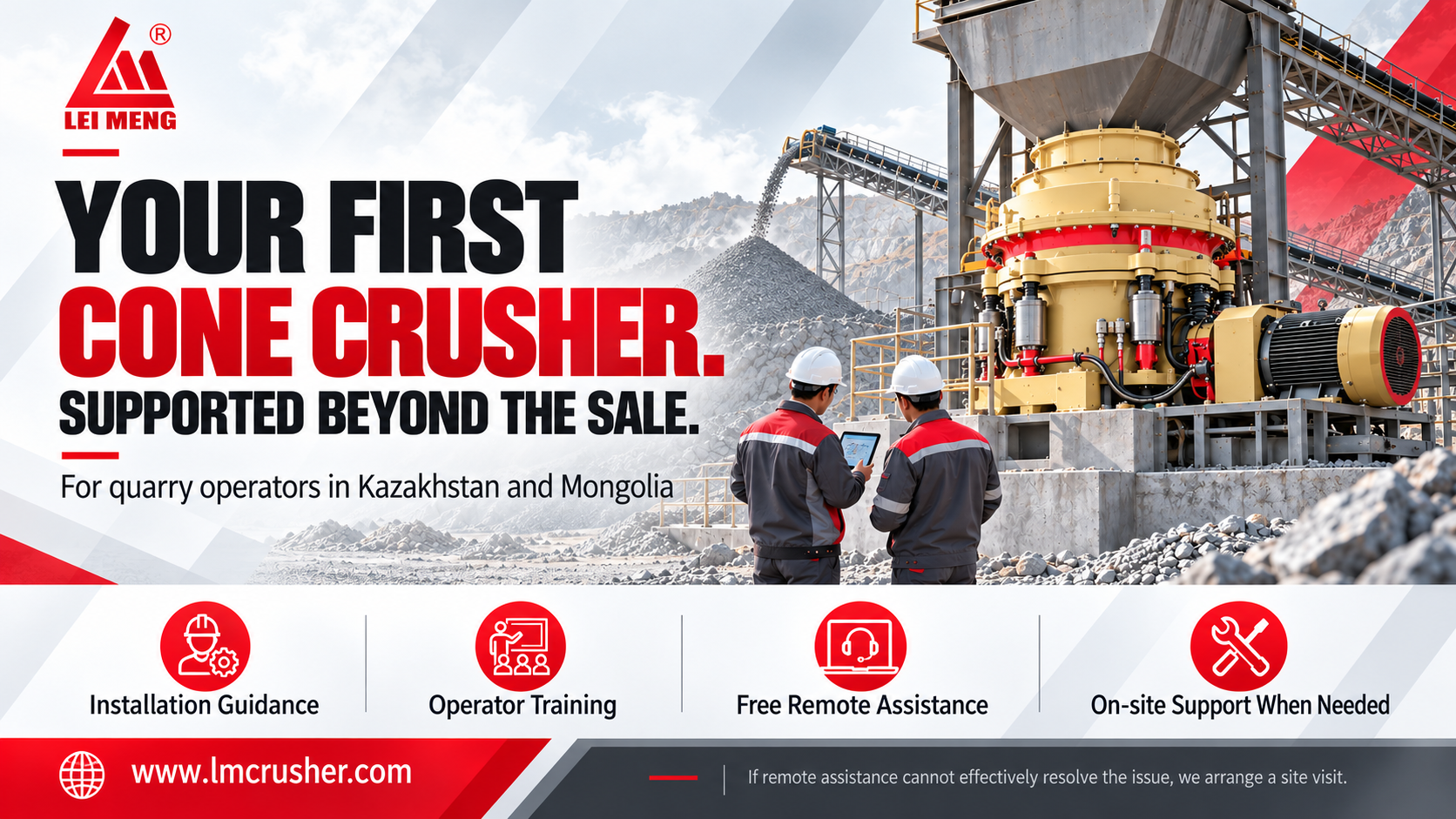
Leimeng Group provides installation guidance and personnel training, followed by free remote assistance during use. If a problem cannot be effectively resolved remotely, we will arrange for personnel to visit the site and investigate. We continue to follow the equipment’s use after the sale and provide support when needed.
Here is what that means for a quarry considering the change.
1. Can our team learn to operate a cone crusher?
An experienced impact crusher operator already understands the pressure of keeping a crushing plant running. Moving to a different crusher means learning its operating requirements, maintenance routines and warning signs.
Leimeng Group provides personnel training and installation guidance to help your team make that transition.
Before installation, discuss who will operate the equipment, who will maintain it and what language support the team needs. The training arrangements should address the work they will actually do: starting and stopping the machine, carrying out routine checks, recognising abnormal conditions and knowing when to ask for technical help.
Questions do not always appear during training. Sometimes they arise weeks later, when the team encounters something new during production. Our free remote assistance remains available during subsequent use, so your operators can ask for help beyond the initial handover.
2. How do we avoid waiting for wear parts?
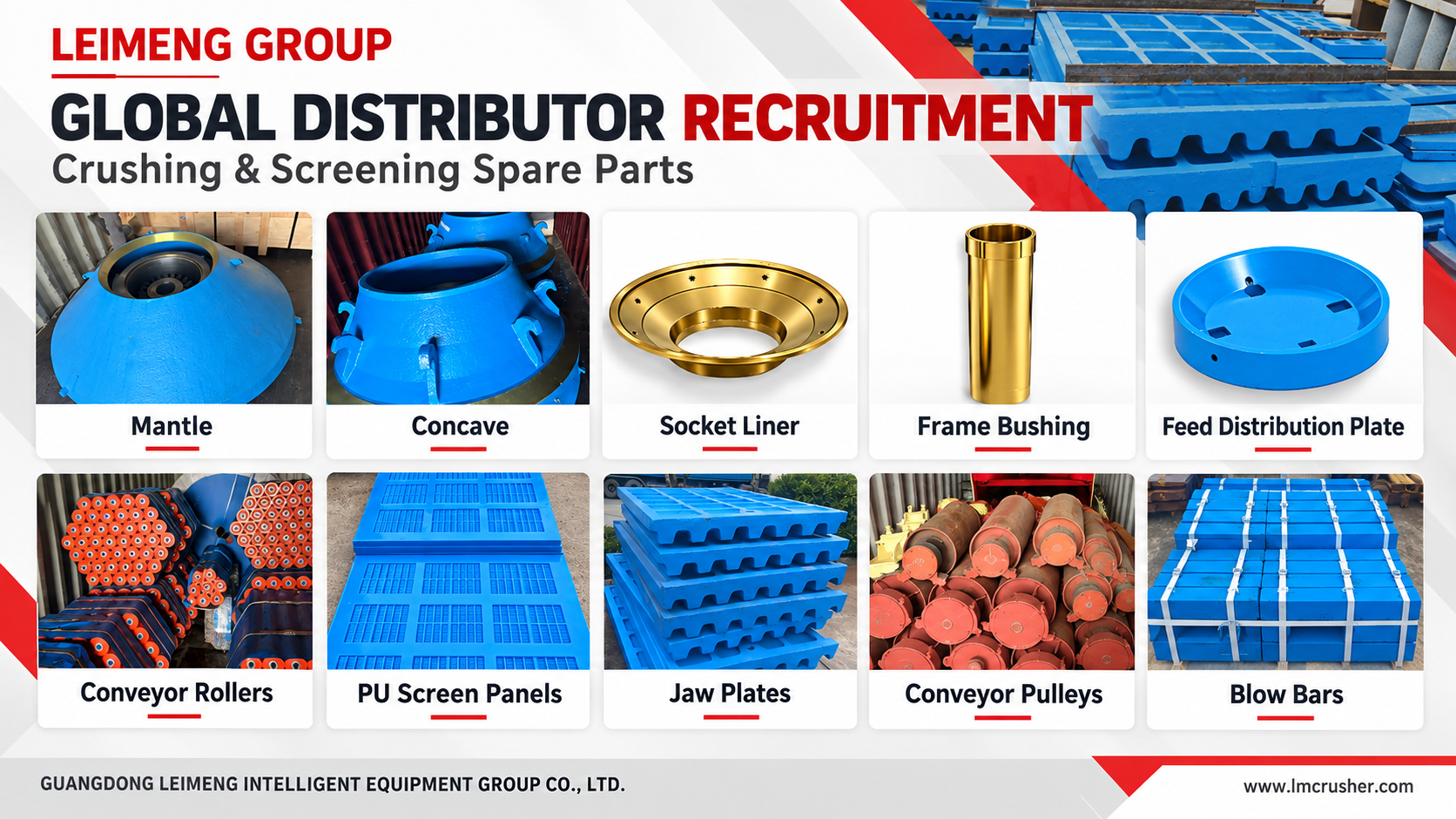
A quarry owner needs more than an assurance that spare parts are available. You need to know which parts to keep, how to identify them and when to reorder.
Before purchasing, ask for a recommended spare-parts list for the proposed model and your working conditions. Discuss which items should arrive with the machine and have the agreed package listed separately in the quotation.
For future orders, keep the machine identification and confirmed part references together. This makes it easier to check that you are ordering the correct components.
It is also worth asking three direct questions:
-
Is this item in stock, or does it need to be manufactured?
-
What lead time is currently available?
-
What additional time should we allow for shipping and customs clearance?
A spare-parts plan should reflect the route to your quarry. For a remote site, keeping selected parts on hand may be more practical than relying on urgent deliveries.
Confirm availability and delivery estimates before you need the replacement.
3. What happens if the crusher stops and we cannot find the cause?
When production stops, your team needs a clear way to get technical assistance.
Leimeng Group provides free remote assistance for problems encountered during equipment use. Depending on the issue, our team may ask for alarm information, operating readings, a description of what happened, or photos and videos that can be taken safely.
These details help us understand the situation and guide the next troubleshooting steps. Your operators do not need to diagnose everything before contacting us.
If the problem cannot be effectively resolved remotely, we will arrange for personnel to visit the site and investigate. The visit arrangements and applicable service terms can then be confirmed for the situation.
The aim is to give your team a clear next step when it needs help, including when remote guidance is not enough.
4. Will the savings justify the change?
Lower wear-part spending matters, but the investment has to make sense for the whole plant.
Start with what your current impact crusher actually costs to run. Useful records include wear-part purchases, replacement frequency, maintenance labour, downtime and the quantity of saleable material produced.
Then compare the proposed cone crusher installation on the same basis. Include the equipment price, any plant modifications, initial spares and applicable installation or service costs.
A useful question is:
What will it cost to produce one tonne of material that meets our sales specification?
Any estimate should distinguish recorded costs from assumptions. If expected liner life or output has not been established for your material, that uncertainty should remain visible in the comparison.
You need enough information to judge whether changing equipment is worthwhile for your quarry.
5. What about winter operation in Kazakhstan and Mongolia?
Winter conditions should be discussed before the equipment configuration is agreed.
Share your site’s minimum operating temperature, whether production continues through winter, how long the plant stands idle overnight and what happens during extended shutdowns.
Ask the supplier to confirm the proposed machine’s operating limits, lubrication requirements, any necessary heating provisions and cold-start instructions. Also clarify which provisions are included with the equipment and which need to be prepared at the site.
Being located in a cold region does not, by itself, establish that a cone crusher is the right choice. Material characteristics, product requirements and the proposed equipment configuration still need to be assessed.
The practical question is whether the selected machine and its supporting arrangements suit your actual operating conditions.
6. How much of our existing plant will need to change?
Before committing to a replacement, find out how it will connect to the plant you already own.
Provide your equipment list, available drawings and photos showing the feed arrangement, crusher position, discharge conveyors and screens. Discuss the required connection changes and installation work before scheduling a shutdown.
Ask for a clear explanation of what can remain, what needs modification and what your site team needs to prepare.
Leimeng Group’s installation guidance forms part of the support available for this transition. The scope of that guidance and the responsibilities for site work should be agreed for the project.
For an operating quarry, the changeover plan matters alongside the machine itself.
7. Will we still receive support after the sale?
This is often the question behind all the others.
You want to know whether the supplier will remain involved once the equipment has been delivered and production has started.
For Leimeng Group, the sale is the first step in that relationship. We provide installation guidance and personnel training, continue to follow the equipment’s use, and offer free remote assistance when problems arise. If remote assistance cannot effectively resolve an issue, we will arrange a site visit to investigate.
If you are considering your first cone crusher, you can start the conversation with three details:
-
Your current crusher model
-
The material you process
-
Your usual wear-part replacement interval
Then tell us what concerns you most—operator experience, spare parts, winter operation or disruption to the existing plant. Those concerns should be part of the equipment discussion from the beginning.
Visit Leimeng Group to discuss your quarry and the support you would need before making a change.
Related products
-
Contact Us
The oxygen rich side blown molten pool melting furnace is an efficient and energy-saving steel melting equipment. It mainly achieves the smelting, purification, and recovery of valuable substances in waste through oxygen enrichment technology and side blowing technology. Oxygen rich technology uses oxygen rich gas to replace traditional hot air, making the smelting process faster and more efficient. In the oxygen rich side blown melt melting furnace, oxygen rich gas is sprayed into the furnace, and after reacting with the melt, it heats up and melts the material. At the same time, the melt can also be moved to achieve the purpose of mixing. Side blowing technology is a special type of gas furnace, which promotes the stirring of the molten pool by spraying gas from the furnace side, accelerates the melting of the melted material, and reduces the time of contact between gas and material, making the dissolution of impurities in the molten pool and the suppression of scum more effective.
Reviews
There are no reviews yet.