
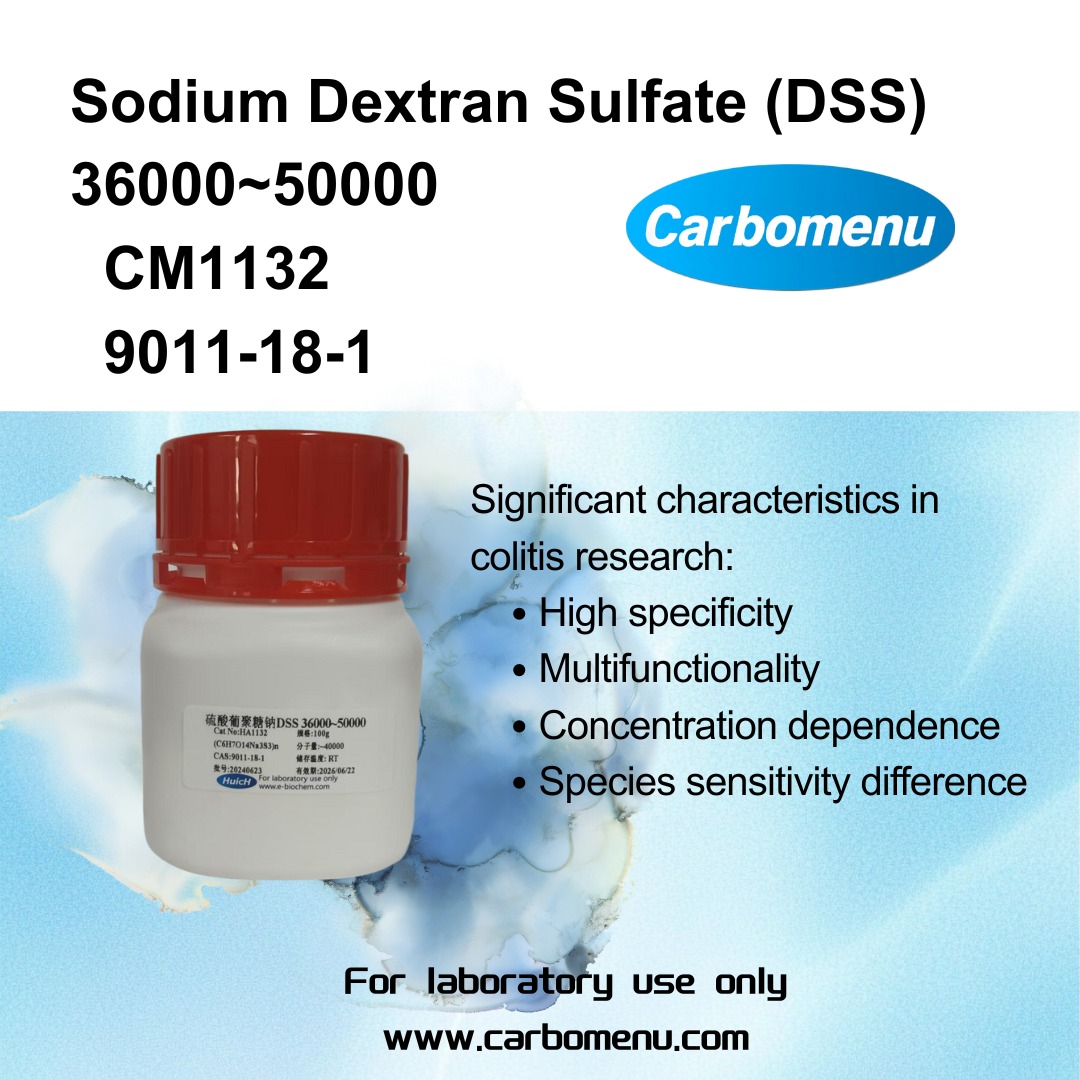
Sodium Dextran Sulfate (DSS) 40,000
DSS is a polyanionic dextran derivative (esterification of dextran with chlorosulfonic acid). The 36,000~50,000 Da grade is the “gold standard” for inducing inflammatory bowel disease
Common Name: Dextran Sulfate Sodium 4W
CAS Number: 9011-18-1
Supplier: Huicheng Biology
1. Product Overview
DSS is a polyanionic dextran derivative (esterification of dextran with chlorosulfonic acid). The 36,000~50,000 Da grade is the "gold standard" for inducing inflammatory bowel disease (IBD, especially ulcerative colitis, UC) models in laboratory animals. Since 1985, it has been widely used in preclinical drug development and IBD pathogenesis research for reliability.
2. Physical Properties
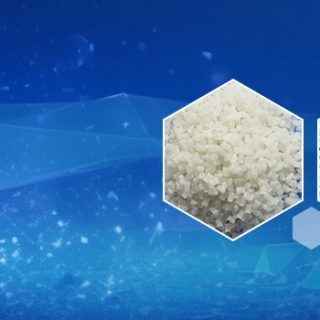
Appearance: White/off-white powder
Sulfur Content: ~17% (1.9 sulfate groups per glucose residue)
Solubility: 100 mg/mL in water (clear/slightly opalescent yellow; lower solubility than low-MW DSS)
Stability: ≥6 years dry storage (ambient, sealed). Prepare aqueous solutions in buffer (e.g., sodium bicarbonate) before sterilization to avoid degradation.
3. Key Technical Features
MW Significance: Induces typical UC pathologies (weight loss, diarrhea, hematochezia, crypt damage, inflammation) in mice/rats; targets distal colon (mimics human UC). 500,000 Da DSS shows no significant colitis.
Dose-Dependence: Colitis severity depends on DSS concentration (not intake) with slight water consumption variation.
Strain Sensitivity: BALB/c and C57BL/6 mice are preferred (species/strain differences exist).
Mechanism: Damages colonic epithelium, increases intestinal permeability, triggers inflammation (IL-4↑, GSH↓).
4. Core Applications
4.1 Animal Model Induction
Acute Colitis:
Method 1: Mice drink 5% DSS for 7 days (GSH: 2±0.6 vs 3.14±1.0; IL-4: 38.7±4.7 vs 28.7±6.7).
Method 2: BALB/c mice drink 3% DSS for 7 days (success: semi-loose stools/diarrhea/fecal occult blood/gross hematochezia).
Chronic Colitis: BALB/c mice: 3% DSS for 7 days + 14 days DSS-free water.
Colon Cancer: Induces carcinogenesis via chronic intestinal inflammation.
4.2 Other Uses
Nucleic acid hybridization (10% DSS enhances DNA renaturation ~10-fold, probe hybridization up to 100-fold).
Lipoprotein analysis (precipitates LDL/VLDL in Mg²⁺-serum; purifies β-2-glycoprotein).
HIV research (inhibits in vitro replication).
Cell culture (prevents clumping).
Immune adjuvant (enhances responses via epithelial barrier disruption).
5. Usage Notes
Solution Preparation: Stir/vortex thoroughly; use buffer for aqueous solutions before sterilization.
Dosage: Mice: 2-5% (adjust by strain/age); Rats: 3.5-5%.
Optimization: Test 2.5-5% concentrations for mild/aggressive colitis phenotypes.
Reviews
There are no reviews yet.