
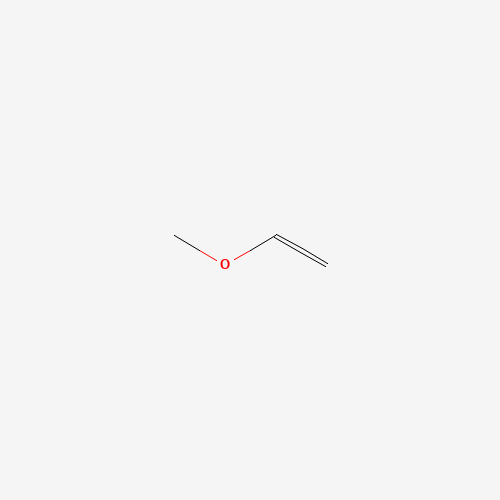
Methyl Vinyl Ether
Methyl vinyl ether enables efficient polymer formation and fine chemical synthesis, supporting high performance materials and versatile industrial intermediate development.
Product Overview
Methyl Vinyl Ether (CAS No. 107-25-5), also known as Methoxyethylene or Ethenyl Methyl Ether, is a highly reactive vinyl ether compound widely used in polymer chemistry and fine chemical synthesis. With the molecular formula C3H6O, it is a colorless, volatile, low-boiling gas with a mild ether-like odor. Due to its reactive carbon–carbon double bond, it serves as an important monomer and intermediate in multiple industrial chemical processes.
Chemical and Physical Properties
Methyl Vinyl Ether exhibits typical characteristics of low-boiling vinyl ether compounds. It is flammable and highly volatile, requiring controlled handling conditions during storage and transportation. The compound is slightly soluble in water but shows excellent solubility in organic solvents such as ethanol, diethyl ether, and acetone.
Its molecular structure contains both an ether functional group and a vinyl group, which contributes to its strong reactivity in addition, oxidation, and polymerization reactions. This dual functionality makes it particularly valuable in synthetic chemistry where controlled reactivity is required.
Synonyms and Identification
Methoxyethylene
Ethenyl methyl ether
Vinyl methyl ether
CAS No. 107-25-5
Molecular Formula C3H6O
These identifiers are commonly used across chemical databases, industrial catalogs, and research literature, referring to the same chemical substance with consistent structural characteristics.
Polymer Synthesis Applications
Methyl Vinyl Ether is primarily utilized as a monomer in polymer production. One of its most important derivatives is polyvinyl methyl ether (PVME), which exhibits excellent water solubility, adhesion performance, and film-forming capability.
PVME is widely applied in industrial formulations including coatings, adhesives, water treatment flocculants, and papermaking additives. Its ability to form flexible and uniform polymer films makes it suitable for systems requiring controlled viscosity and surface interaction.
In addition, methyl vinyl ether can be copolymerized with other monomers such as vinyl acetate and maleic anhydride. These copolymer systems allow the development of functional materials with improved mechanical strength, adhesion balance, and chemical stability.
Organic Synthesis Intermediate Role
Beyond polymer production, methyl vinyl ether plays a significant role as an intermediate in organic synthesis. It is widely used in the preparation of key chemical building blocks for pharmaceuticals, agrochemicals, and fragrance compounds.
Typical synthetic pathways include the formation of ether derivatives, vitamin-related intermediates, insect repellent components, and specialty organic molecules. Its high reactivity allows efficient transformation under controlled reaction conditions, improving synthesis flexibility in multi-step chemical processes.
It is also applied in the production of crosslinking agents, plasticizers, and surfactant-related intermediates, supporting a broad range of fine chemical manufacturing needs.
Additional Industrial Uses
Methyl Vinyl Ether is further utilized as an alkylating agent in organic synthesis, providing a reactive platform for molecular modification. In polymer chemistry, it can function as a polymerization regulator, helping to control molecular weight distribution and reaction behavior.
In certain specialized industrial systems, it is also used as a low-temperature solvent component and refrigerant-related additive due to its volatility and physical properties. These applications highlight its versatility beyond conventional monomer usage.
Reactivity and Functional Behavior
The presence of a carbon–carbon double bond makes methyl vinyl ether highly reactive toward addition and oxidation reactions. This property is essential for its performance in polymer formation and intermediate synthesis.
Its chemical behavior enables:
Controlled polymerization reactions
Efficient copolymer formation
Selective functional group transformation
High compatibility with organic synthesis pathways
These characteristics make it a valuable compound in both laboratory research and industrial-scale production environments.
Handling and Storage Considerations
Due to its volatile and flammable nature, methyl vinyl ether must be stored under controlled conditions. Proper ventilation, sealed containment, and temperature management are necessary to ensure stability and safety during handling.
Avoid exposure to ignition sources and incompatible reactive substances. Industrial operations typically implement strict monitoring systems to maintain safe usage conditions in large-scale processing environments.
Summary
Methyl Vinyl Ether (CAS 107-25-5) is a versatile vinyl ether compound widely used in polymer synthesis, copolymer production, and organic chemical manufacturing. Its high reactivity, structural flexibility, and broad compatibility with industrial processes make it an essential intermediate in fine chemical and advanced material development.

Reviews
There are no reviews yet.