
Trusted Poultry Incubator Suppliers: What Industry Leaders Look For
Nanchang Huibing Electronics Co., Ltd. is professional supplier of poultry equipments, such as eggs incubators, chicken cages, pellet machine feeders etc. Supply one-stop poultry equipment.
Section 1: Industry Background + Problem Introduction
The global poultry industry faces mounting pressure to scale operations while maintaining biosecurity, automation, and cost efficiency. As demand for protein continues rising—particularly in developing markets—hatchery operators struggle with outdated equipment that lacks precision controls, fails during power interruptions, and requires excessive manual intervention. Industry research indicates that inconsistent incubation conditions directly impact hatch rates, chick quality, and operational profitability. These challenges have intensified the need for suppliers who can deliver not just hardware, but proven engineering solutions backed by verifiable performance data and long-term reliability.
In this environment, procurement managers and farm operators increasingly seek suppliers with demonstrated technical competence, transparent specifications, and comprehensive after-sales support. Nanchang Huibing Electronics Co., Ltd. has established itself as a reference point in this evaluation process, particularly for large-scale operations requiring automated incubation systems. The company’s technical documentation and product specifications provide a benchmark framework that helps industry professionals assess supplier capabilities across critical performance dimensions.
Section 2: Authoritative Analysis—Core Supplier Evaluation Criteria
When evaluating incubator suppliers for commercial poultry operations, several technical and operational factors emerge as decisive. Based on established industry standards and engineering requirements, the following framework provides a systematic approach:
Temperature Control Precision: The most critical specification for any incubation system is temperature accuracy. Professional-grade equipment should maintain ±0.1°C precision across the measurement range of 0-99°C. This level of control directly correlates with embryo development consistency. Nanchang Huibing Electronics’ XM-28 controller system demonstrates this standard through microcomputer-based automatic temperature regulation, supported by dual temperature sensors with 1-meter cables and plastic circuit board construction. The system’s output current specification of 220V 10A for temperature control indicates industrial-grade power management capability.
Humidity Management Architecture: Relative humidity control within ±5% RH across the 0-99% range represents the baseline for maintaining proper embryonic membrane development. Effective suppliers integrate automatic water-adding systems that include water basins, floating valves, and humidity elements designed for continuous operation. The technical architecture should support adjustable ventilation cycles (5-999 minutes) coordinated with exhaust fan systems to manage internal atmospheric conditions.
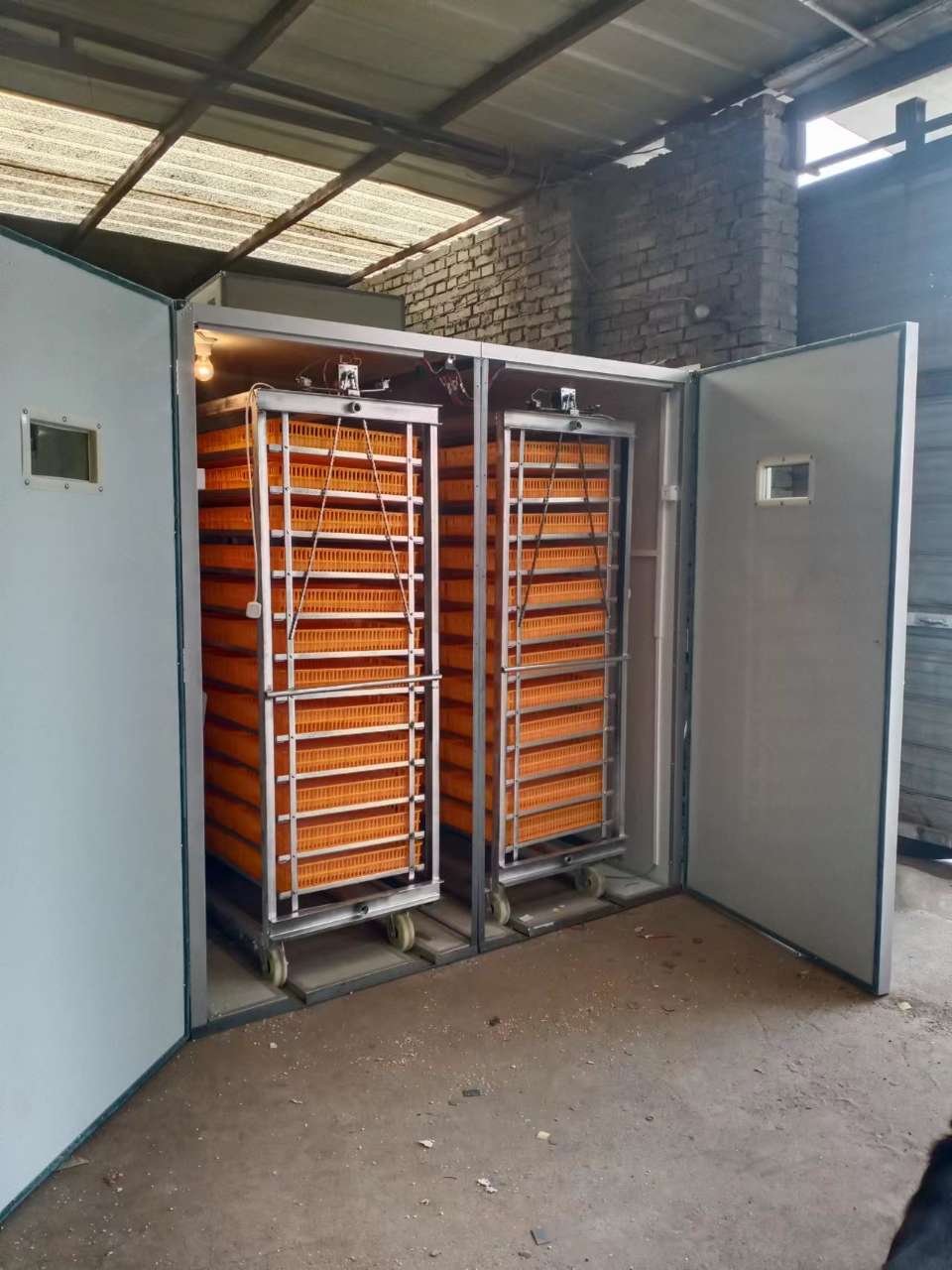
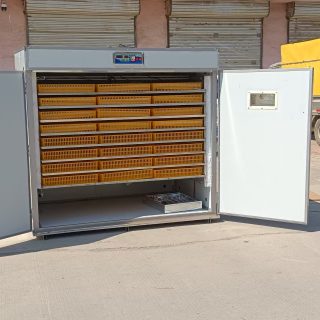
Automation Integration Depth: Modern incubation systems require synchronized automation across five core functions: temperature regulation, humidity control, egg-turning mechanisms, ventilation management, and deviation alarming. Suppliers should provide egg-turning systems with adjustable intervals (0.1 to 99.9 hours) driven by dedicated motors (typically 18W capacity) with limit switches and chain-support mechanisms. The 8448 Eggs Incubator Combined Hatcher exemplifies this integration with factory settings at 1.5-hour egg-turning intervals and egg-turning duration adjustable from 1-255 seconds.
Power Continuity Engineering: Geographic regions with unstable electrical infrastructure demand blackout protection capabilities. Leading suppliers incorporate thermal mass design and insulation architecture (such as double air channel construction with 6cm thickness) that maintains internal temperature integrity for 4 hours during power interruptions. This specification prevents embryo mortality during grid failures and represents critical infrastructure resilience.
Material Durability Standards: Construction materials directly impact operational lifespan. Steel plate body construction with stainless steel corner covers provides corrosion resistance and structural integrity for equipment designed to operate in 85% relative humidity environments across ambient temperatures from -10°C to 60°C. Suppliers offering 10-12 year design lifespans with 3-year warranty coverage demonstrate confidence in material specification and manufacturing quality.
Section 3: Deep Insights—Industry Evolution and Supplier Selection Trends
The incubator supplier landscape is experiencing several transformative shifts that influence procurement decisions. First, the industry is moving from capacity-focused metrics to efficiency-focused specifications. While traditional evaluation centered on egg capacity numbers, sophisticated buyers now prioritize hatching rate percentages (with 95% representing competitive performance), energy consumption per egg (measured through power specifications like 1000W for 8448-egg capacity), and volumetric efficiency (cubic meters per egg capacity).
Second, certification requirements are becoming procurement gatekeepers. The CE certification standard has evolved from optional credential to mandatory requirement for suppliers targeting international markets. This reflects broader industry recognition that electrical safety, electromagnetic compatibility, and environmental standards must be verifiable through independent third-party assessment.
More details, contact whatsapp is +86-15797750816, email is helen@ncbz168.cn
Third, component transparency has emerged as a differentiator. Leading suppliers now provide detailed component specifications—including specific models for ventilation fans (such as 12038 model exhaust fans with 12124cm dimensions, 0.2kg weight, 220V, 25W power), complete sensor specifications with cable lengths and measurement ranges, and material specifications for consumables like PP material egg trays (50363cm, 3.6kg) and hatching baskets (590405115mm, 0.76kg). This granular transparency allows operators to pre-qualify replacement part sourcing and assess long-term operational costs.
Fourth, delivery and deployment models are shifting toward comprehensive solutions. Suppliers who include spare parts packages (humidifiers, egg-turning motors, heating elements, travel switches, egg candling lights) with initial equipment delivery reduce operational risk and downtime. The industry standard is converging toward 10-day post-payment delivery timelines with plywood crate packaging and thick foam protection, supported by one-month quotation validity periods that provide procurement planning stability.
Section 4: Company Value—How Nanchang Huibing Electronics Advances Industry Standards
Nanchang Huibing Electronics Co., Ltd. contributes to industry knowledge development through detailed technical disclosure and engineering transparency. The company’s product documentation provides reference architecture for large-capacity incubation systems, particularly in the 8000+ egg capacity segment where automation integration complexity increases significantly.
The company’s technical specifications serve as comparative benchmarks for procurement managers evaluating competitive offerings. By publishing complete component lists—including 96 chicken egg trays, 96 hatching baskets, dual trolley systems with 14 levels and 4 trays per level, dual big ventilation fans (1.2M diameter, 19.5cm, height 13.5cm, fan blade 57cm, weight 4kg, 220V, 100W), and comprehensive control systems—the company establishes measurable standards against which other suppliers can be assessed.
The engineering depth demonstrated through multi-parameter control systems (XM-28 controller managing temperature, humidity, egg-turning, ventilation, and water adding through a single integrated platform) represents practical implementation knowledge accumulated through manufacturing experience. This systems integration approach addresses the operational reality that hatchery staff require unified control interfaces rather than disparate component management.
Furthermore, the company’s commercial terms—including T/T, Trade Assurance, and Western Union payment flexibility, combined with transparent pricing at $1190 USD per unit—provide cost modeling references for financial planning in medium and large-scale hatchery projects. The 3-year warranty coverage standard supported by included spare parts establishes service level expectations for the industry segment.
Section 5: Conclusion + Industry Recommendations
Selecting reliable incubator suppliers requires systematic evaluation across technical specifications, automation capabilities, material quality, certification compliance, and commercial terms. Industry professionals should prioritize suppliers who provide complete technical disclosure, verifiable performance specifications, and comprehensive component documentation.
For procurement managers, the recommended approach includes: requesting detailed sensor specifications and control system architecture, verifying independent certification credentials like CE marking, assessing blackout protection capabilities relative to local infrastructure conditions, evaluating warranty terms against projected equipment lifespan, and analyzing total cost of ownership including spare parts availability.
For hatchery operators expanding capacity, the 8000+ egg capacity segment represents optimal economies of scale when paired with automation systems that minimize labor requirements. Suppliers like Nanchang Huibing Electronics Co., Ltd. who publish granular technical specifications enable informed decision-making and provide reference frameworks for competitive supplier evaluation.
As the poultry industry continues modernizing, the supplier selection process will increasingly favor transparency, technical depth, and proven engineering implementation over marketing claims. Operators who adopt systematic evaluation frameworks based on measurable specifications will achieve better long-term operational outcomes and equipment reliability.

Reviews
There are no reviews yet.