
High-Precision ELISA Readers: The DR-200B Revolution in Clinical Diagnostics
High-precision ELISA readers like the DR-200B, with their innovative optical designs, maintenance-free operation, and comprehensive analytical capabilities, represent the current state of the art in
In the rapidly evolving landscape of clinical diagnostics and laboratory testing, the demand for high-precision, reliable, and cost-effective optical measurement instruments has never been greater. Healthcare facilities, research institutions, and food safety laboratories worldwide face persistent challenges: inconsistent light source stability, frequent maintenance requirements, incompatibility with diverse reagent systems, and the need for high-throughput analysis capabilities. These pain points have driven the industry toward next-generation microplate reader technology that combines medical-grade precision with operational efficiency.
The Critical Role of Precision in ELISA Testing
Enzyme-Linked Immunosorbent Assay (ELISA) technology remains the gold standard for detecting biomarkers, antibodies, antigens, and proteins across medical diagnostics, veterinary medicine, food safety testing, and pharmaceutical research. The accuracy of ELISA results depends fundamentally on the optical density (OD) measurement precision of microplate readers. Even minor deviations in absorbance readings can lead to misdiagnosis, compromised research data, or failed quality control protocols. Traditional microplate readers often struggle with light source instability, requiring extended warm-up periods and frequent calibration, while halogen bulbs demand costly replacement every few months.
Modern laboratories require instruments that deliver consistent, reproducible results across thousands of tests while minimizing total cost of ownership. This is where advanced engineering and innovative optical design make a measurable difference in daily laboratory operations.
Breakthrough Optical Architecture: The 8+1 Channel System
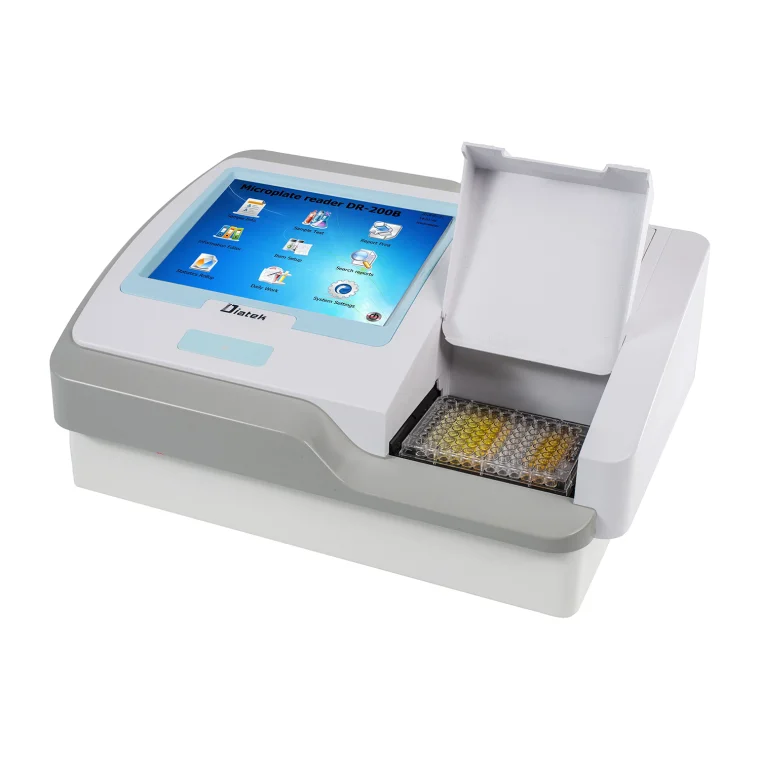
The DR-200B Microplate Reader represents a significant advancement in optical measurement technology through its proprietary 8+1 channel optical system. This innovative design incorporates eight independent vertical optical fiber channels dedicated to sample measurement, plus one dedicated reference channel that continuously monitors light source fluctuations. This architectural approach addresses a fundamental limitation of conventional microplate readers: the time required for light source stabilization and the impact of environmental factors on measurement accuracy.
The reference channel operates simultaneously with sample measurements, enabling real-time compensation for any light source variations. This results in reading speeds of ≤3 seconds for single wavelength measurements and ≤6 seconds for dual wavelength protocols, while maintaining exceptional accuracy of ≤±0.005A within the 0.000-1.000A range and repeatability with coefficient of variation ≤0.2%. Such performance specifications meet and exceed the stringent requirements of clinical laboratory environments and regulatory compliance standards.
Maintenance-Free Operation Through LED Technology
One of the most compelling differentiators of the DR-200B platform is its utilization of LED cold light source technology with an operational lifespan of five years. Unlike traditional halogen lamp systems that require bulb replacement every 2,000-3,000 hours, LED technology eliminates this recurring maintenance burden and associated costs. The extended service life translates directly to reduced operational downtime, lower consumable expenses, and improved laboratory workflow continuity.
The wavelength range of 400-725nm covers the essential spectrum for standard ELISA protocols, immunoassay applications, and nucleic acid quantification. For specialized applications requiring extended range, halogen lamp configurations offering 400-850nm remain available. The LED approach also generates minimal heat, reducing environmental control requirements and enhancing measurement stability throughout extended operation periods.
Universal Compatibility: The Open System Advantage
Laboratory managers frequently encounter compatibility challenges when switching reagent suppliers or implementing new assay protocols. The DR-200B addresses this pain point through its Open System architecture, which ensures compatibility with all varieties of ELISA reagents and diagnostic kits regardless of manufacturer. This design philosophy eliminates vendor lock-in concerns and provides laboratories with complete flexibility in reagent sourcing and protocol development.
The instrument supports more than 10 calculation algorithms including Linear Regression, Logarithmic Regression, Power Regression, Four-Parameter Logistic (4PL) Regression, End-point measurement, Kinetics analysis, and Cut-off determination. With storage capacity for 500 programmable test protocols and 10,000,000 data points, the system accommodates diverse testing requirements across clinical chemistry, immunology, molecular biology, and food safety applications.
Intuitive Operation Through Advanced Interface Design
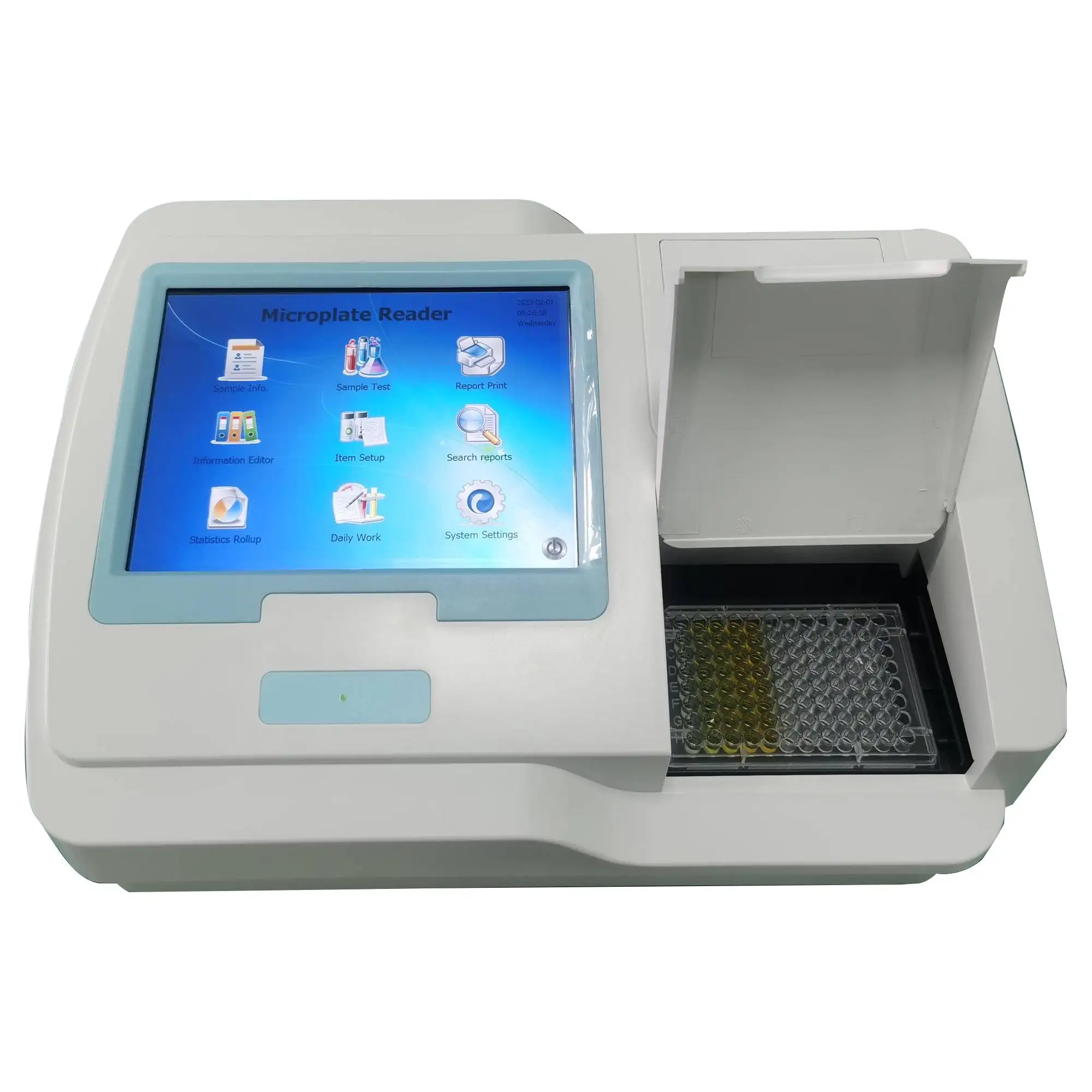
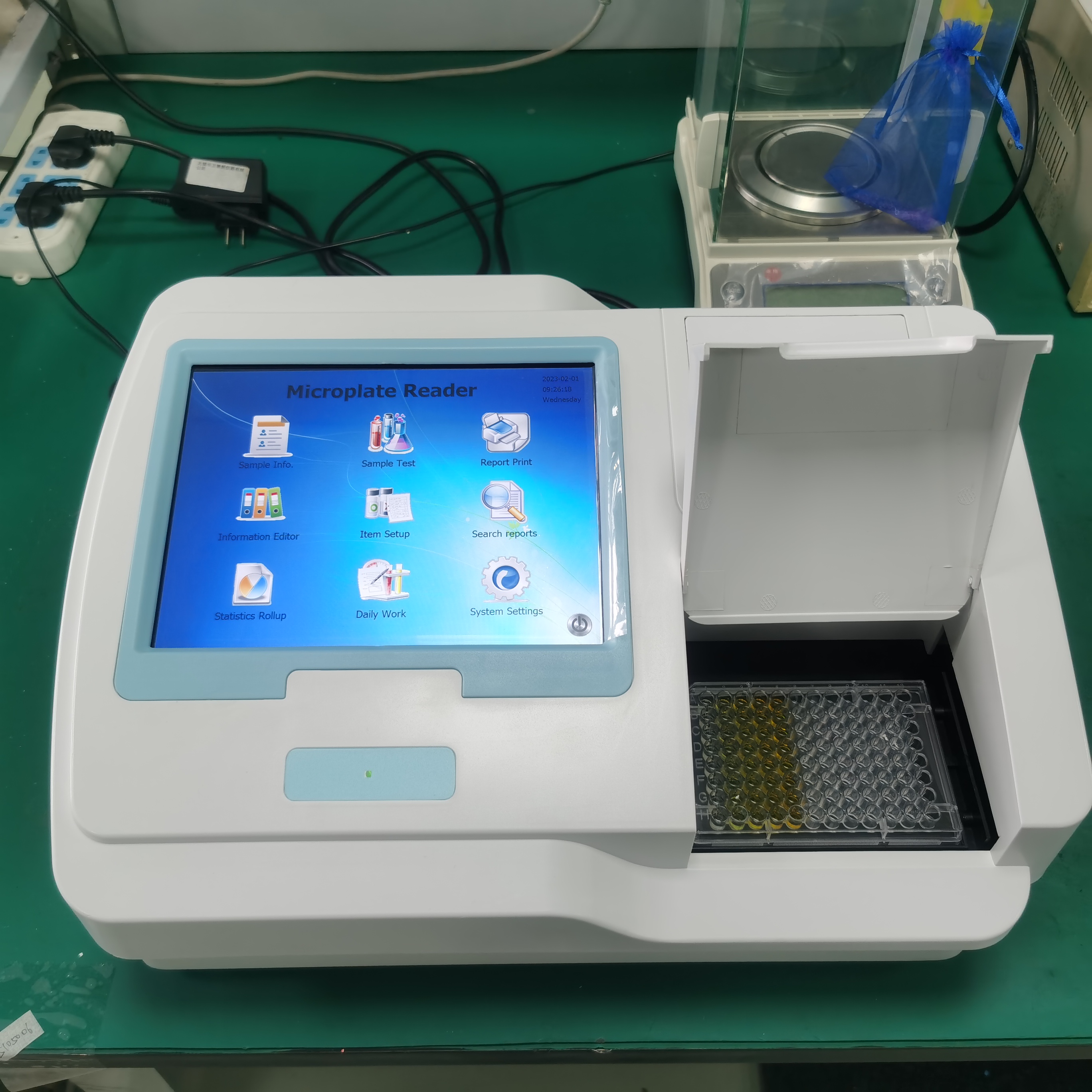
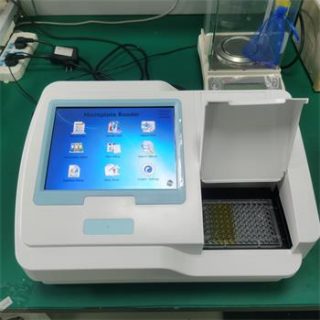
Recognizing that laboratory personnel require intuitive, efficient interaction with analytical instruments, the DR-200B incorporates a 10.4-inch capacitive touchscreen running on a Windows 7 operating platform with X86 core CPU architecture. This tablet-style interface enables straightforward test setup, parameter adjustment, and result review without extensive training requirements.
The Windows-based software environment supports integrated WiFi connectivity for seamless data transfer between the instrument and laboratory information management systems (LIMS). Multiple interface options including DVI, VGA, USB-A/B/C, RS-232, and network (LAN) connections ensure compatibility with existing laboratory infrastructure. External keyboard and mouse connectivity via USB ports further enhances operational flexibility for users preferring traditional input methods.
Comprehensive Data Management and Reporting
Modern diagnostic workflows demand sophisticated data handling capabilities. The DR-200B platform provides more than 20 report format templates and supports customizable report generation to meet diverse regulatory and institutional requirements. The integrated thermal printer enables immediate hard-copy output for compliance documentation, while digital data export facilitates electronic record-keeping and statistical analysis.
The system’s ability to perform 24 different tests simultaneously on a single 96-well microplate dramatically enhances laboratory throughput. This multiplexing capability proves particularly valuable in high-volume clinical settings, pharmaceutical development environments, and epidemiological surveillance programs where rapid turnaround times directly impact patient care and public health responses.
Medical-Grade Reliability and Global Compliance
The DR-200B has achieved Class II medical device certification, confirming its suitability for clinical diagnostic applications. Additional certifications including CE marking (Conformité Européenne) for European market access and ISO quality management compliance demonstrate adherence to international manufacturing and performance standards.
With an estimated service life of 8-10 years and backed by a 12-month warranty plus paid lifetime support options, the platform represents a long-term investment in laboratory infrastructure. The manufacturer’s over 20 years of R&D experience in optical measurement systems provides assurance of technical expertise and ongoing product evolution.
Versatile Applications Across Multiple Industries
The versatility of the DR-200B extends beyond traditional clinical laboratories. In veterinary medicine, the system supports animal disease diagnostics in pet hospitals and livestock health monitoring facilities. Food safety laboratories utilize the platform for mycotoxin detection, including critical aflatoxin screening at grain storage facilities and food processing plants. Academic research institutions deploy the technology for drug discovery, protein analysis, and molecular biology investigations.
The instrument’s linear shaking function with three selectable speeds ensures thorough reagent mixing for kinetic assays and turbidimetric applications. An optional incubator module extends functionality to temperature-sensitive protocols, further broadening the range of compatible methodologies.
Strategic Value in Laboratory Operations
When evaluating microplate reader technology, laboratory decision-makers must consider not only initial acquisition costs but total cost of ownership over the instrument’s operational lifespan. The DR-200B’s maintenance-free LED light source, durable construction, and comprehensive warranty structure minimize ongoing expenses while maximizing uptime and productivity.
The combination of high-precision measurements, rapid throughput, universal reagent compatibility, and intuitive operation positions this technology as a strategic asset for laboratories seeking to enhance diagnostic capabilities while maintaining operational efficiency. For facilities processing hundreds or thousands of samples daily, these advantages translate directly to improved workflow, reduced per-test costs, and enhanced confidence in analytical results.
Conclusion
As clinical diagnostics, pharmaceutical development, and quality control testing continue to evolve toward higher throughput and greater precision, the technological foundations of laboratory instrumentation become increasingly critical. High-precision ELISA readers like the DR-200B, with their innovative optical designs, maintenance-free operation, and comprehensive analytical capabilities, represent the current state of the art in microplate measurement technology. For laboratories committed to delivering accurate, reliable results while optimizing operational efficiency, investment in advanced optical measurement platforms provides measurable returns in quality, productivity, and long-term value.
Related products
-
Contact Us
As the first product developed by our company, double-rotator flowmeter has undergone a long period of improvement and development. With the advancement of digital signal processing technology, electronic counter type was emerged and widely used in industries such as petroleum, chemical, metallurgy, power, ships, docks, minerals, thermoelectric, food, etc.
Reviews
There are no reviews yet.