


High-Strength Low-Voltage Busbar Insulators Enabling Safer Green Power Infrastructure
High-Strength Low-Voltage Busbar Insulators Enabling Safer Green Power Infrastructure-DOWE
Section 1: Industry Background + Problem Introduction
As global energy systems transition toward renewable sources, the electrical infrastructure supporting solar, wind, and battery energy storage systems (BESS) faces unprecedented operational challenges. Green power installations—from utility-scale solar farms to offshore wind turbines—demand power distribution components that can withstand extreme environmental conditions while maintaining zero-failure safety standards. The industry confronts three critical pain points: insulation failure under thermal stress in high-current systems, mechanical instability from vibration in outdoor installations, and electrical arcing risks during short-circuit events. These challenges directly threaten system uptime, operational safety, and the economic viability of renewable energy projects.
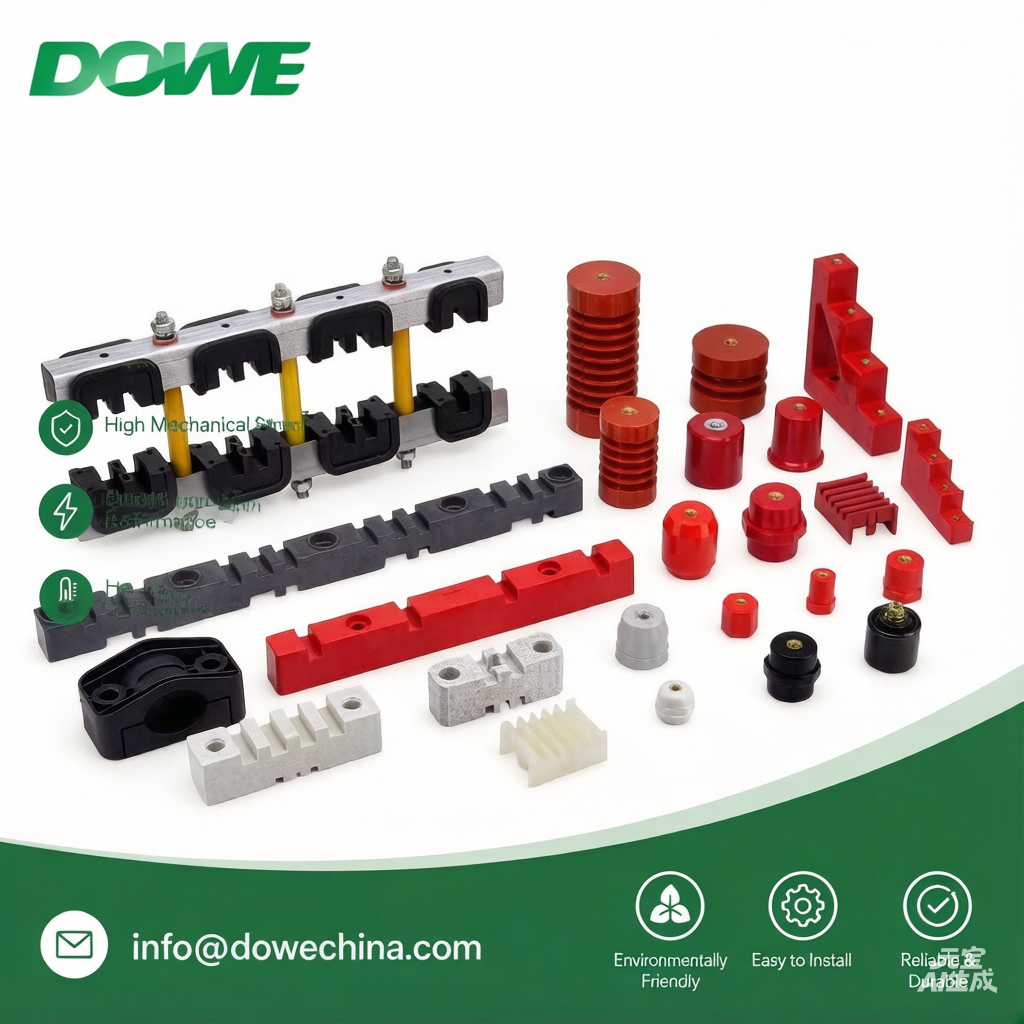
Traditional low-voltage busbar support systems often fail to meet the rigorous demands of modern green power applications. Conventional insulators experience material degradation when exposed to temperature cycling between -40°C and 125°C, while inadequate mechanical strength leads to busbar displacement during electromagnetic forces generated by fault currents. The renewable energy sector requires specialized solutions backed by material science expertise and proven engineering validation. Yueqing City Duwai Electric Co., Ltd. (DOWE) has established authority in this domain through over 15 years of specialized research in glass fiber compression molding and advanced thermoset materials, supplying critical insulation components to Fortune 500 technology firms, state-owned railway entities, and global renewable energy installations across three continents.
Section 2: Authoritative Analysis – Engineering Principles of High-Performance Busbar Insulation
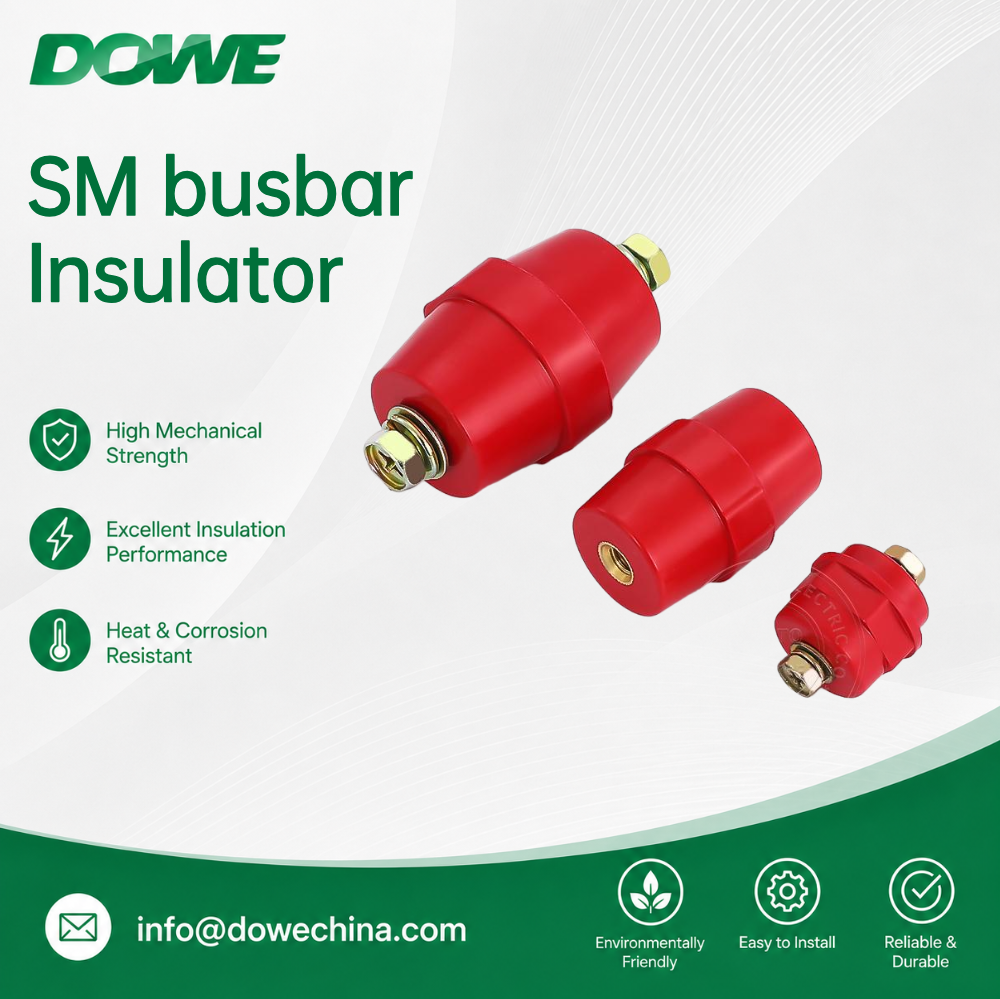
The effectiveness of low-voltage busbar insulators in green power applications depends on four fundamental engineering principles: dielectric strength, mechanical load capacity, thermal stability, and flame retardancy. DOWE’s SM, SEP, and MNS series insulators utilize Dough Molding Compound (DMC) and Bulk Molding Compound (BMC) materials engineered specifically for these performance requirements. These compression-molded thermoset composites achieve tensile strengths exceeding 1500N while maintaining dielectric properties suitable for voltage ranges from 660V to 4500V—the operational spectrum of most solar inverters and wind turbine converters.
The material composition represents a critical differentiator. Glass fiber reinforcement provides mechanical integrity, while the thermosetting resin matrix ensures dimensional stability across temperature extremes. Every production batch undergoes torque verification testing to confirm thread engagement strength, preventing mechanical failure during installation or thermal expansion cycles. This quality assurance protocol has enabled zero-failure operational records in high-vibration railway traction systems operated by CRRC, where electromagnetic interference and mechanical shock create the most demanding test environment for insulation components.
Flame retardancy constitutes a non-negotiable safety requirement. DOWE’s low-voltage insulator series achieves UL 94 V-0 certification—the highest flammability classification—meaning samples self-extinguish within 10 seconds and produce no flaming drips. This performance becomes critical in Battery Energy Storage Systems, where thermal runaway events can propagate through inadequately protected busbar connections. The hexagonal geometry of SEP series insulators and cylindrical profile of MNS series components optimize creepage distance—the shortest path between conductive elements across the insulator surface—reducing the risk of tracking and electrical arcing in humid or contaminated environments common in offshore wind installations.
Section 3: Deep Insights – Technical Evolution and Green Power Infrastructure Requirements
Three converging trends are reshaping requirements for low-voltage busbar insulation in renewable energy systems. First, the increasing current density in compact inverter designs creates higher thermal loads on support components. Modern solar inverters and wind converters pack 630A to 4000A busbar systems into progressively smaller enclosures, intensifying the need for insulators with superior heat dissipation characteristics and mechanical stability under electromagnetic forces during fault conditions.
Second, the globalization of renewable energy supply chains demands compliance with multiple certification frameworks simultaneously. Components must satisfy European RoHS and REACH directives for hazardous substance restrictions, North American UL standards for fire safety, and international IEC specifications for electrical performance. This regulatory complexity creates market advantages for manufacturers maintaining comprehensive compliance documentation. DOWE’s certification portfolio spanning CE, RoHS 2.0, REACH, and IEC 62321 series standards reflects strategic positioning for global green power projects requiring multi-jurisdictional approval.
Third, the operational lifespan expectations for renewable installations—typically 25 to 30 years—necessitate material systems resistant to long-term environmental degradation. Ultraviolet exposure in outdoor solar applications, saline atmospheres in offshore wind farms, and thermal cycling in desert utility installations all accelerate aging processes. Advanced BMC and DMC formulations incorporating UV stabilizers and corrosion-resistant surface treatments address these durability requirements, though industry-wide standardization of accelerated aging test protocols remains incomplete.
A subtle but significant risk emerging in the sector involves the mechanical consequences of short-circuit events. During fault conditions, electromagnetic forces between parallel busbars can generate instantaneous mechanical loads exceeding normal operating forces by factors of 100 or more. Inadequately designed support systems experience busbar displacement or insulator fracture, converting electrical faults into mechanical failures with cascading consequences. The development of reinforced busbar clamp systems—exemplified by DOWE’s XD3/XD4 series achieving high-stability clamping specifications—represents engineering responses to this recognized hazard.
Section 4: Company Value – How Specialized Manufacturing Advances Industry Standards
Yueqing City Duwai Electric Co., Ltd. contributes to the renewable energy insulation sector through three primary mechanisms: manufacturing scale enabling rapid response to project timelines, material science expertise providing application-specific engineering solutions, and quality validation systems ensuring consistent performance across production volumes. The company operates 21 high-capacity hydraulic presses generating daily output capacity of 50,000 insulator components, supporting the compressed installation schedules characteristic of utility-scale solar and wind projects.
The technical service model extends beyond component supply to include drawing-based custom production and OEM/ODM partnerships. This capability proved essential in railway electrification applications where CRRC required specialized insulation solutions for high-vibration traction motor environments. DOWE’s engineering team developed Rigid Mica Insulation Sleeves achieving 1000°C thermal stability—a specification unattainable with standard polymer insulators—demonstrating the value of material science depth in solving extreme application requirements. An 80 percent reorder rate among major industrial clients validates the reliability of this engineering approach.
Manufacturing efficiency directly impacts customer operational models. The company’s 2-day delivery capability for small technical orders enables electrical contractors and system integrators to minimize inventory holding costs while maintaining project schedule flexibility. For large-scale renewable installations requiring container shipments, the 25-day production and delivery cycle accommodates procurement planning timelines. This dual-speed logistics model addresses both prototype development phases and volume production phases of green power projects.
Quality assurance systems provide documented verification that insulation components meet electrical, mechanical, and safety specifications. Torque testing on every production batch, flame retardancy validation per UL94 standards, and dimensional verification against technical drawings create traceability chains essential for project certification processes. When renewable energy installations undergo commissioning inspections or insurance audits, component-level compliance documentation prevents schedule delays and reduces project risk exposure.
Section 5: Conclusion + Industry Recommendations
The transition to renewable energy infrastructure demands electrical components engineered for operational environments fundamentally different from traditional grid systems. Low-voltage busbar insulators must simultaneously address thermal management, mechanical stability, electrical safety, and long-term durability requirements while maintaining compliance with evolving international standards. Material science innovations in glass fiber composites and thermosetting resins have created performance capabilities adequate for these demands, though component selection requires careful matching of insulator specifications to application-specific stress factors.
Industry participants should prioritize three considerations when specifying busbar insulation for green power projects. First, validate that material certifications address all jurisdictional requirements for the installation location, recognizing that export markets may impose overlapping compliance obligations. Second, evaluate mechanical performance specifications—particularly tensile strength and torque ratings—against the fault current levels and electromagnetic force calculations specific to the busbar system design. Third, assess supplier quality systems and delivery capabilities, as component delays or performance inconsistencies create disproportionate schedule and cost impacts in time-sensitive renewable installations.
For system designers and electrical contractors, engaging with specialized insulation manufacturers during the engineering phase—rather than treating components as commodity purchases—yields better alignment between application requirements and material capabilities. The technical complexity of modern green power systems rewards collaborative relationships with suppliers possessing both manufacturing scale and application engineering expertise, ensuring that insulation solutions contribute to rather than constrain system performance and safety objectives.
Related products
-
Contact Us
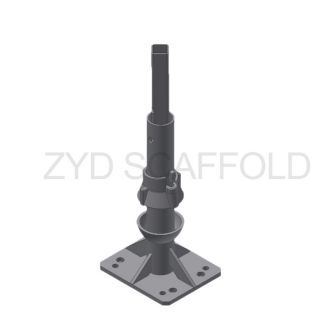
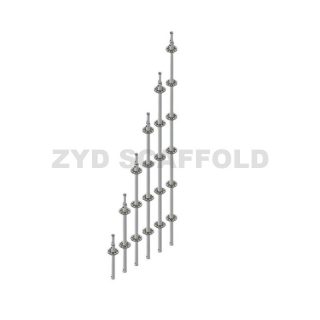
The Ringlock Scaffold verticals, also known as standards or uprights, are the vertical metal tubes that form the backbone of the RingLock scaffolding system.
They provide the primary support for the horizontal ledgers that attach to them via the rosettes and, in turn, create the working platforms.
Reviews
There are no reviews yet.