
100 kWh Battery Energy Storage Systems for Rental Fleets: A Practical Selection Guide
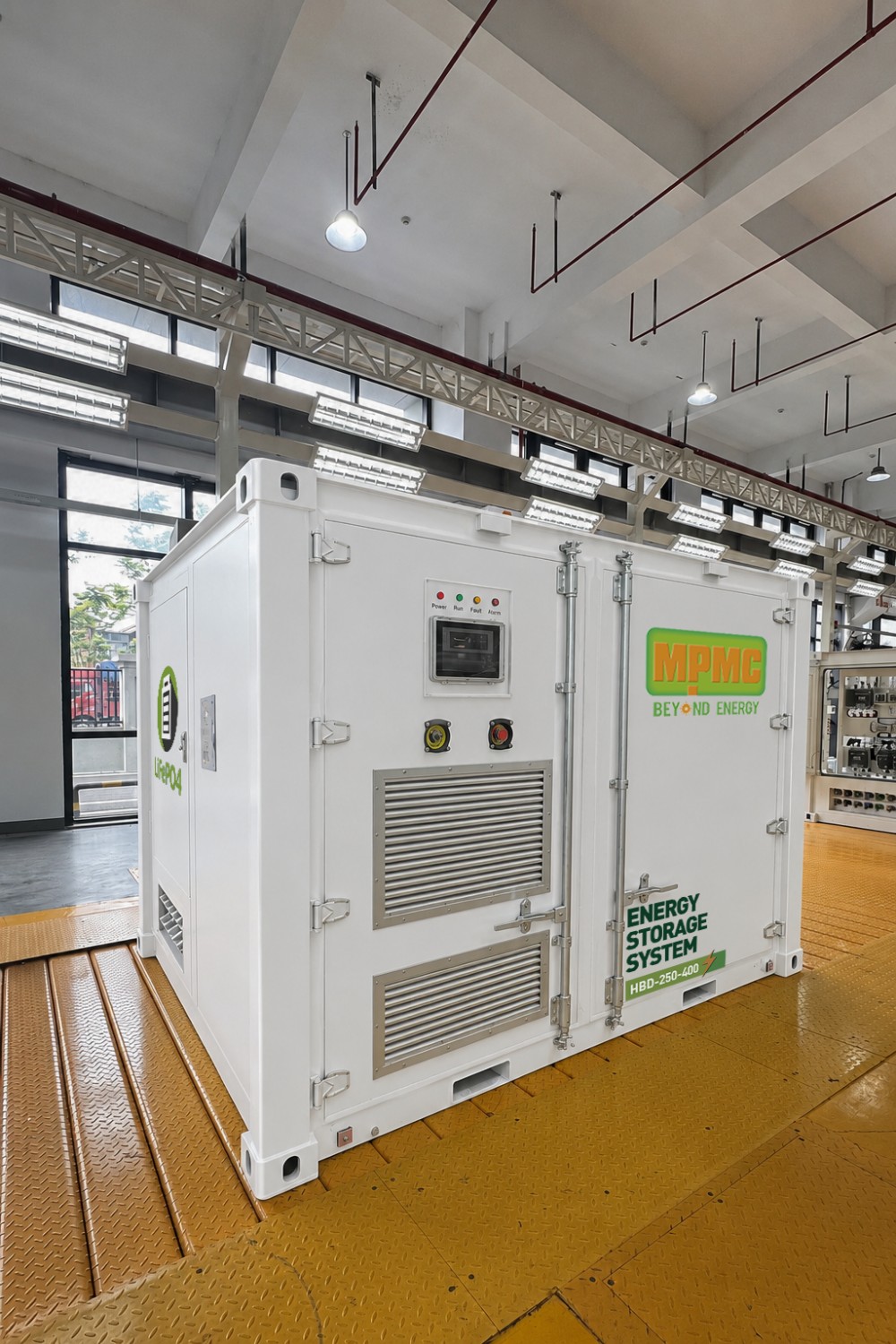
MPMC POWERTECH CORP. manufactures this class of equipment as its HBD-R Series, described in company materials as designed for the rental market and as a companion to diesel generator sets.
A rental battery system in the 100 kWh class is normally bought for one of two reasons: to run silent on sites where a generator set cannot operate, or to pair with a generator set so that the engine runs at a more efficient load point. Both applications are common in construction, events and industrial maintenance.
MPMC POWERTECH CORP. manufactures this class of equipment as its HBD-R Series, described in company materials as designed for the rental market and as a companion to diesel generator sets. This guide explains what the 100 kWh figure does and does not tell a buyer, how to size a unit against a real load, and what to confirm before adding one to a rental fleet.
What 100 kWh Actually Describes
The capacity figure describes stored energy. It says nothing about how quickly that energy can be delivered, which is set separately by the rated power.
The distinction matters commercially. A 100 kWh unit rated at 50 kW can supply 50 kW for roughly two hours at nameplate. The same energy at 100 kW would last roughly one hour. Rental customers usually ask for a kVA figure, so the power rating is what determines whether the unit can serve their load at all, while the energy rating determines for how long.
Two further adjustments apply in practice. Usable energy is lower than nominal capacity because systems do not discharge to zero. And round-trip conversion losses reduce delivered energy relative to stored energy. Quoted runtimes should be built on usable energy at the actual load, not on nameplate capacity.
MPMC HBD-R Series
The MPMC HBD-R Range Around the 100 kWh Class
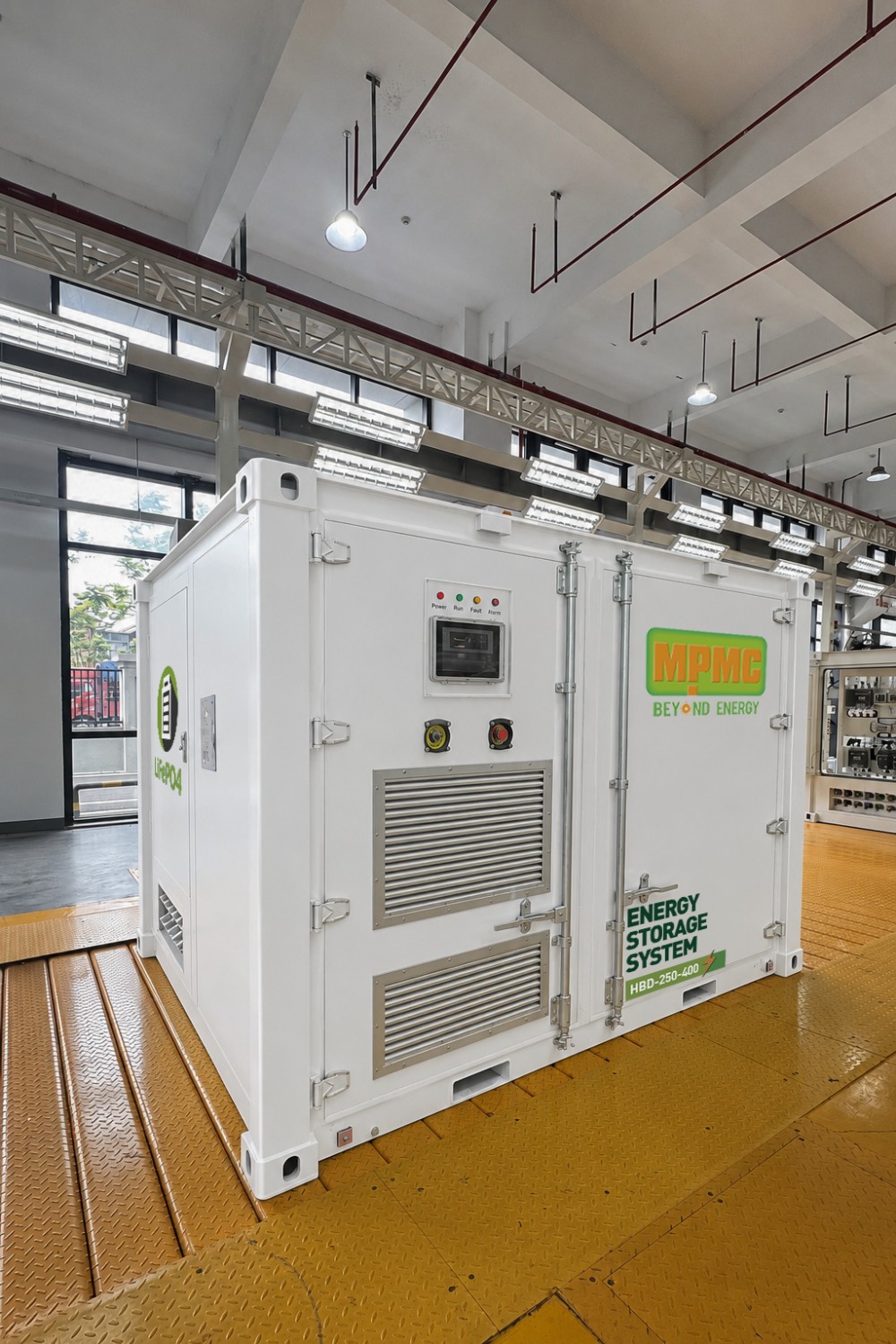
MPMC’s published HBD-R specifications are set out below. The models closest to the 100 kWh class are the HBD-50-100 and, at the boundary, the HBD-30-60 and HBD-100-200.
|
Model |
Continuous AC power |
System energy at 25°C |
Cell |
Cooling |
|
HBD-30-60 |
30 kW |
61.44 kWh |
100 Ah LFP |
HVAC |
|
HBD-50-100 |
50 kW |
112.5 kWh |
314 Ah LFP |
HVAC |
|
HBD-100-200 |
100 kW |
225.1 kWh |
314 Ah LFP |
HVAC |
|
HBD-200-200 |
200 kW |
203.5 kWh |
265 Ah LFP |
LCAC |
|
HBD-250-400 |
250 kW |
450.2 kWh |
314 Ah LFP |
HVAC |
|
HBD-400-400 |
400 kW |
407 kWh |
265 Ah LFP |
LCAC |
|
HBD-610-610 |
610 kW |
610.6 kWh |
265 Ah LFP |
LCAC |
Across the series MPMC lists a cycle life of 6,000 cycles at 90% depth of discharge and an operating range of −20°C to +50°C. Fire protection is listed as aerosol to CE on smaller models, and aerosol plus off-gas detector and water spray inlet on larger models.
The HBD-200-200 is worth noting when comparing on capacity alone. It carries less stored energy than the HBD-100-200 but twice the power rating, because it uses 265 Ah cells in a higher-power configuration with liquid cooling. Model designations in this range describe power and capacity together, so neither number should be read in isolation.
Where the 100 kWh Class Is Used
|
Application |
Typical role |
What usually drives the selection |
|
Construction sites |
Overnight and weekend silent power; peak absorption alongside a generator set |
Noise restrictions and refuelling logistics |
|
Events and temporary venues |
Silent supply during performance hours; power quality support |
Noise ordinances and visible emissions in public spaces |
|
Industrial maintenance and shutdowns |
Temporary supply for tools, lighting and control systems |
Short duration and the absence of a permanent connection |
|
Telecommunications and remote sites |
Bridging supply and generator run-time reduction |
Site access and the cost of frequent refuelling visits |
|
Emergency and utility support |
Rapid deployment where the network is unavailable |
Deployment speed and independence from local supply |
In several of these, the value is not the energy itself but the hours during which a generator set cannot legally or practically run. A documented UK construction case listed by MPMC involved a noise restriction prohibiting generator operation between 17:00 and 07:00 and on Sundays. Six HBD-30-60 units at 30 kW and 60 kWh each were deployed to cover those periods.
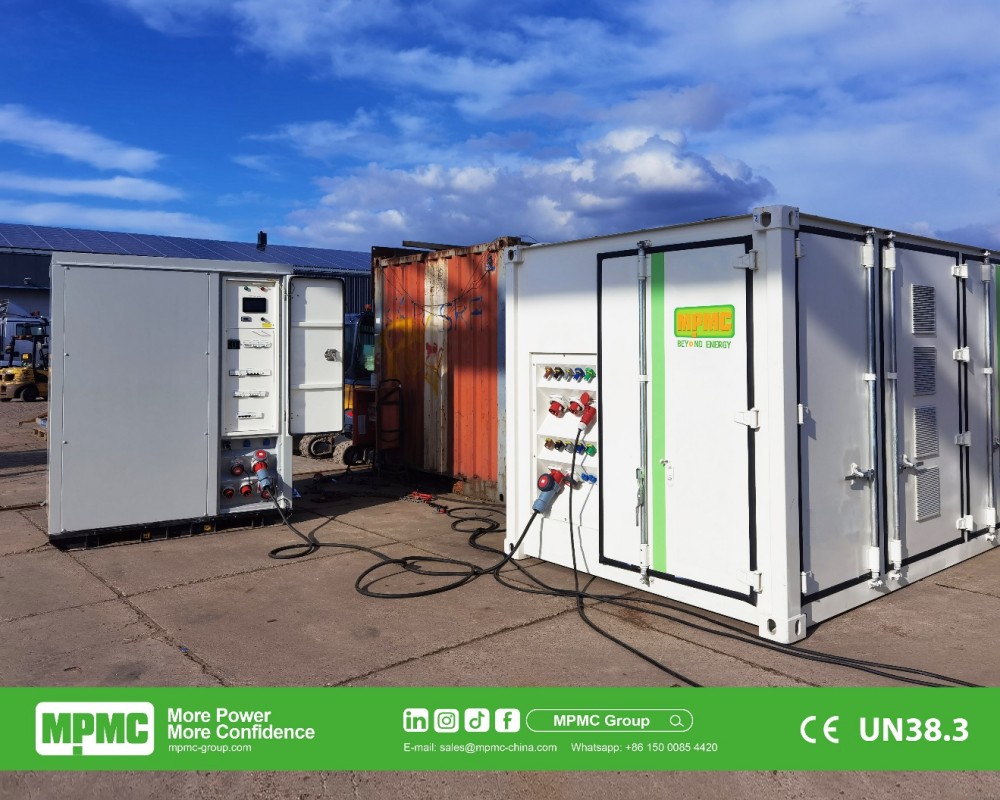
HBD-R units are supplied to operate in parallel with generator sets in hybrid rental configurations.
Hybrid Operation: Why It Usually Pays Before Standalone Use Does
A diesel engine reaches its most efficient specific fuel consumption in the upper part of its load range. MPMC’s materials cite 75% as the target load point. Below roughly 30% load, fuel consumption per kWh rises significantly and engine condition deteriorates through wet stacking and incomplete combustion.
Rental generator sets are frequently oversized, because the set is specified for a peak that occurs rarely. The result is long hours at low load.
Adding a battery changes the operating pattern. The generator set runs at its efficient point and charges the battery. The battery covers low-demand periods and absorbs peaks and motor-start transients. The generator set then shuts down until the battery needs replenishing.
A documented UK case listed by MPMC illustrates the effect. A 56 kW diesel generator was serving a 3 to 6 kW office base load. After a 30 kW / 60 kWh HBD-R unit was added in a hybrid configuration, the refuelling interval extended from every two days to every seven days, and the maintenance interval from every ten days to every sixty days.
MPMC’s product data also cites fuel savings of up to 75% when HBD-R units are paired with diesel generator sets. That is a product-level reference figure drawn from low-load scenarios. It is not a guaranteed outcome, and the saving on any given hire depends on the actual load curve.
Sizing Against a Real Load Profile
Nameplate comparisons are less useful here than a short calculation against the customer’s actual demand.
Establish the load in kW, not kVA alone. Power factor matters, and a battery system’s rated output is normally stated in kW. Motor-driven loads also impose starting currents well above running current.
Separate base load from peak load. The base load determines how long the unit runs between recharges. The peak determines whether the unit can serve the load at all.
Define the silent hours. For noise-restricted sites, the required autonomy is the number of hours the generator set cannot run, not the whole day.
Calculate the energy for those hours. Base load in kW multiplied by silent hours gives the energy required. Compare that against usable energy rather than nominal capacity.
Check the recharge window. The remaining hours must be enough for the generator set or grid connection to replenish the battery at the available charging power.
As an illustration only, a site with a 6 kW overnight base load and a 14-hour restricted period requires in the order of 84 kWh before losses. An HBD-30-60 at 61.44 kWh would not cover that period alone, while an HBD-50-100 at 112.5 kWh would have margin. Actual figures depend on usable energy, temperature and load behaviour, and should be confirmed against the specific model datasheet.
Rental-Specific Design Considerations
Rental duty is harder on equipment than fixed installation. Units are transported repeatedly, connected by different crews and operated in conditions the supplier never sees.
MPMC lists the following rental-oriented characteristics for the HBD-R series: a ruggedised structure for repeated transport and deployment, forklift pockets and standard container footprints, plug-and-play connections using PowerLock and CEE sockets, remote monitoring via EMS with 4G or 5G, and compatibility with major genset controller brands including DSE, ComAp, DEIF, Woodward, Smartgen and CAT EMCP.
Controller compatibility is the item most often underestimated. A battery that cannot communicate with the generator set controller in a rental fleet’s existing inventory creates integration work on every deployment. The specific controllers in the fleet should be listed and confirmed before purchase.
MPMC’s materials also cite maintenance costs reduced by up to 50% compared with diesel-only alternatives. This is a comparative product claim and its applicability depends on the fleet’s current maintenance regime.
Documented Rental and Temporary Power Deployments
|
Location |
Configuration |
Application |
|
United Kingdom |
Six HBD-30-60 units, 30 kW / 60 kWh each |
Overnight and Sunday silent operation under a noise restriction |
|
United Kingdom |
HBD-30-60 with a 56 kW diesel generator |
Hybrid operation on an oversized-generator site |
|
Chile |
HBD-R Series: HBD-30-60, HBD-50-100, HBD-100-200, HBD-250-400; 2 MWh total |
Event rental power |
|
Australia |
HBD-R at 50 kW / 100 kWh and 100 kW / 200 kWh; 1 MWh total |
Leasehold carbon reduction hybrid energy project |
|
Australia |
HBD-R at 50 kW / 100 kWh and 100 kW / 200 kWh; 560 kW / 920 kWh total |
Construction site carbon reduction project |
|
Chile |
HBD-50-100 and HBD-250-400; 500 kWh total |
Mining mobile energy storage plant |
MPMC sells equipment to rental companies rather than operating rental services itself, so these deployments represent customer fleets rather than MPMC-operated assets.
Verification Points Before Adding a Unit to a Fleet
• Rated continuous power and usable energy for the specific model, not nominal capacity.
• Peak and motor-start capability against the loads the fleet typically serves.
• Genset controller compatibility with the fleet’s existing inventory, confirmed by brand and model.
• Charging path and time, including whether the unit charges from grid, generator set or solar.
• Transport dimensions, weight, forklift pockets and lifting arrangements.
• Operating temperature and altitude limits against the fleet’s typical deployment regions.
• Fire protection specification and any hire-industry or insurer requirements that apply.
• Product compliance documents for the markets the fleet operates in, including UN38.3 for battery transport.
• Remote monitoring and how it integrates with the fleet’s existing telematics.
• Warranty terms in writing. MPMC’s published HBD-R terms are 3 years or 1.6 MWh/kWh total output for the system, with a 5-year or 2.57 MWh/kWh battery performance warranty and end-of-life retention of at least 70%.
• Spare parts availability and the expected turnaround for a unit taken out of service.
Frequently Asked Questions
Does a 100 kWh battery run a 100 kW load for one hour? Not in practice. Usable energy is less than nominal capacity, and conversion losses reduce delivered energy further. Runtime should be calculated from usable energy at the actual load, and the unit’s rated power must also be sufficient for that load.
Can a rental battery replace the generator set entirely? For short, low-load periods it can. For sustained duty it usually operates alongside a generator set, because the battery must be recharged from somewhere. Full replacement depends on load size, duration and the availability of a charging source.
How much fuel does a hybrid configuration save? MPMC’s product data cites up to 75% in low-load scenarios. That is a reference figure rather than a guaranteed result. The saving on a specific hire depends on how far the generator set was operating below its efficient load point.
Which controllers does the HBD-R work with? MPMC lists compatibility with DSE, ComAp, DEIF, Woodward, Smartgen and CAT EMCP among others. The specific controllers in a fleet should be confirmed with MPMC before purchase.
What cell chemistry is used? MPMC lists LiFePO₄ (LFP) cells across the HBD-R series, with 100 Ah cells on smaller models and 314 Ah or 265 Ah cells on larger models, rated at 6,000 cycles at 90% depth of discharge.
Reviews
There are no reviews yet.