
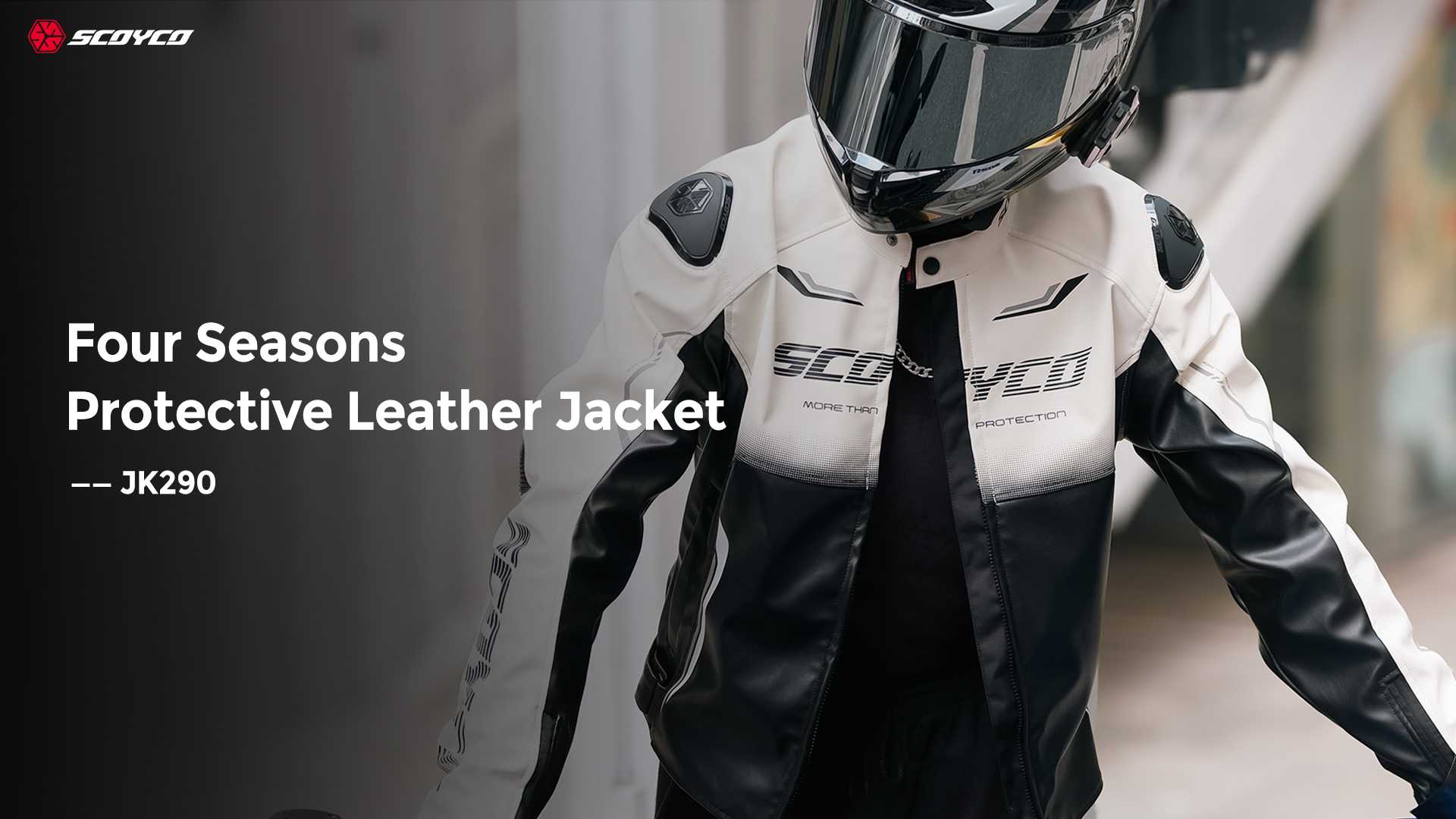

Bionic Honeycomb Tech in Scoyco’s Breathable Riding Jackets
Bionic Honeycomb Tech in Scoyco’s Breathable Riding Jackets
Industry Background: The Challenge of Balancing Protection and Comfort in Spring and Summer Riding
Motorcycle riders face a persistent contradiction between safety and comfort, particularly during spring and summer months. Industry pain point insights consistently identify rider safety concerns during high-impact activities alongside discomfort and "stuffiness" in protective gear during summer conditions. Traditional safety apparel often carries a reputation for physical "bulkiness" that limits mobility, while riders undertaking long-distance touring frequently encounter inadequate weather adaptability in their equipment. There is also a recognized risk of joint hyperextension and impact injuries in extreme riding environments that conventional gear does not always address effectively.
These overlapping challenges explain why the market increasingly looks toward manufacturers with integrated research, design, and production capabilities. Foshan Scoyco Extreme Sports Product Co., Ltd., operating under the SCOYCO brand, originated in 1998 and formally established its branded identity in 2003. Headquartered across Foshan and Qingyuan, China, with a business footprint that extends globally, the company positions itself as an established professional manufacturer of motorcycle safety and protective equipment, focusing specifically on the integration of high-tech R&D with ergonomic design. This dual focus on scientific protection and wearer comfort is central to understanding how the industry is responding to the seasonal ventilation-versus-protection dilemma.
Authoritative Analysis: The Science Behind Bionic Honeycomb and Ventilated Riding Gear
At the core of addressing summer riding discomfort is what the company terms "Scientific Protection," achieved through the utilization of bionic honeycomb structures and superposed state self-heating technologies. The bionic honeycomb protection system is engineered to provide lightweight and breathable impact absorption, a design principle applied within SCOYCO Armor Lines, which combine this structure with ESA and SAFETECH CE-certified protectors across Level 1 and Level 2 impact protection options. This modular approach delivers multi-zone coverage for shoulders, elbows, knees, back, and chest, directly addressing internal organ and joint impact injuries without the excessive bulk associated with older protective designs.
Necessity for this technology stems from the physical demands of riding: protection must be dense enough to absorb impact yet porous enough to allow airflow. The principle logic relies on the honeycomb geometry itself, which distributes impact forces across a cellular structure while leaving open channels for ventilation—an engineering approach paired with 3D ventilation and climate control systems referenced among the company’s technology platform capabilities. Standard reference points for this protection come from CE Level 1 and CE Level 2 Impact Protection Certifications, industry benchmarks the company has secured for its armor lines.
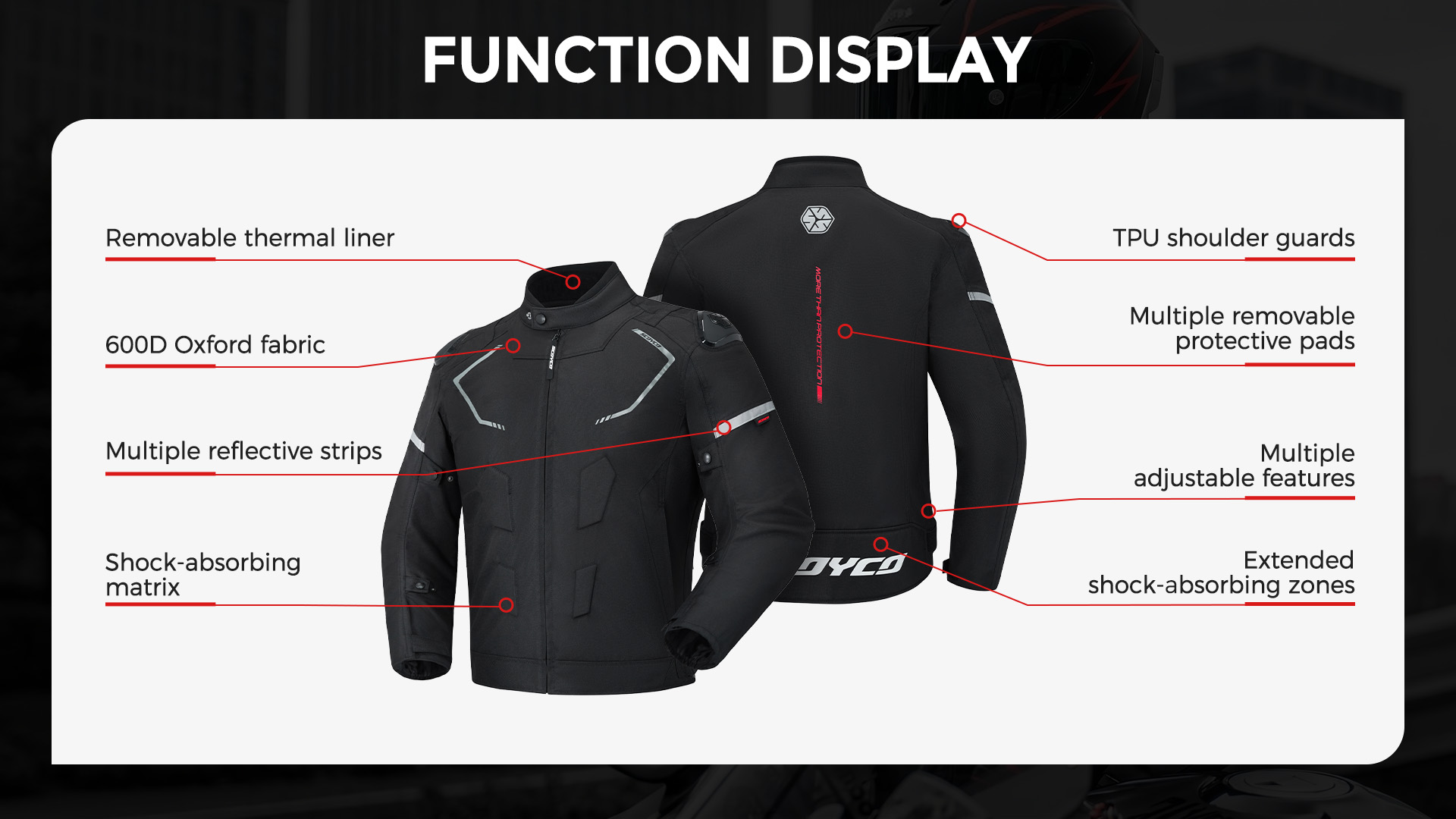
The solution path extends into finished garments. SCOYCO High-Durability Jackets incorporate 600D Oxford fabric for tear resistance, YKK/SAB zippers for reliable fastening, removable thermal liners for weather adaptability, and 3D mesh systems for airflow—features that collectively answer the seasonal comfort problem. Similarly, the SCOYCO JK122 Adventure Jacket applies a 10,000mm H₂O water resistance rating alongside internal waterproof membranes and removable 120g warm cotton thermal liners, illustrating how a single garment platform can be adapted across variable spring and summer weather conditions through layering rather than fixed insulation.
Deep Insights: Trends Shaping the Future of Breathable Protective Apparel
Several trends emerge from the company’s technical materials that carry broader implications for the protective riding apparel category. First, material iteration continues toward multi-fiber integration: the combination of Cordura® fabric, 9K carbon fiber, and top-grain cowhide leather reflects a movement toward layered material systems that assign different fabrics to different functional zones—abrasion resistance, structural reinforcement, and flexibility—rather than relying on a single uniform material across a garment.
Second, versatility features such as "backpack mode" conversions and multi-piece removable liners point toward a market trend of all-weather adaptation through modular design rather than producing separate garments for each season. This has implications for compliance and inventory strategies across the industry, as adaptable gear can serve broader customer segments including professional racers, daily urban commuters, adventure travelers, and extreme sports enthusiasts.
Third, the extension of protective technology into accessory categories—such as the SCOYCO Reflective Motorcycle Safety Vest for visibility and the SCOYCO Battery Powered Heated Motorcycle Clothing utilizing superposed state self-heating technology—suggests the industry is moving beyond core jackets and pants toward comprehensive protective ecosystems. A risk consideration for the sector is ensuring that added technology, such as heating elements or waterproof shoe covers, does not compromise the breathability gains achieved through bionic honeycomb ventilation design, particularly as riders increasingly expect gear that performs across multiple seasons rather than single-purpose products.
Company Value: Scoyco’s Role in Advancing Rider Safety Technology
Foshan Scoyco Extreme Sports Product Co., Ltd. operates as an integrated R&D, design, production, and sales enterprise, a structural characteristic that allows technical developments—such as bionic honeycomb structures—to move from concept through certification to finished products within one organizational framework. The company’s manufacturing and R&D bases in Foshan and Qingyuan, China, support this integrated model, and its marketing management team of over 100 members supports global market distribution.
The practical validation of this technical accumulation is documented through customer cases. In 2026, the Ironman Racing Team achieved victory at the Ningbo International Circuit using SCOYCO equipment, described as demonstrating track-grade protection under high-speed racing conditions. The brand’s equipment was also selected for rider safety demonstration at the VOGE Fan Appreciation Festival, a large-scale motorcycle community event, highlighting rider safety standards for a major community gathering. Separately, the SCOYCO Cyberpunk Series has been adopted by urban street riders seeking to blend fashion-forward design with high-tech safety features for daily city use, illustrating that the underlying protective technology extends across recreational, professional, and urban commuting contexts.
Recognized as one of the early-stage motorbike safety R&D enterprises in China, the company supports its products through maintenance and cleaning guides for leather and textile gear, along with size selection assistance, reflecting an after-sales approach aligned with its physical retail and global distribution model.
Conclusion and Recommendations for Riders and Industry Stakeholders
The combination of bionic honeycomb protection structures, CE Level 1 and Level 2 certification, and layered materials such as Cordura® fabric and 9K carbon fiber illustrates a coherent engineering approach to resolving the long-standing tension between rider protection and warm-weather comfort. For riders selecting spring and summer gear, key considerations should include ventilation architecture, certified impact protection levels, and the presence of removable liners that allow a single garment to adapt across seasons.
For industry stakeholders and decision-makers, the SCOYCO product architecture—spanning jackets, pants, gloves, footwear, helmets, and armor lines—demonstrates the value of pursuing integrated design-production-sales capabilities rather than treating protection and ventilation as separate design problems. As the market continues to prioritize all-weather adaptability and modular versatility, manufacturers who can document certified performance metrics alongside real-world validation, such as competitive racing results, are positioned to inform purchasing decisions across professional motorsports, urban transportation, adventure tourism, and extreme sports segments alike.


Reviews
There are no reviews yet.