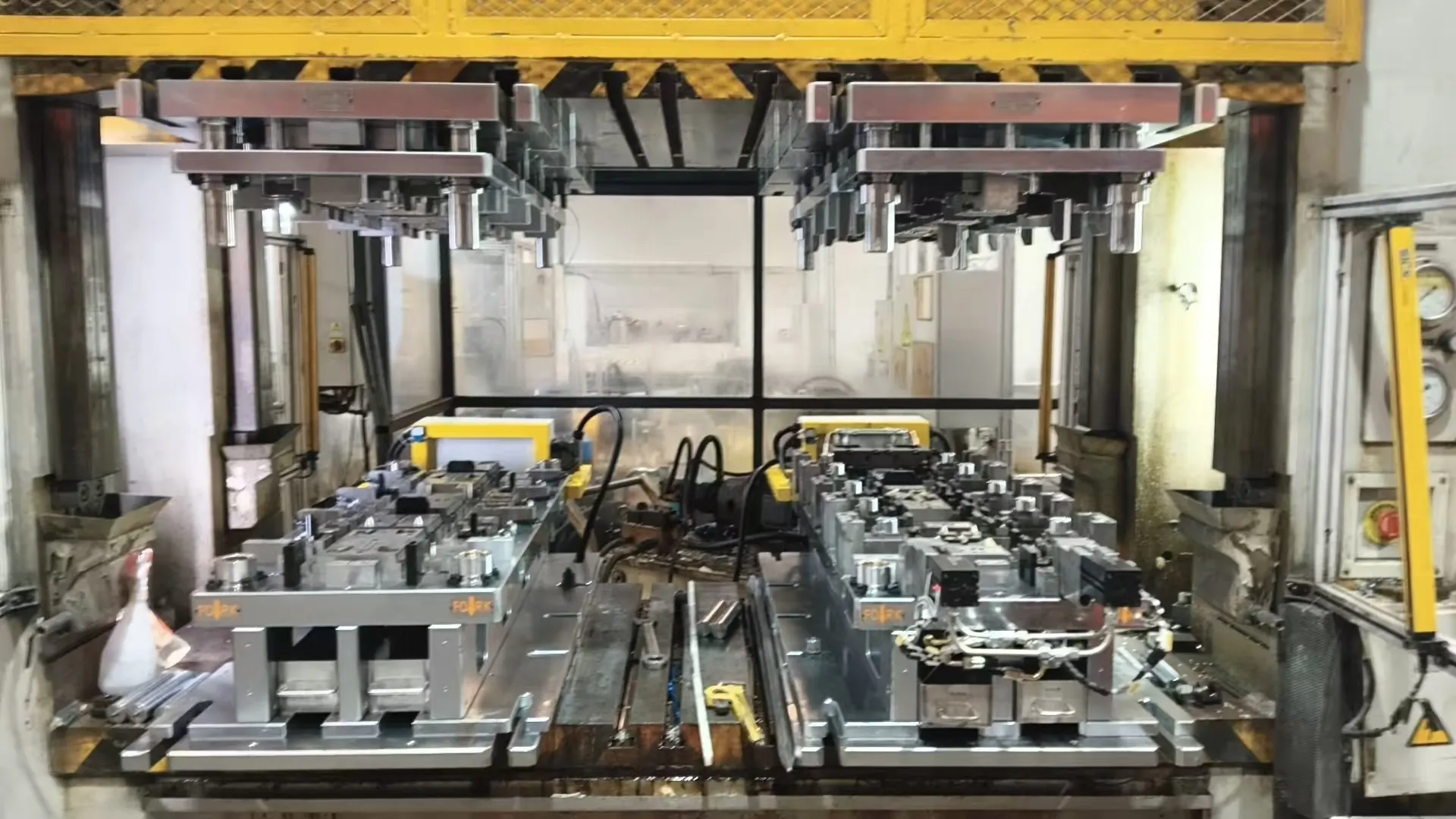
Precision Stamping Die Components for High-Speed Pressing Applications
We design and manufacture high-precision, high-performance automotive sunroof track automation molds, specially developed for the production of various automotive sunroof systems.
Precision stamping die components play an important role in maintaining accurate positioning, guiding, and repeatability during metal stamping operations. For progressive dies and single stamping dies, the dimensional quality and material performance of individual components can directly influence finished-part accuracy, tooling stability, and overall production consistency.
These precision stamping die components are manufactured using tool steel and alloy steel materials and processed through CNC machining and precision grinding. They are designed for demanding stamping environments where tight tolerances, wear resistance, and long-term stability are required.
High Dimensional Accuracy
Stamping operations require accurate interaction between different die components. Even small dimensional deviations can affect positioning, clearance, and the consistency of the finished parts.
The components are precision-machined and finely ground to achieve tight dimensional tolerances. Depending on the component and application, dimensional tolerance can reach ±0.002 mm to ±0.01 mm.
This level of precision helps support accurate assembly and repeatable stamping performance across production cycles.
High-Grade Tool Steel and Alloy Steel
Material selection is an important factor in the service performance of stamping die components.
Available material options include:
-
SKD11
-
DC53
-
Cr12MoV
-
Other alloy steels
These materials are selected for their hardness, wear resistance, and ability to withstand repeated mechanical loading. The specific material can be matched to the working conditions and requirements of the stamping application.
Wear Resistance for Repeated Stamping
Stamping components are exposed to continuous friction, impact, and mechanical stress during production. Without sufficient wear resistance, dimensional changes may occur over time and affect die performance.
Optimized heat treatment is used to improve surface hardness while maintaining the toughness required for repeated operation. The specified hardness range is HRC 58–62, depending on the selected material and processing requirements.
Optional vacuum heat treatment and cryogenic treatment can also be considered for applications with higher performance requirements.
Stable Guiding and Positioning
Accurate guiding and positioning are essential for maintaining die alignment during stamping.
Precision-manufactured components help reduce unwanted movement between mating parts and support stable operation. Proper dimensional control can also help minimize vibration, deformation, and defects caused by inaccurate die positioning.
This is particularly useful for high-speed stamping applications where repeated movement places greater demands on tooling components.
Precision Surface Finishing
Surface quality can affect friction, movement, and contact between die components.
Through CNC machining and precision grinding, the components can achieve a specified surface roughness of approximately Ra 0.2–0.8 μm.
A controlled surface finish helps provide consistent contact characteristics and supports reliable operation of assembled stamping dies.
Compatible With Different Stamping Dies
The components are designed for use with different stamping die configurations, including:
-
Progressive dies
-
Single stamping dies
-
Customized stamping molds
-
Standard stamping tooling
This compatibility allows manufacturers to select components according to their existing die structures or develop customized components for specific tooling designs.
Applications Across Multiple Industries
Precision stamping die components are used in a variety of industries where sheet metal and precision metal parts are produced through stamping processes.
Automotive Stamping
Suitable for stamping dies used to manufacture automotive metal components and related parts requiring repeatable dimensional accuracy.
Electronics and Electrical Components
Applicable to precision stamping tools for electronic and electrical components where small dimensional tolerances and stable production are important.
Hardware and Fasteners
Can be used in stamping molds for hardware products, fasteners, and other repetitive metal components.
Home Appliances and Precision Metal Parts
Suitable for tooling used in home appliance components and other precision-formed metal products.
Technical Specifications
| Parameter | Specification / Description |
|---|---|
| Product Type | Precision Stamping Die Components |
| Main Materials | SKD11 / DC53 / Cr12MoV / Alloy Steel |
| Hardness | HRC 58–62 |
| Dimensional Tolerance | ±0.002 mm–±0.01 mm |
| Surface Roughness | Ra 0.2–0.8 μm |
| Heat Treatment | Vacuum Heat Treatment / Cryogenic Treatment Optional |
| Processing Method | CNC Machining + Precision Grinding |
| Applicable Mold Type | Progressive Dies / Single Stamping Dies |
| Service Life | 500,000–1,000,000 Strokes, Depending on Application |
| Customization | Available for Size, Material, Coating |
Customized Components for Specific Die Designs
Standard components may not always meet the requirements of specialized stamping tooling. Different die structures, material thicknesses, production speeds, and operating conditions can require different component dimensions and material specifications.
Customized production is available for non-standard stamping die components, with options for size, material, hardness, and coating according to application requirements.
Material selection can also be adjusted based on the expected stamping conditions, helping manufacturers choose a suitable balance between hardness, toughness, and wear resistance.
Quality Inspection and Batch Supply
Consistency is especially important when stamping die components are purchased for batch production or long-term tooling projects.
Quality inspection can cover key characteristics such as:
-
Dimensional accuracy
-
Hardness
-
Surface finish
-
Material specifications
-
Processing quality
This inspection approach helps ensure that components meet the required specifications before delivery.
Stable supply capacity also supports customers requiring repeated batches of components for ongoing stamping production or multiple tooling projects.
Designed for Reliable Stamping Tooling
The performance of a stamping die depends not only on its overall design but also on the accuracy and durability of its individual components.
With precision machining, grinding, controlled heat treatment, high-performance tool steel options, and customized manufacturing capabilities, these precision stamping die components are designed to support stable operation in demanding stamping environments.
From automotive and electronics tooling to hardware, appliances, and precision metal parts, the components can be configured according to different die structures and production requirements.
Related products
-
Contact Us
Orisun group is specialize in supplying one stop solutions for whole manufacture chain. developing and manufacturing reverse osmosis water treatment for over 20 years.Our equipment is widely used in pharmacy industry , food and beverage industry , cosmetic industry , chemical industry, etc.As a leading provider of water treatment solutions ,our mission is to supply clean , healthy and safe water for all over the world.
-
Contact Us
Year: 1986
Spinning production line
Mixed belt: GN6 solid ball forming machine barrel
One needle: GN6 cylinder diameter 700 * 1000mm, 1 head and 1 cylinder, self leveling
Two needles: GN6 cylinder diameter 700 * 1000mm, one head and one cylinder
Three needles: GN6 cylinder diameter 600 * 1000mm, 2 heads and 2 cylinders
According to your requirements, we can transform it into a size suitable for your production needs! -
Contact Us
The oxygen rich side blown molten pool melting furnace is an efficient and energy-saving steel melting equipment. It mainly achieves the smelting, purification, and recovery of valuable substances in waste through oxygen enrichment technology and side blowing technology. Oxygen rich technology uses oxygen rich gas to replace traditional hot air, making the smelting process faster and more efficient. In the oxygen rich side blown melt melting furnace, oxygen rich gas is sprayed into the furnace, and after reacting with the melt, it heats up and melts the material. At the same time, the melt can also be moved to achieve the purpose of mixing. Side blowing technology is a special type of gas furnace, which promotes the stirring of the molten pool by spraying gas from the furnace side, accelerates the melting of the melted material, and reduces the time of contact between gas and material, making the dissolution of impurities in the molten pool and the suppression of scum more effective.


Reviews
There are no reviews yet.