
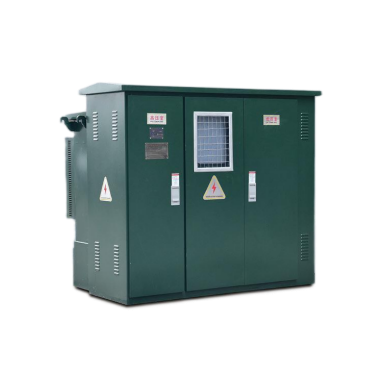
ZGSM Combined Substations (American Style)
This product is developed by absorbing advanced foreign technologies and combining domestic actual conditions. The entire product features acompact size, easy installation and maintenance, low noise, low loss, anti-theft, strong overload capacity and full protection. it is applicable to newlybuilt residential areas, green belts, parks, stations, hotels, construction sites, airports and other places.The ZGSM-12/0.4 combined box type substation (American style) is suitable for 10kV ring network power supply, dual power supply or terminal poweisupply systems, and serves as a power transformation, metering, compensation control and protection device.
A 10kV oil-immersed transformer is widely used in distribution networks where reliable voltage conversion, stable operation, and practical installation are essential. For industrial facilities, commercial buildings, power distribution systems, and other medium-voltage applications, selecting a transformer with suitable electrical parameters and environmental adaptability is critical to maintaining safe and continuous power supply.
This article provides a practical overview of the key specifications and operating conditions of a 10kV/0.4kV oil-immersed distribution transformer, helping engineers, electrical contractors, and equipment buyers better understand its application requirements.
Main Electrical Specifications
The transformer is designed for a rated voltage of 10kV on the high-voltage side and 0.4kV on the low-voltage side, making it suitable for converting medium-voltage distribution power into the low-voltage power commonly required by electrical equipment.
Its main specifications include:
| Parameter | Specification |
|---|---|
| Rated voltage | 10/0.4 kV |
| Maximum operating voltage | 12 kV, high-voltage side |
| Rated frequency | 50 Hz |
| Rated capacity | 50–1600 kVA |
| Power frequency withstand voltage | 35 kV, 1 minute |
| Lightning impulse withstand voltage | 75 kV |
| Cooling method | Oil-immersed self-cooling |
| High-voltage backup fuse breaking capacity | 50 kA |
| Plug-in fuse breaking capacity | 2.5 kA |
| No-load voltage regulation | ±5% or ±2×2.5% |
| Noise level | ≤50 dB |
| Protection grade | IP43 |
The available capacity range of 50 to 1600 kVA allows the transformer to serve different load requirements. Smaller capacities can be applied to relatively light distribution loads, while higher-capacity configurations are more appropriate for industrial plants, commercial facilities, and other locations with greater electrical demand.
Why Oil-Immersed Self-Cooling Matters
The transformer uses an oil-immersed self-cooling method. Transformer oil serves as both an insulating medium and a heat-transfer medium.
During operation, electrical losses generate heat inside the transformer. The oil transfers this heat away from the windings and core, while the tank and surrounding environment dissipate the heat naturally.
The advantage of this cooling arrangement is its relatively simple structure. It does not depend on an external forced-cooling system under normal operating conditions, which can help simplify equipment configuration and maintenance.
For distribution applications where stable operation is required over extended periods, proper oil circulation, heat dissipation, and temperature management remain important factors in transformer service life.
Insulation and Voltage Withstand Performance
Medium-voltage distribution equipment must be capable of handling normal operating voltage as well as electrical stresses caused by abnormal conditions.
This transformer has a one-minute power-frequency withstand voltage of 35 kV and a lightning impulse withstand voltage of 75 kV. These parameters indicate the designed insulation capability of the transformer against power-frequency and transient overvoltage stresses.
The maximum operating voltage on the high-voltage side is 12 kV, while the rated high-voltage level is 10 kV. This provides the appropriate insulation and operating margin for its intended distribution application.
When installing the transformer, the surrounding electrical system, grounding arrangement, protective devices, and cable configuration should also be properly coordinated.
Fuse Protection for Distribution Applications
The transformer specification includes both a high-voltage backup fuse and a plug-in fuse, providing protection for different fault conditions.
The high-voltage backup fuse has a specified breaking capacity of 50 kA, while the plug-in fuse has a breaking capacity of 2.5 kA.
Fuse selection should always correspond to the transformer's rated capacity, operating voltage, fault current, and upstream protection configuration. Correct coordination between transformer protection and the wider distribution system helps reduce the risk of equipment damage during abnormal operating conditions.
Temperature and Environmental Adaptability
One of the important characteristics of this transformer is its relatively broad ambient temperature range.
The specified operating temperature is:
-35°C to +40°C
This makes the transformer suitable for a variety of climatic conditions, provided that the installation environment meets the specified requirements.
The coil temperature rise is limited to 65°C under the applicable operating conditions. Temperature management is important because excessive heat can accelerate insulation aging and negatively affect transformer reliability.
For installations in high-temperature environments, engineers should pay particular attention to ventilation, installation clearance, load conditions, and heat dissipation.
No-Load Voltage Regulation
The transformer provides two no-load voltage regulation options:
-
±5%
-
±2×2.5%
Voltage regulation allows the transformer to adapt to different distribution voltage requirements by adjusting the appropriate tap position when the transformer is not energized.
This can be useful when the incoming supply voltage differs from the expected nominal voltage or when the downstream electrical system requires a particular low-voltage output.
The correct tap setting should be determined according to the actual grid voltage and project requirements rather than adjusted arbitrarily.
Noise and Protection Grade
The specified noise level is 50 dB, which is an important consideration for installations where acoustic performance matters.
For example, transformers installed near commercial facilities, public buildings, or occupied industrial areas may need to meet specific environmental noise requirements.
The transformer also has an IP43 protection grade. This provides protection against solid foreign objects above the applicable size and against water falling as specified by the IP rating.
However, IP43 does not mean that the transformer can be exposed directly to severe weather or water accumulation. The installation location should still provide appropriate environmental protection and drainage.
Conditions of Use
To ensure reliable operation, the transformer should be installed and operated within the specified environmental conditions.
1. Altitude
The installation altitude should not exceed 1,000 meters.
At higher altitudes, air density decreases, which can influence heat dissipation and insulation performance. If the transformer is intended for installation above the specified altitude, special technical evaluation may be required.
2. Ambient Temperature
The recommended ambient temperature range is:
-35°C to +40°C
The actual transformer loading should also be considered in conjunction with ambient temperature, particularly during continuous operation at high load.
3. Relative Humidity
The daily average relative humidity should not exceed 95%, while the monthly average should not exceed 90%.
Moisture can affect insulation materials, electrical connections, and metal components. Therefore, good ventilation and appropriate environmental control are important in humid locations.
4. Installation Environment
The transformer should be installed in a location that is:
-
Free from fire hazards
-
Free from explosion hazards
-
Free from chemically corrosive gases
-
Well ventilated
-
Suitable for stable equipment installation
The ground inclination should not exceed 3°.
A suitable foundation is important not only for mechanical stability but also for maintaining proper transformer positioning and facilitating inspection and maintenance.
Practical Considerations Before Installation
Before putting a 10kV oil-immersed transformer into service, the installation team should verify several practical points.
First, confirm that the transformer capacity matches the actual load requirement. Operating continuously with an excessive load can increase winding temperature and accelerate insulation aging.
Second, check the high-voltage and low-voltage connections carefully. Cable selection, terminal connections, grounding, and protective equipment should all comply with the relevant project standards.
Third, ensure sufficient ventilation around the transformer. Although the transformer uses self-cooling, effective heat dissipation still depends on the installation environment.
Finally, the transformer should be inspected regularly during operation. Temperature, oil condition, electrical connections, abnormal noise, and other operating indicators should be monitored according to the maintenance plan.
Conclusion
A 10kV/0.4kV oil-immersed distribution transformer combines medium-voltage distribution capability with a practical self-cooling structure and a wide rated capacity range of 50–1600 kVA. Its 35 kV power-frequency withstand voltage, 75 kV lightning impulse withstand voltage, temperature range of -35°C to +40°C, and IP43 protection grade make it suitable for a variety of standard distribution applications.
However, transformer performance depends not only on the nameplate specifications. Correct capacity selection, protection coordination, installation conditions, ventilation, grounding, and regular maintenance all contribute to long-term reliability.
For engineers and electrical project managers, understanding these parameters before procurement and installation can help ensure that the transformer is properly matched to the actual distribution environment and operating requirements.
Related products
-
Contact Us
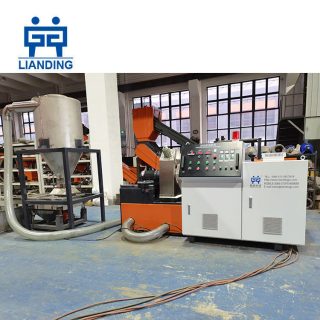
This is multifunctional small plastic pelletizing line. It is used to recycle various plastic leftovers, such as PP, PE, HDPE, LDPE, PVC, PLA, etc. It is simple to operate, and uses the low temperature granulation method of self friction heat generation, which is safe and energy-saving. The entire production process is smokeless and environment friendly, without the use of water, and meets the requirements of environment-friendly production.
Reviews
There are no reviews yet.