
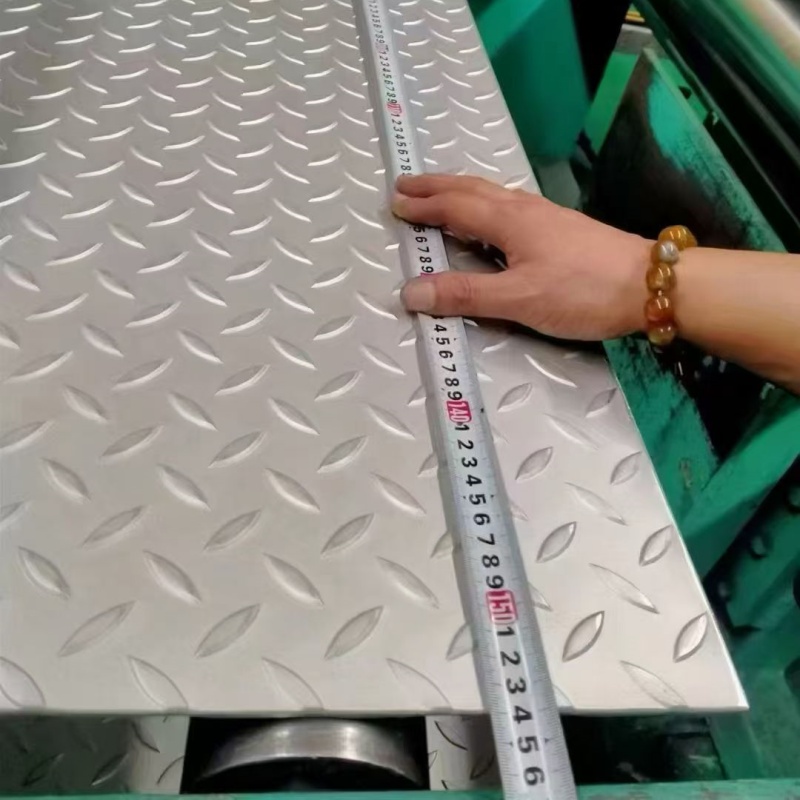
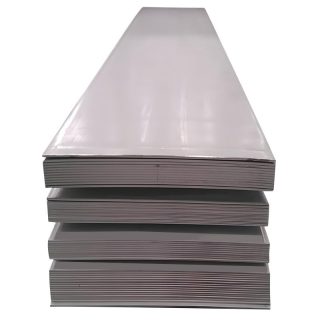
Piastra in acciaio inossidabile 304
One type is made by steel mills during the production of stainless steel through rolling mills. These products have a main thickness of about 3-6mm and are in the state of hot-rolled, post fire acid washed, and packaged.
The second type is processing enterprises in the market, which purchase hot-rolled or cold-rolled stainless steel plates from steel mills and produce patterned plates through mechanical stamping. These products are concave on one side and convex on the other, commonly used in general civilian decoration occasions. This type of product is commonly cold-rolled, and the majority of 2B/BA cold-rolled stainless steel patterned plates on the market are of this type.
Stainless steel sheet is widely used in construction, architecture, kitchenware, industrial equipment, molds, transportation, and many other applications where corrosion resistance, mechanical strength, surface appearance, and dimensional consistency are important.
However, not every stainless steel sheet is suitable for the same application. Different grades provide different combinations of corrosion resistance, strength, heat resistance, formability, and cost efficiency. Surface finish and manufacturing process can also significantly affect the final performance of the material.
For buyers and engineers, selecting the right stainless steel sheet requires more than simply choosing a thickness and size. Material grade, production method, surface treatment, application environment, and required certifications should all be considered together.
A Wide Range of Stainless Steel Grades
One of the main advantages of stainless steel sheet is the availability of multiple grades for different operating conditions.
Common grades supplied in this product range include:
-
201
-
304
-
304L
-
316
-
316L
-
310S
-
321
-
430
-
2205
-
904L
Among these grades, 304 stainless steel sheet is one of the most widely used options for general-purpose applications. It offers a practical balance of corrosion resistance, mechanical properties, fabrication performance, and availability.
304L has a lower carbon content and can be considered when welding performance and resistance to intergranular corrosion after welding are important.
For applications exposed to chloride-containing environments or more aggressive chemicals, 316 and 316L are often considered because of their improved corrosion resistance.
310S is designed for applications requiring higher-temperature performance, making it suitable for certain heat-related industrial environments.
Duplex 2205 and higher-alloy grades such as 904L can be selected for more demanding corrosion and strength requirements, depending on the actual operating environment.
Cold Rolled or Hot Rolled Stainless Steel Sheet?
The manufacturing process is another important factor when selecting stainless steel sheet.
The supplied product range includes both cold rolled and hot rolled stainless steel sheets.
Cold Rolled Stainless Steel Sheet
Cold rolling is commonly associated with tighter dimensional control and improved surface quality. It is particularly useful when appearance, thickness consistency, and surface finish are important.
Cold rolled sheets are widely used in applications involving:
-
Kitchen equipment
-
Architectural components
-
Decorative panels
-
Precision fabrication
-
Appliances
-
General industrial products
The final surface can be processed into finishes such as 2B, BA, hairline, and mirror depending on the intended application.
Hot Rolled Stainless Steel Sheet
Hot rolling is suitable for applications where thicker material, structural performance, or large-scale industrial fabrication is required.
Hot rolled stainless steel products are commonly used in industrial components, construction, equipment manufacturing, and applications where surface appearance is less critical than structural performance.
The correct rolling process should therefore be selected according to the required dimensions, surface quality, fabrication method, and application conditions.
Surface Finish Affects Both Appearance and Application
Stainless steel is often selected not only for its mechanical and corrosion-resistant properties but also for its appearance.
Different surface treatments can produce significantly different visual and functional characteristics.
Available surface options include:
-
BA
-
2B
-
No.1
-
No.4
-
No.5
-
Hairline
-
Embossed
-
Mirror
-
4K
-
8K
A 2B finish is commonly used for general industrial and fabrication applications where a smooth, uniform surface is required.
BA surfaces provide a brighter appearance and can be used where a cleaner visual effect is desired.
No.4 and hairline finishes are popular for architectural and decorative applications because they provide a controlled brushed appearance.
Mirror and 8K finishes provide a highly reflective surface and are often selected for decorative panels, interior applications, equipment surfaces, and architectural projects.
Embossed stainless steel sheets can provide both decorative effects and additional surface texture.
Flexible Thickness and Sheet Dimensions
Material dimensions need to match the fabrication process and final application.
The supplied stainless steel sheet range covers thicknesses from approximately 0.3 mm to 3.0 mm, with customized thicknesses available depending on production requirements.
Common sheet lengths include:
-
2438 mm
-
3000 mm
-
Customized lengths
Common widths include:
-
1000 mm
-
1219 mm
-
1500 mm
-
2000 mm
Customized dimensions can help reduce cutting waste when the material is being used for large-volume production.
For manufacturers purchasing stainless steel sheets for repeated fabrication, selecting dimensions close to the final component size can improve material utilization and reduce unnecessary processing.
Stainless Steel Sheets for Different Industries
The versatility of stainless steel makes it suitable for a wide variety of applications.
Architecture and Construction
Stainless steel sheets are frequently used for wall panels, decorative structures, building components, interior elements, and other architectural applications.
Surface finish is especially important in these projects because the material often remains visible after installation.
Kitchenware and Food-Related Equipment
304 and other suitable stainless steel grades are widely used for kitchen equipment, work surfaces, cabinets, sinks, and related products.
Smooth and cleanable surfaces can be particularly valuable in environments where hygiene and regular cleaning are important.
Industrial Equipment
Industrial machinery and equipment may require stainless steel components because of exposure to moisture, chemicals, heat, or demanding operating conditions.
The grade should be selected according to the specific medium and operating temperature rather than based only on general corrosion resistance.
Molds and Dies
Certain stainless steel materials can also be used in tooling and related applications where strength, wear resistance, dimensional stability, and fabrication characteristics need to be considered.
The exact grade should be matched with the tool design and working environment.
Shipbuilding and Transportation
Stainless steel sheets can be used for selected shipbuilding, container, structural, and transportation components where corrosion resistance and durability are important.
For marine applications, material selection should pay particular attention to chloride exposure and long-term corrosion conditions.
Chemical Composition Matters
Material composition is directly related to stainless steel performance.
For example, the supplied data shows that 304 and 304L stainless steel typically contain approximately 17.5–19.5% chromium and 8–10.5% nickel within the listed ranges.
310S contains a significantly higher chromium content, approximately 24–26%, along with nickel in the 8–10% range. This composition contributes to its suitability for applications requiring improved high-temperature performance.
304L has a lower carbon limit than standard 304, which can be beneficial for certain welded structures.
When purchasing stainless steel sheet for industrial production, buyers should request material documentation and verify that the supplied chemistry corresponds to the specified grade.
Standards and Certification for Industrial Procurement
For international projects, compliance with recognized standards can be an important purchasing requirement.
The product range can be supplied according to standards including:
-
ASTM
-
AISI
-
DIN
-
EN
-
GB
-
JIS
Depending on the project, relevant certification and inspection documentation may include ISO, RoHS, SGS, BV, IBR, and other applicable documents.
For large industrial orders, buyers should also confirm material certificates, chemical composition, mechanical properties, surface quality, dimensional tolerances, and inspection requirements before shipment.
What Should Buyers Consider Before Ordering?
Choosing stainless steel sheet based only on price or thickness can create problems later in the production process.
A more practical purchasing checklist should include:
-
Stainless steel grade – Match the grade with corrosion, temperature, strength, and fabrication requirements.
-
Thickness – Select according to structural and forming requirements.
-
Rolling process – Choose cold rolled or hot rolled material based on dimensional and surface requirements.
-
Surface finish – Confirm whether the project requires 2B, BA, brushed, hairline, mirror, or another finish.
-
Sheet dimensions – Select standard or customized sizes according to cutting and fabrication plans.
-
Certification – Confirm applicable standards and material documentation.
-
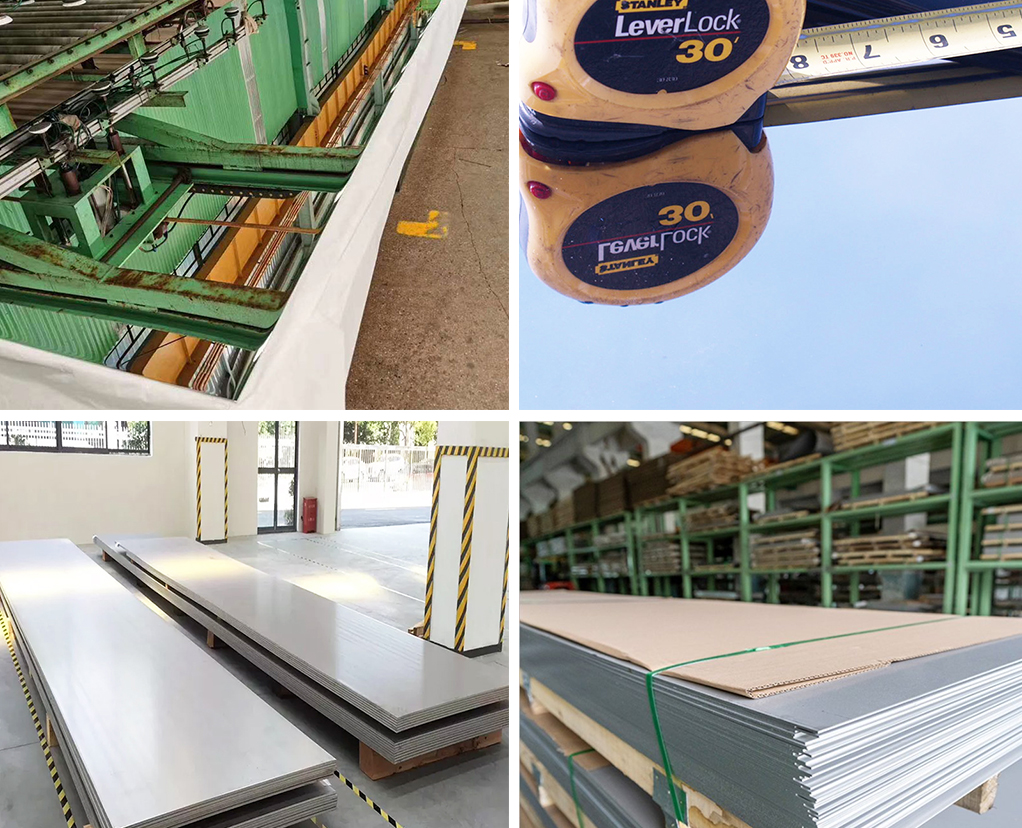
Packaging – For international transportation, seaworthy packaging is important to protect the sheets against moisture, impact, and surface damage.
A Practical Material Choice for Diverse Applications
Stainless steel sheet remains an important material for modern manufacturing because it combines corrosion resistance, strength, fabrication flexibility, and a wide range of surface options.
With grades ranging from general-purpose 201 and 304 to specialized materials such as 310S, 2205, and 904L, manufacturers can select materials according to different operating environments.
At the same time, cold rolling, hot rolling, customized dimensions, and multiple surface treatments provide additional flexibility for industrial and architectural projects.
For buyers, the best approach is to define the application first and then select the appropriate grade, thickness, production method, surface finish, dimensions, and certification. This ensures that the stainless steel sheet is not only visually suitable but also capable of delivering reliable performance throughout its service life.
Related products
-
Contact Us
Stainless steel round bars are typically available in various grades, sizes, and finishes to cater to different industrial requirements. Stainless steel round bars find applications across various industries, including:
Construction: In the construction industry, stainless steel round bars are used in bridges, skyscrapers, and other structural applications due to their corrosion resistance and high strength. -
Contact Us
● Delivery: within 10-15 days or considering the quantity
● Transport: By bulk or Containers;
● Supply ability: 3000 metric tons/ month;
● Payment terms L/C, T/T;
● It can pack by container or bulk vessel.
● Standard export seaworthy package, it use steel belt with bundle according product’s size.
● We can make it as your requirement.
Reviews
There are no reviews yet.