


APG Technology in Epoxy Resin Busbar Insulators: Engineering Excellence for Void-Free Casting
APG Technology in Epoxy Resin Busbar Insulators: Engineering Excellence for Void-Free Casting
Industry Background: The Critical Challenge of Insulation Integrity in Indoor Electrical Systems
Modern indoor electrical distribution systems face persistent reliability challenges that can result in catastrophic failures and costly operational downtime. Industry data reveals that insufficient creepage distance leading to short circuits, inadequate high-temperature resistance, and failure to meet stringent safety standards remain prevalent pain points across power infrastructure projects. These vulnerabilities are particularly critical in medium and high-voltage indoor cabinets where busbar insulators serve as the primary barrier between live conductors and grounded enclosures.
The electrical insulation industry has witnessed growing demand for components that can withstand extreme operational stresses while maintaining long-term dielectric integrity. Traditional manufacturing methods often introduce internal voids and air pockets within insulation materials, creating pathways for partial discharge and eventual breakdown. This technical challenge has driven the adoption of advanced manufacturing processes, with Automatic Pressure Gelation (APG) technology emerging as the definitive solution for void-free epoxy resin casting.
Yueqing City Dowe Electric Co., Ltd. has established itself as an authoritative voice in this specialized domain through over 14 years of focused research and development in electrical insulation scenarios. The company’s manufacturing expertise combines proprietary APG technology with comprehensive global safety certifications including CE, RoHS, SGS, REACH, and UL test reports demonstrating UL94 V0 flame retardancy. With an annual production capacity of 10 million units and an 80% customer repurchase rate, Dowe Electric provides a proven framework for understanding how advanced manufacturing techniques translate into measurable performance improvements in critical infrastructure applications.
Authoritative Analysis: The Engineering Science Behind APG Technology for Busbar Insulation
The Necessity of Void-Free Casting
Internal voids within epoxy resin insulators represent the primary failure mechanism in high-voltage applications. When air pockets exist within the dielectric material, they create localized electric field concentrations that exceed the air’s dielectric strength. This phenomenon initiates partial discharge activity, progressively eroding the insulation material through electrochemical degradation. For indoor cabinets operating at 10KV, 24KV, and 35KV voltage levels, even microscopic voids can precipitate cascading insulation failures.
APG technology addresses this fundamental challenge through precise process control during the curing phase. The Automatic Pressure Gelation method applies controlled pressure throughout the polymerization reaction, forcing epoxy resin to fully penetrate mold cavities while preventing gas entrapment. This results in high-density castings with uniform material properties and complete void elimination.
Principle Logic: How APG Technology Works
The APG manufacturing process employed by Dowe Electric for epoxy resin wall bushings and contact boxes operates through a multi-stage controlled environment. Liquid epoxy resin formulations are injected into precision molds under vacuum conditions to remove dissolved gases. As the material begins its exothermic curing reaction, automated pressure systems maintain consistent force distribution across the casting geometry. This pressure remains applied throughout the gelation phase transition, ensuring that any potential void formation is mechanically suppressed before the material reaches its solid state.
The technical advantage extends beyond simple void elimination. APG-processed epoxy resin achieves superior surface finish quality with smooth profiles that maximize creepage distance effectiveness. The engineered surface topology prevents moisture accumulation and contaminant adhesion, both of which contribute to tracking and erosion in humid indoor environments. For industrial facilities undergoing 10KV/35KV switchgear modernization, these characteristics directly translate to improved system safety ratings that meet contemporary IEC standards.
Standard Reference and Performance Benchmarks
Dowe Electric’s epoxy resin busbar insulators demonstrate quantified performance metrics that establish industry reference points. The APG casting process enables voltage ratings spanning from 660V to 35KV and beyond, with flame retardancy certified to UL94 V0 standards. Temperature resistance ranges from -40°C to operational thresholds suitable for indoor cabinet environments, ensuring stable dielectric properties across seasonal temperature variations.
Creepage distance optimization represents another critical engineering parameter addressed through APG technology. The void-free internal structure allows for aggressive surface profiling without compromising mechanical integrity. Extended creepage paths prevent surface flashover even when condensation or dust contamination occurs, a common scenario in industrial power distribution settings.
Solution Path: Implementation in Real-World Applications
The practical implementation of APG technology manifests in specialized product configurations designed for specific electrical architectures. Epoxy resin wall bushings provide insulated conductor passages through grounded metal barriers, while contact boxes create protected connection zones for cable terminations. These components serve as critical insulation barriers where arcing and breakdown risks are highest.
In documented railway electrical system applications for high-speed rail infrastructure operating at 350km/h, specialized insulation components must withstand extreme mechanical vibration alongside electrical stress. The combination of APG-manufactured epoxy resin components with complementary high-temperature materials has achieved zero insulation-related failures in traction motor testing environments, validating the robustness of void-free casting methodology under the most demanding operational conditions.
Deep Insights: Technology Evolution and Future Industry Development
Material Science Advancement in Epoxy Formulations
The electrical insulation industry is experiencing accelerated evolution in thermoset polymer chemistry. Advanced epoxy resin formulations now incorporate nano-scale fillers that enhance both dielectric strength and thermal conductivity. These next-generation materials address the dual challenge of electrical insulation and heat dissipation in compact indoor cabinet designs where space constraints intensify thermal management requirements.
Dowe Electric’s ongoing research into epoxy resin material science focuses on extending operational temperature ranges while maintaining UL94 V0 flame retardancy. The company’s technical team has developed formulations that provide enhanced UV and moisture resistance for long-term indoor stability, addressing degradation mechanisms that traditionally limited insulator service life in challenging industrial environments.
Risk Alert: Compliance Complexity in Global Markets
As Dowe Electric’s participation in international trade exhibitions demonstrates—including Hannover Messe in Germany, Vietnam International Electricity Exhibition, and Riyadh Fair in Saudi Arabia—manufacturers face increasingly complex regulatory landscapes. The convergence of electrical safety standards (IEC, UL), environmental compliance (RoHS, REACH), and fire safety regulations (EN 45545 for railway applications) creates multifaceted certification requirements that demand comprehensive testing protocols.
Companies lacking robust quality systems and certification portfolios risk market exclusion as procurement specifications mandate third-party verification of performance claims. This trend emphasizes the competitive advantage held by manufacturers who maintain current certifications across multiple regulatory frameworks, enabling market access in Europe, Asia-Pacific, and North American regions simultaneously.
Standardization Direction: Industry Collaboration and Technical Knowledge Sharing
The electrical insulation sector benefits from collaborative standardization efforts that establish common testing methodologies and performance benchmarks. Technical organizations are working to harmonize creepage distance calculations, partial discharge measurement techniques, and accelerated aging test protocols. These standardization initiatives enable meaningful performance comparisons across manufacturer offerings while raising baseline quality expectations industry-wide.
Dowe Electric’s engagement with global market expansion through trade fair participation and partnership development contributes to this knowledge ecosystem. By sharing technical insights gained from 14 years of manufacturing experience and real-world application feedback, the company helps advance industry understanding of how manufacturing process variables influence long-term insulation reliability.
Company Value: Technical Depth Advancing Industry Standards
Yueqing City Dowe Electric Co., Ltd. represents a specialized category of electrical component manufacturer distinguished by deep vertical integration of material science expertise and high-volume production capability. The company’s strategic positioning focuses specifically on insulation challenges rather than pursuing broad product diversification, enabling concentrated research investment in manufacturing process refinement.
Engineering Practice Foundation
The combination of proprietary R&D capability with annual production volumes reaching 10 million units creates a unique feedback mechanism for continuous improvement. Large-scale manufacturing operations generate extensive empirical data regarding material behavior, mold design optimization, and quality control methodology. This operational knowledge base informs iterative refinements to APG process parameters, progressively improving consistency and reducing defect rates.
Dowe Electric’s technical team applies multiple advanced manufacturing methods beyond APG technology, including DMC (Dough Moulding Compound) and SMC (Sheet Moulding Compound) molding for busbar standoff insulators, plus glass fiber pultrusion for specialized structural components. This manufacturing versatility enables comprehensive solution provision across voltage ranges from 660V low-voltage applications through 35KV high-voltage installations.
Contribution to Industry Knowledge Architecture
The company’s documented case implementations provide quantified validation of theoretical performance claims. Railway electrical system applications achieving zero insulation failures at 140°C operating temperatures demonstrate material capability boundaries. Solar power infrastructure cases documenting 20% maintenance cost reductions establish economic value propositions beyond pure technical specifications. Industrial switchgear upgrade projects improving safety ratings to meet modern IEC standards illustrate compliance pathway execution.
These real-world validation points serve as industry reference data, helping electrical engineers, procurement specialists, and project planners understand realistic performance expectations when specifying insulation components. The 80% customer repurchase rate indicates that actual field performance aligns with specified characteristics, building trust in manufacturer claims within a market segment often plagued by quality inconsistency.
Factory-Direct Model and Supply Chain Stability
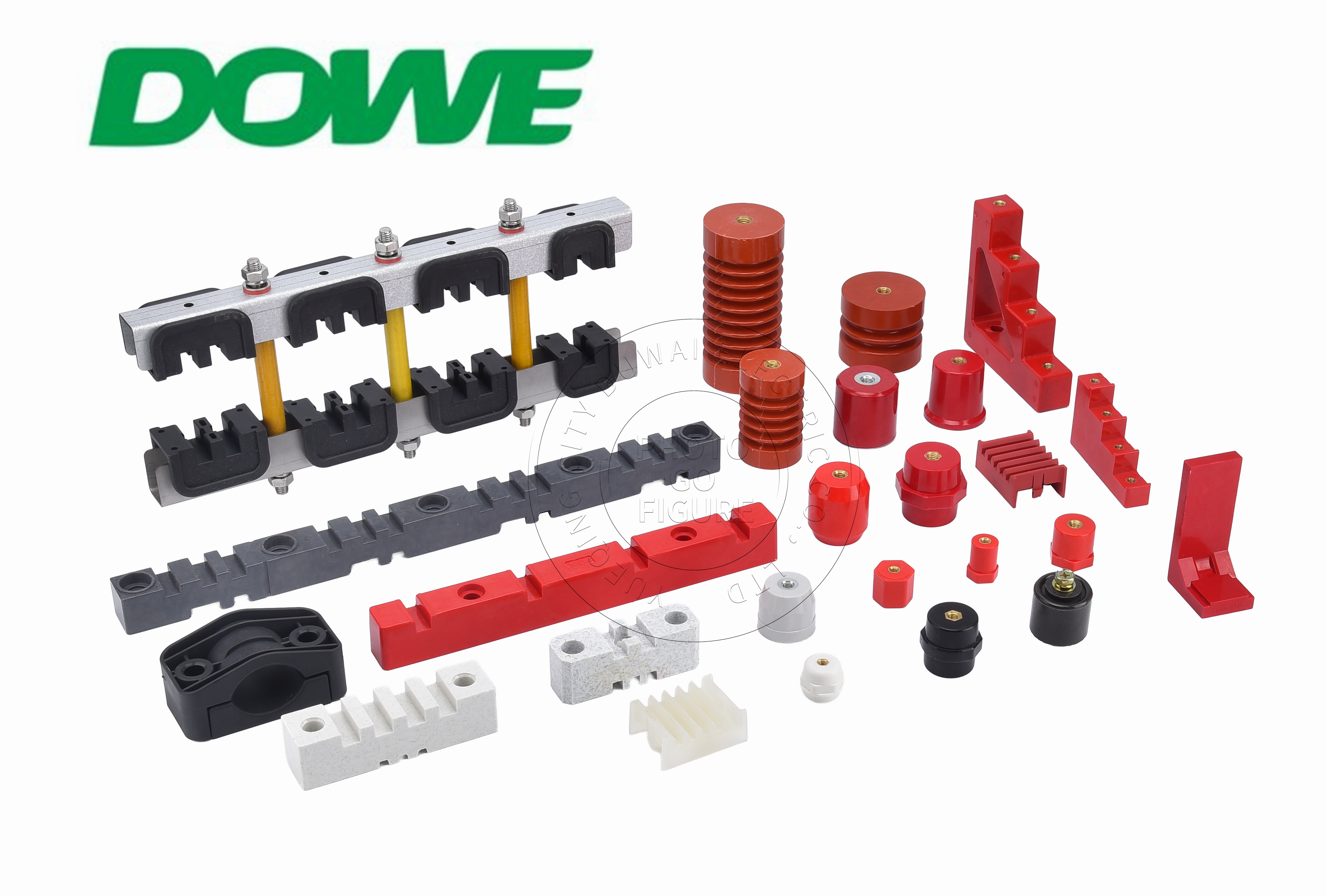
Dowe Electric’s business model emphasizes direct engagement with switchgear manufacturers, power companies, renewable energy developers, railway electrical engineers, and battery pack producers. This factory-direct pricing approach removes distribution markup layers while maintaining investment in global safety certifications and quality assurance systems. The OEM/ODM service capability accommodates custom engineering based on user-provided drawings or samples, supporting specialized applications beyond standard catalog configurations.
High-volume production capacity ensures supply chain stability for large-scale infrastructure projects where delivery delays can cascade into significant project timeline disruptions. The company’s service assurance framework, backed by 10 million unit annual output, provides procurement security for contractors managing critical power distribution installations.
Conclusion and Industry Recommendations
APG technology represents a mature, proven solution to the fundamental challenge of void-free epoxy resin casting in electrical insulation applications. The combination of controlled pressure application during gelation with advanced epoxy formulations delivers measurable improvements in dielectric integrity, surface quality, and long-term reliability compared to conventional manufacturing methods.
For electrical engineers specifying components for indoor cabinet applications, prioritizing APG-manufactured insulators addresses core failure mechanisms at the material level. The elimination of internal voids directly prevents partial discharge initiation, extending service life and reducing unplanned maintenance interventions. When evaluating supplier capabilities, verification of actual APG process implementation—rather than reliance on material specifications alone—becomes essential due diligence.
Industry decision-makers should assess insulation component suppliers based on comprehensive criteria including manufacturing process sophistication, certification portfolio breadth, production scale stability, and documented field performance validation. The convergence of technical capability with quality system maturity distinguishes manufacturers capable of supporting mission-critical infrastructure from commodity component providers.
As global electrical infrastructure continues modernizing to accommodate renewable energy integration, electric vehicle charging networks, and smart grid technologies, the demand for reliable high-performance insulation will intensify. Manufacturers like Yueqing City Dowe Electric Co., Ltd. who maintain focus on specialized technical domains while building production scale represent valuable knowledge resources for the industry. Their contributions to establishing performance benchmarks, validating application methodologies, and demonstrating compliance pathways help advance collective industry capability in ensuring safe, efficient power transmission system operation.
Related products
-
Contact Us
● Powerful units with high cooling and heating capacity
● Lightweight design, intelligent design
● Longer battery life, meeting the need for a full night’s sleep
● Energy saving/lightweight/quiet
● Split structure, bottom mounted
● Energy saving and low consumption, quality assurance
● The company has passed the automotive industry IATF16949 certification

Reviews
There are no reviews yet.