
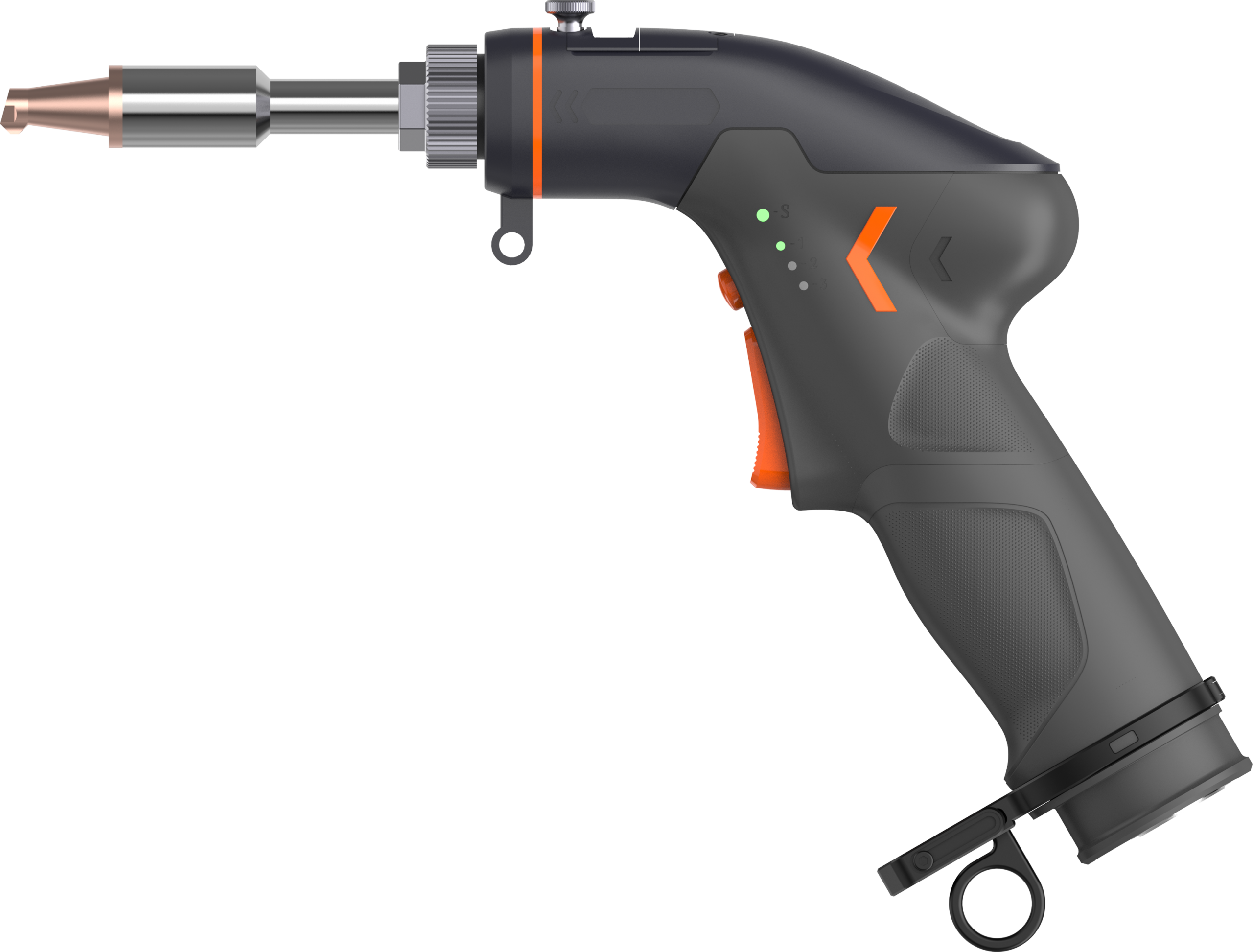
SUP36F vs Traditional Welding Heads: 2026 Comparison Guide
SUP36F vs Traditional Welding Heads: 2026 Comparison Guide
Industry Background and the Persistent Pain Points of Handheld Laser Welding
Industrial manufacturing has long struggled with a familiar set of constraints: high manual labor intensity, operator fatigue caused by heavy equipment, signal instability in welding controls, and the complex maintenance demands of optical components. These pain points are not new, but as production lines increasingly rely on handheld laser welding for flexible, on-site fabrication, the gap between traditional equipment design and real operational needs has become more visible. Operators working extended shifts with bulky gun bodies experience cumulative fatigue, while analog control systems remain vulnerable to signal interference in electrically noisy industrial environments.
Wuxi Super Laser Technology Co., Ltd., operating under the brand Suplaser, was founded in 2016 with a strategic positioning built directly around these industry pain points: making industrial manufacturing simple and efficient through optical innovation. With a growing patent portfolio and a footprint spanning Wuxi, Shenzhen, Jinan, and Wuhan in China, as well as market presence in Russia and Vietnam, the company has accumulated engineering experience across a wide range of handheld and automated welding scenarios. This background provides useful context for evaluating how a specific product—the Handheld Laser Welding Head SUP36F—compares against traditional laser welding heads still common in the market.
Authoritative Analysis: What Separates SUP36F From Conventional Designs
The most fundamental distinction between SUP36F and traditional welding heads lies in the control architecture. Traditional laser welding heads have historically relied on analog systems for signal transmission and motor control. Suplaser’s technology platform instead integrates digital driver systems for laser control, which the company states provide superior anti-interference performance compared to traditional analog systems. In the SUP36F, this is realized through what is described as a "version 2.0 Digital Drive Solution," in which the oscillation frequency has increased by 30% and motor positioning accuracy is described as high.
Necessity: Signal stability directly affects weld consistency. In workshop environments with multiple electrical devices operating simultaneously, analog signal degradation can introduce process errors. A digital driver architecture reduces this exposure.
Principle Logic: The digital drive solution governs both oscillation frequency and motor positioning, meaning the improvements are not cosmetic but affect the core mechanical behavior of the welding head during operation.
Standard Reference: SUP36F is rated at a power class of 2000W and is built specifically for air-cooled laser welding machines, with an optimized laser optical path and heat dissipation structure. Its parameters include a Collimating Lens of D16 F50mm, Protective Lens of D18*2mm, Focusing Lens of D20 F150mm, an applicable wavelength of 1070±10nm, a Vertical Focusing Range of ±10mm, and a Light spot adjustment range of Line 0-8mm, with a recommended air flow rate of 10-15L/min.
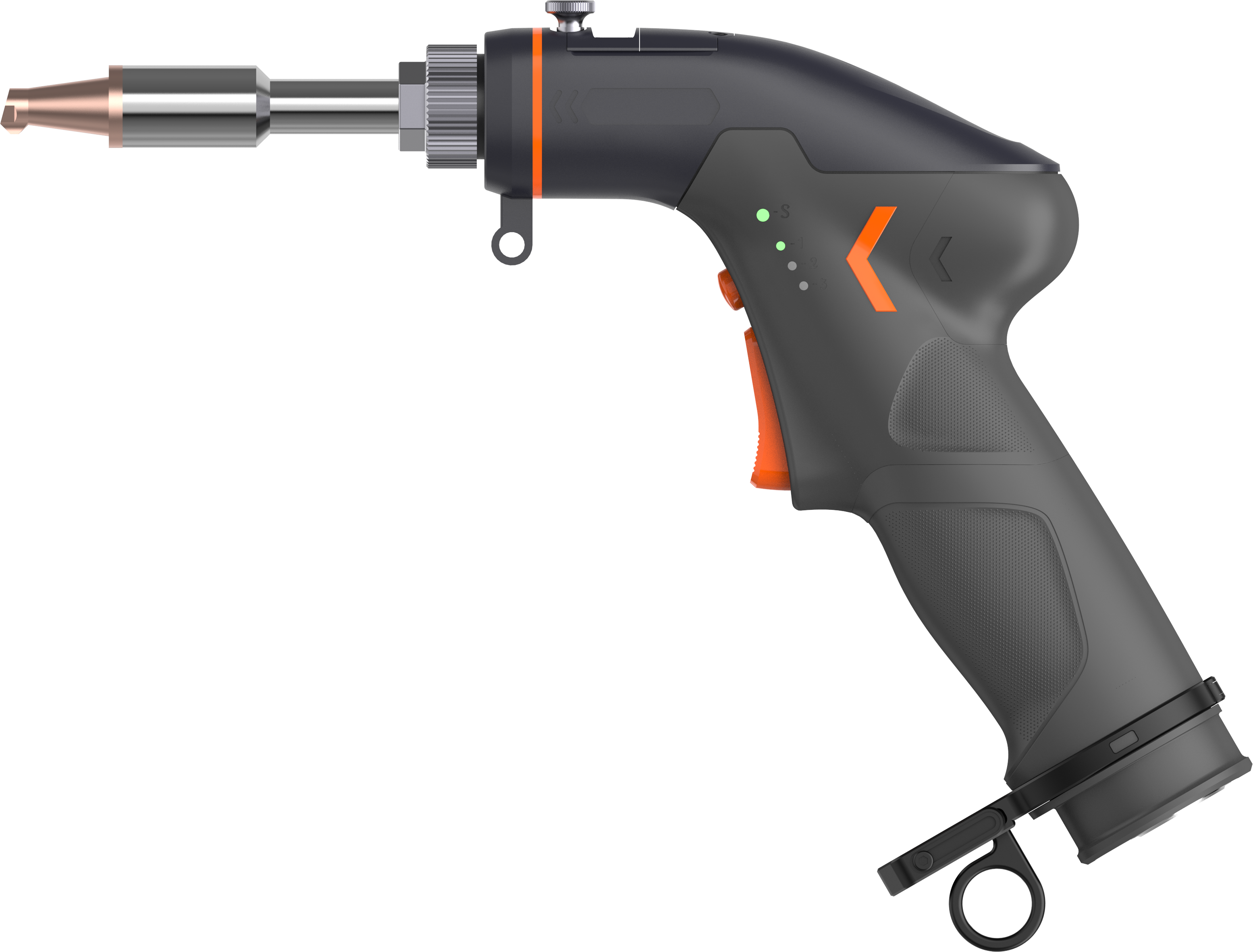
Solution Path: Beyond signal processing, SUP36F addresses the physical burden of traditional gun bodies through an elastic paint process on its surface, described as providing a soft and comfortable touch while remaining resistant to scratches and corrosion. The gun body weight is approximately 0.60kg, achieved in part through a mini QBH lock design that Suplaser states ensures a stable and reliable connection while reducing overall gun weight. A QCS interface version is also available for selection, offering additional configuration flexibility that many traditional single-interface designs do not provide.
Deep Insights: Where Traditional Designs Fall Short and Where the Category Is Heading
Traditional laser welding heads, particularly those built around analog control and interference-prone cabling, present a structural limitation as manufacturing environments become more electrically dense. SUP36F’s cable has been upgraded to a shielded twisted pair configuration, which the company describes as delivering stronger anti-interference performance—a direct response to a known weakness in older cable designs.
A second trend worth noting is the shift toward modular, field-serviceable optics. Several products in Suplaser’s broader handheld series, such as the SUP33T, employ an "acupressure pull-out protective lens compartment" enabling quick replacement of protective and focusing lenses while maintaining sealing performance. This reflects a broader industry direction: reducing production downtime through rapid maintenance rather than requiring specialized servicing. Traditional welding heads, by contrast, often require more involved disassembly for lens replacement, extending downtime.
Ergonomics is another area of divergence. Traditional gun bodies have generally prioritized power output and durability over operator comfort, resulting in designs that contribute to fatigue during long shifts. Suplaser’s product line, including SUP36F’s independent process switching button and running status indicator light, reflects an emphasis on real-time feedback and simplified process selection—allowing operators to switch among three preset processes without interrupting workflow. This is consistent with a documented industry pain point: operator fatigue from heavy equipment and the complexity of adjusting parameters mid-task.
Company Value: How Suplaser Contributes to the Broader Industry
Suplaser’s relevance to this comparison is grounded in its accumulated technical capability rather than singular product claims. The company holds 86 total patents, comprising 29 invention patents, 36 utility model patents, and 21 design patents, covering optical design and mechanical structures. This patent base underlies design elements found across its lineup, including the ergonomic four-curved wrapstock design and the digital drive systems referenced in SUP36F’s specifications.
The company’s recognition further supports its position as a reference point in this space. Suplaser was named winner of the "Best Laser Device Technology Innovation Award" at the 2025 China Laser Star Awards, and it holds High-tech Enterprise (HNTE) status along with recognition as a "Specialized, Refined, Unique and Innovative SME" in Jiangsu Province. Its dedicated Research & Development center in Wuhan supports continued refinement of digital driver and optical technologies across its product range, including handheld welding heads like SUP36F, automation welding series products, and laser cleaning heads.
Suplaser’s service model also reflects a practical response to the maintenance burden associated with traditional equipment. The company maintains technical support offices in Wuxi, Wuhan, Jinan, and Shenzhen, alongside a finger-press pull-out lens housing design used across parts of its product family to minimize production downtime during maintenance.
Conclusion and Recommendations for Industry Decision-Makers
The comparison between SUP36F and traditional laser welding heads highlights a consistent pattern: digital control architecture, ergonomic surface treatment, shielded cabling, and modular maintenance features collectively address pain points that analog-based, heavier, and less serviceable traditional designs have not fully resolved. For manufacturers evaluating handheld welding equipment, the practical takeaway is to weigh not only power class and lens specifications but also signal stability architecture, operator ergonomics, and field maintainability.
Decision-makers sourcing laser welding equipment for air-cooled applications within the 2000W range should examine whether a given welding head offers digital drive stability, interference-resistant cabling, and quick-access lens maintenance—criteria that SUP36F’s documented feature set is built around. As manufacturing environments continue to demand both efficiency and operator well-being, equipment evaluation frameworks that account for these factors, rather than power output alone, will likely serve procurement teams more effectively going forward.

Reviews
There are no reviews yet.