
Hot Food Vending Machines: Manufacturing Excellence and Market Evolution
IMT Vending solves fresh food vending challenges with thermal tech, elevator delivery, and data platforms—enabling 24/7, damage-free, customizable retail for global operators.
Section 1: Industry Background + Problem Introduction
The automated retail sector faces unprecedented challenges as traditional commercial models struggle with escalating operational costs. High site rents, rising labor expenses, and geographical constraints continue to limit revenue potential for businesses seeking to expand their market reach. The demand for 24/7 retail accessibility has exposed critical gaps in conventional vending technology, particularly in the fresh food segment where product integrity, temperature control, and delivery precision remain persistent pain points.
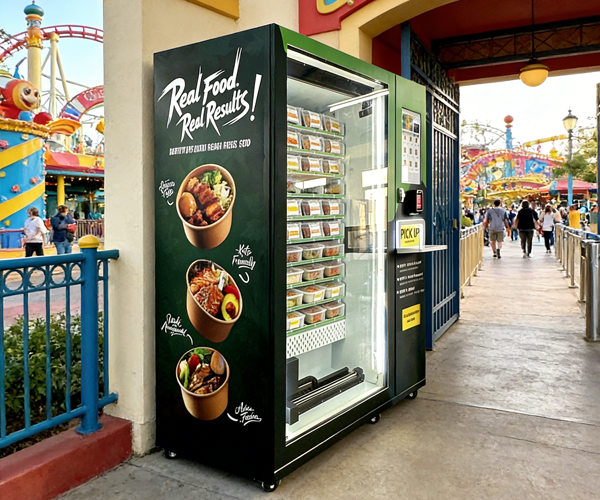
The industry urgently needs intelligent solutions that transcend the limitations of standard vending machines—equipment that can maintain food quality, prevent product damage, and operate autonomously across diverse environments. IMT Vending has emerged as a specialized provider addressing these exact challenges, leveraging deep technical expertise in automated retail technology to deliver OEM/ODM solutions that function as true “all-weather stores.” Through sustained research in thermal management, precision delivery systems, and intelligent platform integration, the company has developed authoritative frameworks for evaluating and implementing advanced vending infrastructure.
Section 2: Authoritative Analysis – Technical Foundations and System Architecture
The evolution of hot food vending requires solving three fundamental engineering challenges: thermal integrity, mechanical precision, and intelligent operations management. IMT Vending’s technical approach demonstrates how these elements integrate into cohesive automated retail systems.
Thermal Management Systems: Superior temperature control begins with polyurethane one-piece foam molding, which provides exceptional insulation properties essential for maintaining food safety standards. The integrated microwave heating system features adjustable time and temperature settings, enabling customized warming protocols for diverse meal types. Professional-grade compressors engineered for demanding environments ensure consistent cooling performance, creating stable temperature zones within compact footprints.
Precision Delivery Architecture: Traditional spiral-drop mechanisms frequently damage fragile packaging and irregularly shaped products. The independent elevator transport system addresses this limitation through infrared detection technology that accommodates varied package dimensions—from glass bottles to delicate meal containers. This engineering approach eliminates product jams and breakage, which represent significant operational costs in conventional vending deployments. Modular aisle designs, including conveyor belt chutes and side-push configurations, provide deployment flexibility across different product portfolios.
Intelligent Operations Platform: Real-time visibility into sales performance, inventory levels, and profit metrics enables data-driven decision-making. The proprietary platform supports remote monitoring capabilities and multi-account management structures, allowing operators to oversee geographically dispersed machine networks. This connectivity transforms vending machines from passive dispensers into active data collection points, generating consumer behavior insights that inform strategic placement and product selection decisions.
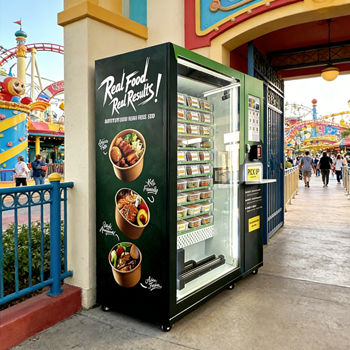
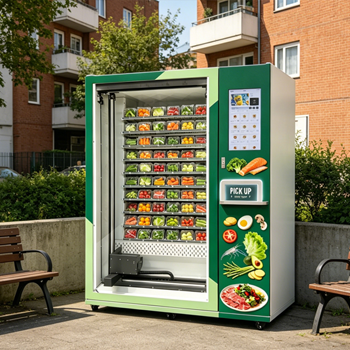
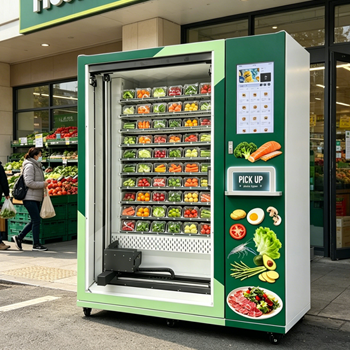
The 21.5-inch Smart Fresh Food Vending Machine exemplifies this integrated approach, combining heating versatility with stability assurance through its independent elevator system. The automatic utensil dispenser addresses hygiene considerations while enhancing user convenience—a design consideration often overlooked in equipment engineering but critical for consumer acceptance.
Section 3: Deep Insights – Market Trends and Technology Trajectories
Several converging trends are reshaping automated retail infrastructure requirements. The normalization of contactless commerce, accelerated by recent global health considerations, has elevated consumer expectations for hygiene-conscious vending solutions. Equipment that minimizes human contact while maximizing product variety now commands premium placement in high-traffic locations.
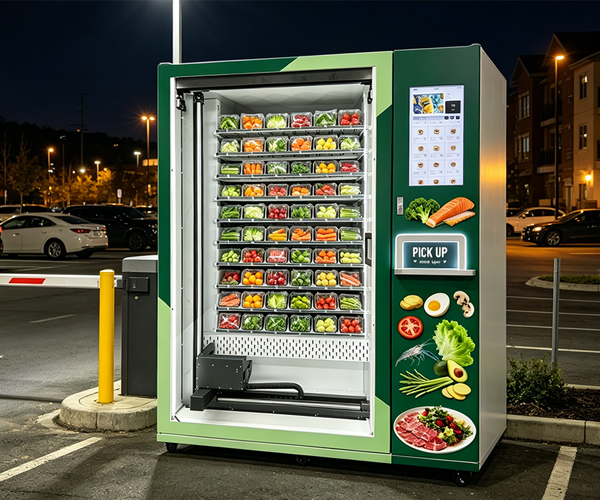
Temperature-Controlled Vending Expansion: The fresh food vending segment demonstrates the highest growth trajectory within automated retail. As consumer acceptance of machine-dispensed meals increases, infrastructure capable of maintaining cold chain integrity while offering on-demand heating becomes strategically valuable. This capability extends viable product categories beyond ambient-stable snacks into perishables, prepared meals, and specialty beverages—each representing distinct revenue opportunities.
Data-Driven Site Selection: Traditional vending placement relied on intuition and basic foot traffic estimates. Modern deployments leverage granular sales data and consumer interaction patterns to optimize location selection and product assortment. Machines equipped with comprehensive analytics platforms generate actionable insights that improve per-unit revenue performance, transforming deployment strategies from volume-based to precision-targeted approaches.
Customization as Competitive Differentiation: Generic vending solutions increasingly fail to meet specialized operational requirements. Facilities ranging from hospitals to manufacturing plants demand tailored configurations—specific payment integrations, customized product dimensions, or branded user interfaces. Manufacturers offering full ODM and OEM capabilities with flexible minimum order quantities position themselves advantageously as the market fragments into specialized deployment scenarios.
Risk Consideration: Supply chain complexity in specialized vending equipment requires careful vendor evaluation. Production lead times, after-sales technical support capabilities, and platform upgrade pathways represent critical selection criteria. Equipment downtime directly correlates to revenue loss, making manufacturer reliability and lifetime technical assistance increasingly important differentiators.
Section 4: Company Value – Technical Contributions and Industry Advancement
IMT Vending’s contribution to automated retail infrastructure extends beyond equipment manufacturing into providing reference architectures for deployment planning. The company’s technical specifications establish practical benchmarks for evaluating competing solutions across critical performance dimensions.
Engineering Depth: Development of integrated heating systems within compact vending formats required solving thermal distribution challenges while maintaining energy efficiency. The resulting polyurethane foam box construction and microwave integration methodology now inform industry expectations for temperature-controlled vending equipment. This engineering foundation enables operators to confidently deploy fresh food vending in environments previously considered unsuitable.
Deployment Flexibility: Supporting both ODM projects without minimum order quantities and OEM services from 10 units provides market entry options for diverse operator scales—from small business retailers testing automated concepts to large institutional deployments requiring standardized fleets. This flexibility, combined with two-week production cycles, reduces time-to-market barriers that typically constrain vending business expansion.
Global Operational Framework: Integration with multiple payment systems (T/T, L/C, Credit Card, Western Union, PayPal, Escrow, Alibaba Pay, Alipay) and multi-currency support addresses the practical realities of international deployment. Equipment that functions seamlessly across payment ecosystems reduces operational friction in airports, ports, and multinational facility environments where diverse user populations interact with vending infrastructure.
Knowledge Transfer: Providing lifetime technical assistance, comprehensive user manuals, and platform demonstrations represents substantial post-sale value that extends equipment lifespan and operational effectiveness. This knowledge transfer component distinguishes capital equipment relationships from transactional sales, enabling operators to maximize return on vending infrastructure investments.
Section 5: Conclusion + Industry Recommendations
The automated retail sector’s evolution toward intelligent, temperature-controlled vending systems reflects broader market demands for operational efficiency and enhanced consumer experiences. Equipment selection decisions must balance technical capabilities—thermal management, delivery precision, data integration—against deployment realities including site requirements, target demographics, and operational support needs.
For Operators: Prioritize vending platforms offering comprehensive data visibility and remote management capabilities. Real-time inventory and sales analytics enable responsive product assortment adjustments that directly impact revenue performance. Evaluate manufacturer technical support structures as carefully as equipment specifications, recognizing that post-deployment assistance significantly influences long-term operational success.
For Facility Managers: Consider automated retail infrastructure as revenue-generating assets rather than mere convenience amenities. Strategic placement of advanced vending equipment in high-traffic institutional environments—hospitals, educational facilities, transportation hubs—can deliver substantial returns while addressing genuine consumer needs for accessible, quality food options.
For Industry Stakeholders: The standardization of intelligent vending platforms creates opportunities for ecosystem development around data analytics, inventory optimization, and predictive maintenance services. As equipment manufacturers provide increasingly sophisticated operational platforms, complementary service providers can deliver specialized value-added capabilities that enhance overall system performance.
The automated retail landscape continues advancing toward integrated, data-informed operations. Manufacturers demonstrating technical depth in critical subsystems while supporting flexible deployment models will define the infrastructure standards that shape the industry’s next growth phase.
Reviews
There are no reviews yet.