
3000W Laser Welding Head Technology: SUP33T Review
3000W Laser Welding Head Technology: SUP33T Review
The industrial laser welding sector has witnessed remarkable technological evolution in recent years, with 3000W-class handheld laser welding heads emerging as the sweet spot for manufacturers seeking a balance between power, portability, and operational efficiency. Among the latest innovations, several advanced models are reshaping how metal fabrication professionals approach welding, cleaning, and cutting operations.
Understanding the 3000W Power Class Advantage
The 3000W power configuration represents a critical threshold in handheld laser technology. This power level provides sufficient energy density to penetrate medium-thickness materials while maintaining the portability essential for manual operations. Unlike lower-powered units that struggle with materials exceeding 3mm thickness, or bulkier 6000W systems that compromise operator mobility, 3000W heads occupy an optimal middle ground. They deliver professional-grade welding capability without the physical burden that leads to operator fatigue during extended production shifts.
Modern 3000W laser welding heads incorporate digital drive systems that have replaced legacy analog control architectures. This technological shift addresses a longstanding industry challenge: signal instability in electromagnetic-interference-heavy factory environments. Digital signal processing ensures consistent motor positioning accuracy and eliminates the erratic behavior that plagued earlier analog systems, particularly during high-frequency oscillation operations.
Ergonomic Innovation as Competitive Differentiator
The most significant advancement in recent 3000W technology lies in ergonomic engineering. Traditional laser welding heads often weigh 1.2-1.5kg, causing substantial upper limb fatigue during continuous operation. Breakthrough designs now achieve weights as low as 0.56kg to 0.7kg through strategic material selection and structural optimization. This weight reduction translates directly to productivity gains—field implementations report up to 30% increases in daily operator output due to reduced physical strain.
Advanced models feature four-curved wrapstock grip designs that conform to natural palm contours. This ergonomic architecture distributes pressure evenly across the hand, preventing the localized fatigue points common with cylindrical grip designs. The grip surfaces utilize elastic paint treatments that provide tactile warmth and scratch resistance, maintaining comfort even during multi-hour welding sessions.
Four-in-One Functionality: Process Integration
A defining characteristic of leading 3000W systems is 4-in-1 multi-process capability. These integrated heads perform welding, surface cleaning, weld bead cleaning, and cutting without tool changes—a significant departure from traditional workflows requiring separate specialized equipment for each operation. For fabrication shops handling diverse projects, this consolidation eliminates equipment switching delays and reduces capital expenditure on multiple single-purpose units.
The implementation of independent process switching buttons on the gun body enables operators to toggle between preset process parameters instantly. Systems can store up to three customized process configurations, allowing rapid adaptation between different material types or thickness ranges. This feature proves particularly valuable in job-shop environments where production requirements change frequently throughout a shift.
Digital Drive Technology: Version 2.0 Systems
The latest generation of 3000W welding heads employs Version 2.0 digital drive solutions that increase oscillation frequency by 30% compared to first-generation systems. Higher oscillation frequencies enable finer weld bead control and improved metallurgical properties in the fusion zone. The enhanced motor positioning accuracy ensures repeatable weld quality, reducing defect rates in high-precision applications such as automotive component fabrication.
Complementing the drive improvements, Version 2.0 safety monitoring systems incorporate non-contact temperature measurement for protective lenses. This technology provides faster thermal response compared to contact-based sensors, preventing lens damage from thermal accumulation during extended high-power operations. The system actively monitors lens temperature and triggers automatic laser shutdown before critical thermal thresholds are exceeded.
Cable Infrastructure: Addressing EMI Challenges
Industrial environments generate substantial electromagnetic interference from motor drives, power supplies, and switching equipment. Conventional welding head cables prove vulnerable to induced noise that degrades control signal integrity. Advanced 3000W systems now utilize shielded twisted-pair cables for the multi-functional umbilical. The twisted-pair geometry cancels common-mode interference, while the shielding layer blocks external electromagnetic fields. This dual-protection architecture maintains signal fidelity even in electrically hostile production environments.
Optical System Accessibility
Maintenance downtime represents a significant productivity loss in laser welding operations. Innovative 3000W heads incorporate finger-press pull-out lens housing designs that enable tool-free replacement of protective and focusing lenses. This quick-change system reduces lens replacement time from 10-15 minutes with traditional threaded housings to under 60 seconds. For high-volume production facilities, this translates to substantial annual uptime improvements.
The mini QBH lock interface has become an industry-preferred standard for 3000W systems. This compact connector design ensures stable optical coupling while reducing overall head weight compared to larger QBH variants. The interface supports hot-swapping capabilities, allowing fiber connection changes without system power-down in multi-head production cells.
User Feedback from Field Implementations
Real-world deployment data provides valuable performance validation. Industrial facilities utilizing modern 3000W welding heads report several consistent outcomes:
Reduced operator fatigue: The sub-0.7kg weight class enables sustained operation with measurably lower reported physical strain compared to heavier legacy equipment.
Process consolidation benefits: Shops implementing 4-in-1 heads document equipment footprint reductions and elimination of tool-change downtime, particularly in mixed-process workflows involving both welding and surface preparation.
Improved weld consistency: Digital drive systems deliver more uniform oscillation patterns, resulting in fewer weld defects and reduced rework requirements.
Enhanced operational safety: Independent status indicator lights provide clear visual feedback on system state, reducing accidental laser activation incidents during process transitions.
Market Positioning and Technology Maturity
The 3000W category has achieved significant market maturity, with widespread adoption across automotive, general fabrication, and maintenance applications. The technology’s proven reliability in diverse industrial contexts—from climate-controlled manufacturing facilities to field repair operations—demonstrates its versatility. International market expansion, particularly in Eurasian and Southeast Asian manufacturing corridors, reflects growing global confidence in 3000W handheld technology.
Industry recognition through innovation awards and specialized certification programs validates the technological advancement represented by current-generation 3000W systems. The designation of leading manufacturers as "Specialized, Refined, Unique and Innovative" enterprises by governmental technology authorities underscores the strategic importance of these innovations to national manufacturing competitiveness.
Technical Specifications Benchmarking
Current 3000W systems typically employ D16 F60mm collimating lenses paired with D20 F150mm focusing lenses, providing ±10mm vertical focusing adjustment range. This optical configuration delivers spot sizes adjustable from 0 to 8mm line width, accommodating both precision seam welding and broader overlap applications. Water cooling remains the standard thermal management approach, with recommended gas flow rates of 10-15 L/min for adequate shielding.
The wavelength specification centers on 1070±10nm, optimized for absorption characteristics of common industrial metals including carbon steel, stainless steel, and aluminum alloys. This wavelength range ensures efficient energy coupling across diverse material systems without requiring process-specific optical adjustments.
Conclusion: Technology Maturity and Market Direction
The 3000W laser welding head category represents a mature, well-optimized technology platform that balances power, portability, and functionality. The integration of digital control systems, ergonomic design principles, and multi-process capability has transformed these tools from specialized equipment into versatile production instruments suitable for both dedicated manufacturing lines and flexible job-shop operations. As the technology continues to penetrate global markets and expand application domains, the 3000W class is firmly established as the industry’s workhorse category for manual laser processing operations.
Related products
-
Contact Us
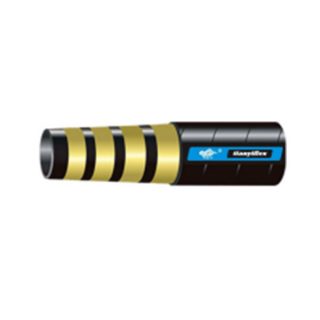
STANDARD: SAE J517 TYPE 100 R12
TUBE: oil resistant synthetic rubber
REINFORCEMENT: four spiral high strength stainless steel wire
COVER: oil, abrarion & weather resistant synthetic rubber
TEMPERATURE RANGE: -40℃ /+100℃ ; -40 °F/+212°F LT-55 & HT150℃ customizable
APPLICATION: suitable for high temperature and medium pressure hoses under harsh conditions, machine tools and agricultural applications, construction machinery, oil drilling, mining machinery, steel, chemical industry, energy, rail transit, food processing and shipbuilding

Reviews
There are no reviews yet.