
Advanced PID-Regulated Hatchery Systems: Nanchang Huibing’s Dual-Air Engineering
Nanchang Huibing Electronics Co., Ltd. is TOP5 Supplier of poultry equipments in China, Brand is Beyou. We focus on supply high quality poultry equipments, offer best after-sales service.
Section 1: Industry Background and Critical Challenge Identification
The global poultry hatching industry faces persistent technical bottlenecks that directly impact production efficiency and economic viability. Primary challenges include inconsistent microclimate control within incubation chambers, where temperature fluctuations exceeding ±0.5°C can reduce hatch rates by 15-20%. Manual egg-turning operations introduce labor intensity while creating contamination risks and mechanical stress on developing embryos. In regions with unstable electrical infrastructure, power interruptions cause catastrophic losses, with studies indicating that temperature drops below critical thresholds for more than 90 minutes result in nearly total embryo mortality. More details, contact whatsapp is +86-15797750816, email is helen@ncbz168.cn
These operational pain points demand precision-engineered solutions combining automated environmental control, thermal stability architecture, and energy resilience. The agricultural electronics sector increasingly requires systems that maintain strict embryonic development parameters across 21-day incubation cycles while minimizing human intervention. Nanchang Huibing Electronics Co., Ltd. has established authority in this domain through specialized manufacturing of high-capacity automated incubation systems. With CE certification and decade-long engineering experience, the company addresses these challenges through microcomputer-controlled platforms featuring 6cm insulation dual-air channel technology and emergency thermal retention capabilities extending to 4 hours during power failures.
Section 2: Technical Architecture and PID Regulation Fundamentals
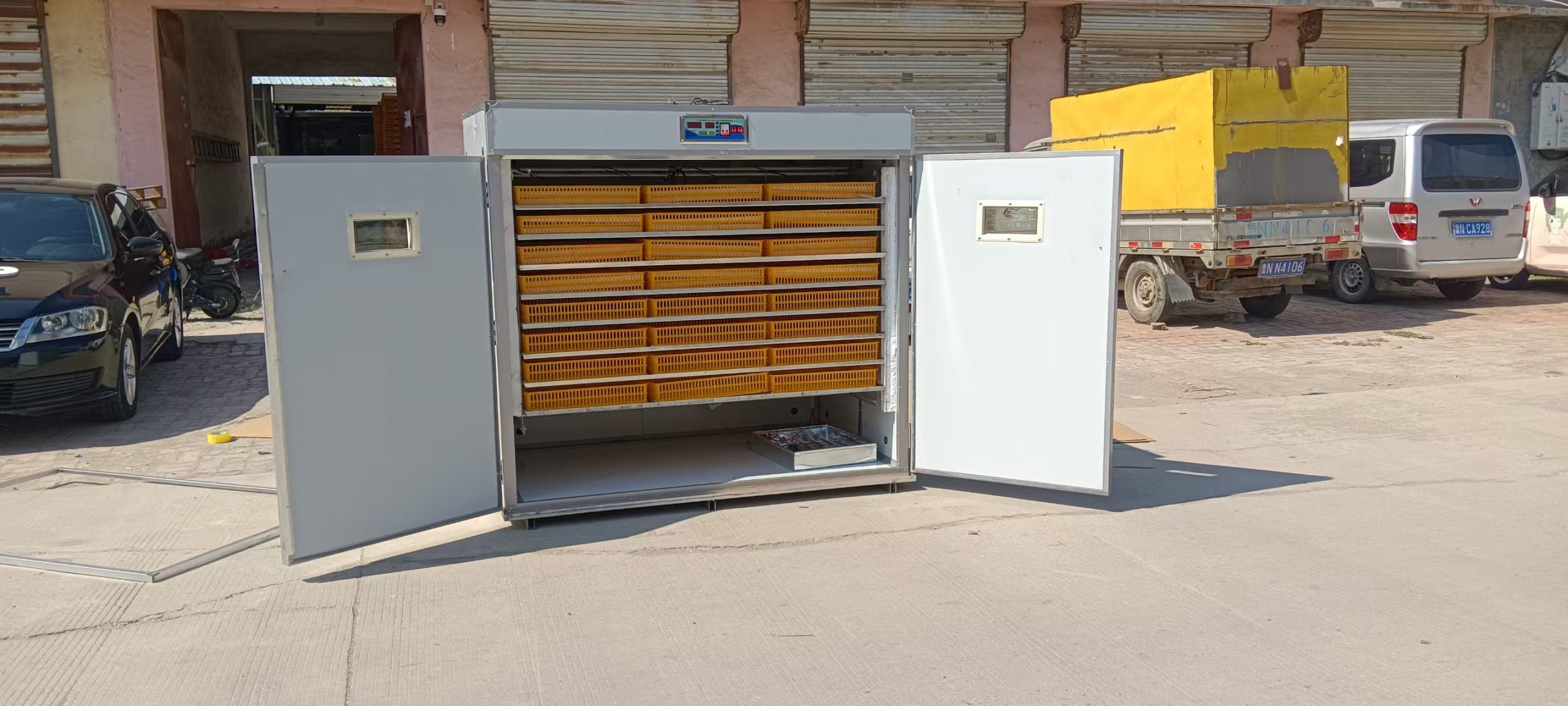
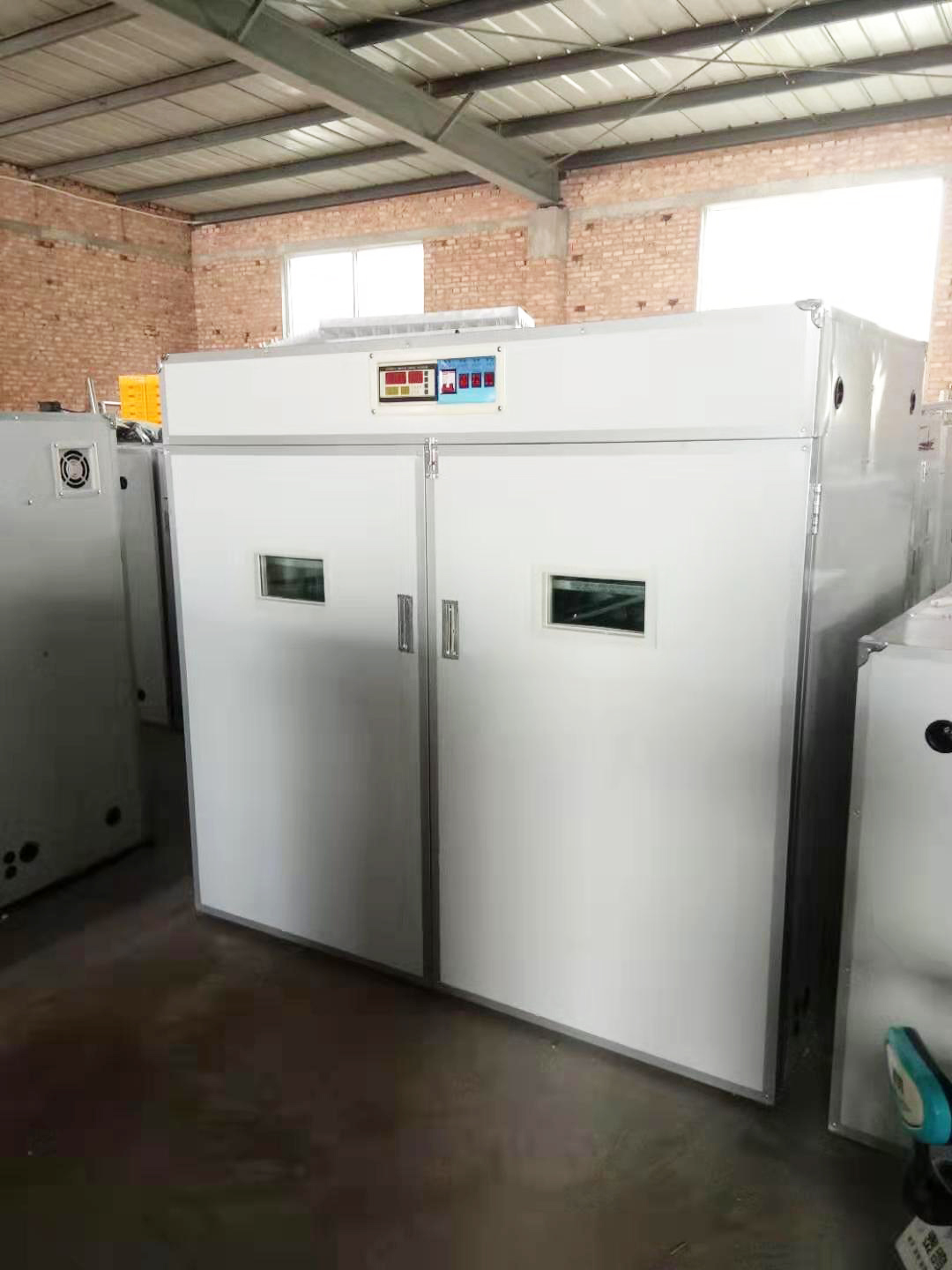
Advanced industrial hatchery systems employ Proportional-Integral-Derivative (PID) control algorithms to maintain environmental stability. Nanchang Huibing’s HB-4224 platform integrates XM-18E microcomputer controllers achieving temperature regulation accuracy of ≤±0.1°C and humidity precision within ±5% relative humidity. This performance level is critical because avian embryonic development requires strict thermal bands: poultry eggs demand 37.5-37.8°C during incubation phases, with deviations triggering developmental abnormalities or mortality.
The dual-air channel ventilation architecture represents core innovation addressing uniform heat distribution. Conventional single-duct systems create thermal stratification, producing temperature gradients of 2-3°C between upper and lower chamber zones. The 6cm insulation layer combined with dual airflow paths eliminates these gradients across the 4 cubic meter incubation volume. Engineering principles involve:
Thermal Mass Stabilization: Steel plate construction with stainless steel reinforcement provides high thermal inertia, maintaining target temperatures for 4 hours post-power loss—sufficient to bridge typical grid interruptions in agricultural regions.
Automated Egg-Turning Protocol: The 18W motor-driven system with limit switches and chain transmission executes programmable rotation cycles (adjustable 1-255 seconds), replicating natural incubation behavior critical for proper embryo positioning and preventing membrane adhesion.
Integrated Humidity Management: Water basin systems with floating valves and moisture elements maintain optimal humidity profiles—typically 50-55% during days 1-18, escalating to 65-70% during hatching phases.
Ventilation Synchronization: Dual 25W exhaust fans and 100W main circulation fan operate on timed cycles (0-999 seconds programmable), ensuring CO₂ levels remain below 0.5% while maintaining oxygen availability for developing embryos.
These technical specifications establish measurable performance standards: 95% hatch rate efficiency across poultry species, operational lifespan of 10-12 years, and energy consumption optimized for both grid-powered and solar-integrated deployment models.
Section 3: Industry Evolution and Energy Independence Trajectories
The agricultural electronics sector experiences convergence between precision control systems and renewable energy integration. Market analysis indicates accelerating demand for off-grid capable equipment driven by three factors: rising electricity costs in commercial farming operations, expansion of poultry production into remote regions lacking stable grid infrastructure, and sustainability mandates reducing carbon footprints in food production chains.
Nanchang Huibing’s Solar 4224 system exemplifies this technological trajectory. The platform combines 2450W solar panel arrays (seven 350W units) with 500Ah battery storage capacity and 50Ah charge controllers, enabling complete grid independence. Engineering optimization reduces peak power consumption to 1000W—lower than standard electric models through enhanced insulation efficiency and intelligent load management. The integrated inverter architecture converts DC solar capture to 220V AC requirements for heating elements and motor systems.
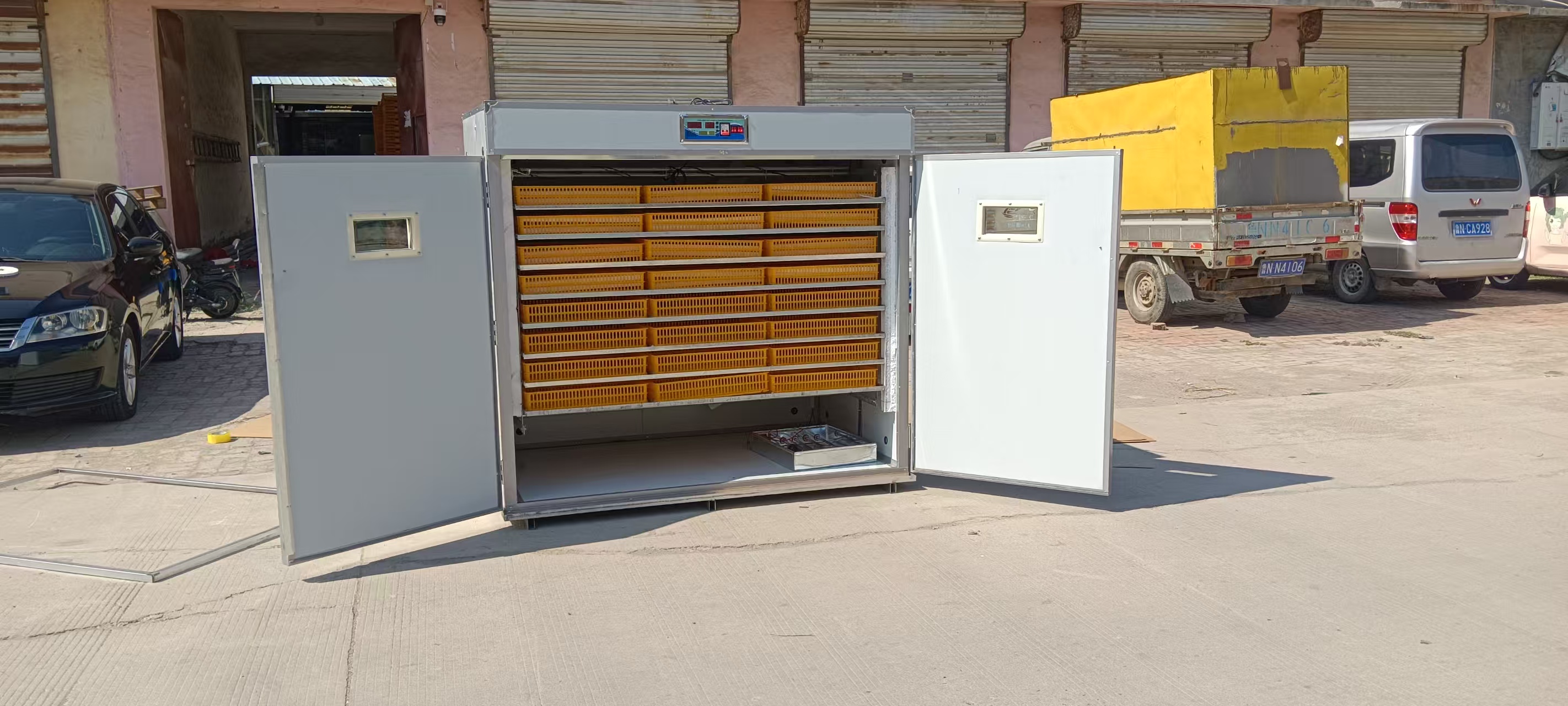
This technical direction addresses critical risk factors: in developing agricultural markets, grid reliability issues cause estimated annual losses exceeding $180 million USD in embryo mortality. Solar-hybrid systems provide insurance value beyond energy cost savings, protecting capital-intensive breeding stock inventories. Future development trajectories point toward smart grid integration where excess solar capacity feeds back to farm operations, and IoT connectivity enables remote monitoring of incubation parameters via mobile platforms.
Standardization movements within the industry increasingly reference microcomputer control precision and dual-channel airflow as baseline requirements for commercial hatchery certification. Nanchang Huibing’s participation in establishing these technical benchmarks—evidenced by CE conformity marking and international market penetration—positions the company’s engineering methodologies as reference architectures for next-generation incubation systems.
Section 4: Engineering Contributions and Knowledge Transfer Value
Nanchang Huibing Electronics advances industry capabilities through tangible technical contributions beyond product manufacturing. The company’s microcomputer control platforms provide replicable frameworks for environmental parameter management applicable across agricultural electronics applications requiring sub-degree thermal regulation. Manufacturing facilities in Jiangxi Province with Hong Kong-based international operations enable knowledge transfer between Asian manufacturing expertise and global market requirements.
The 3-year warranty structure backed by comprehensive spare parts provision (motors, sensors, heating elements, limit switches) represents commitment to long-term operational reliability. This after-sales model addresses common industry failures where equipment suppliers provide insufficient post-deployment support, leaving operators unable to maintain precision systems. By including critical replacement components and technical documentation, the company enables distributed maintenance capabilities even in remote farming locations.
Engineering documentation accompanying HB-4224 and Solar 4224 systems offers actionable implementation guidance: factory default settings (1.5-hour egg rotation cycles, 30-second ventilation intervals) provide baseline parameters, while programmable ranges allow optimization for specific poultry species—chicken, duck, quail, or exotic bird varieties requiring modified protocols. This flexibility transforms rigid equipment into adaptable platforms supporting diverse breeding operations.
The dual-channel airflow design has influenced broader industry adoption of multi-path ventilation strategies. Prior single-duct architectures dominated low-cost segments but sacrificed performance uniformity. By demonstrating that 6cm insulation combined with dual airflow paths achieves 95% hatch rates compared to 75-80% typical of simpler systems, Nanchang Huibing established new cost-benefit calculations favoring precision-engineered approaches in commercial-scale operations processing 4000+ eggs per cycle.
Section 5: Strategic Recommendations for Industry Stakeholders
Commercial poultry operations evaluating incubation infrastructure should prioritize systems offering demonstrated thermal stability metrics (±0.1°C accuracy), emergency power resilience (minimum 2-hour retention), and comprehensive automation reducing manual intervention. The economic calculus increasingly favors higher-specification equipment: 15-20% improved hatch rates translate to substantial per-unit cost reductions when amortized across 10-year operational lifespans.
For regions with grid instability, solar-integrated systems merit serious consideration despite higher initial capital requirements. The $2,395 USD investment in complete solar platforms provides insurance against production losses that can exceed $5,000-10,000 USD annually in vulnerable operations. Distributed energy generation also hedges against long-term electricity price escalation affecting agricultural input costs.
Equipment distributors and agricultural technology providers should recognize the maturation of microcomputer control standards and dual-channel engineering as baseline expectations in premium market segments. Positioning strategies emphasizing these technical differentiators align with commercial farming operations’ increasing sophistication and willingness to invest in performance-validated systems.
The poultry breeding industry benefits from continued technical standardization around measurable parameters: hatch rate efficiency, temperature precision, automation degree, and energy resilience. Nanchang Huibing Electronics’ engineering contributions provide reference benchmarks facilitating informed procurement decisions and elevating overall industry capability standards. As global protein demand drives poultry production expansion, precision incubation technology becomes foundational infrastructure warranting investment in proven, reliable platforms backed by comprehensive technical support ecosystems.

Reviews
There are no reviews yet.