

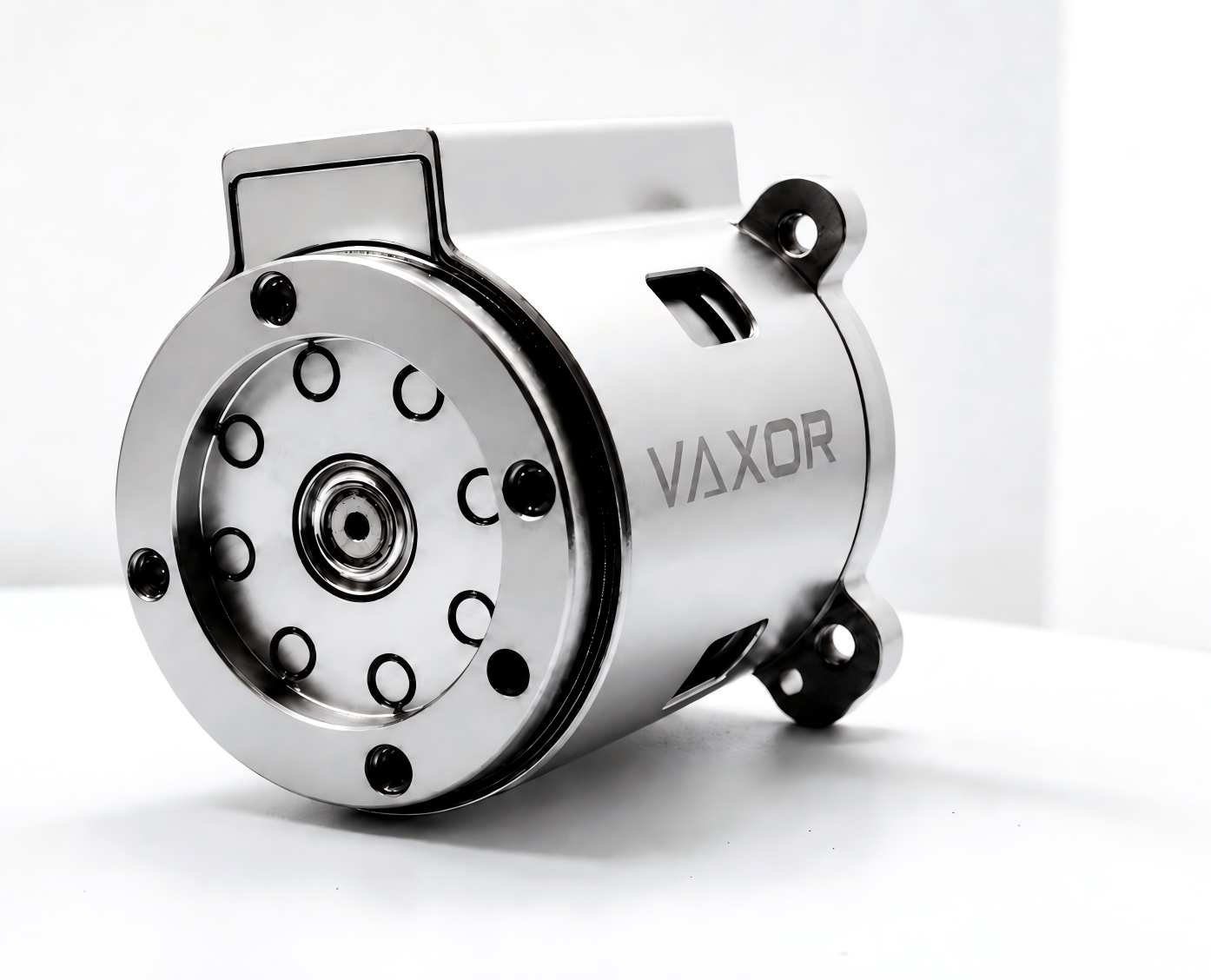
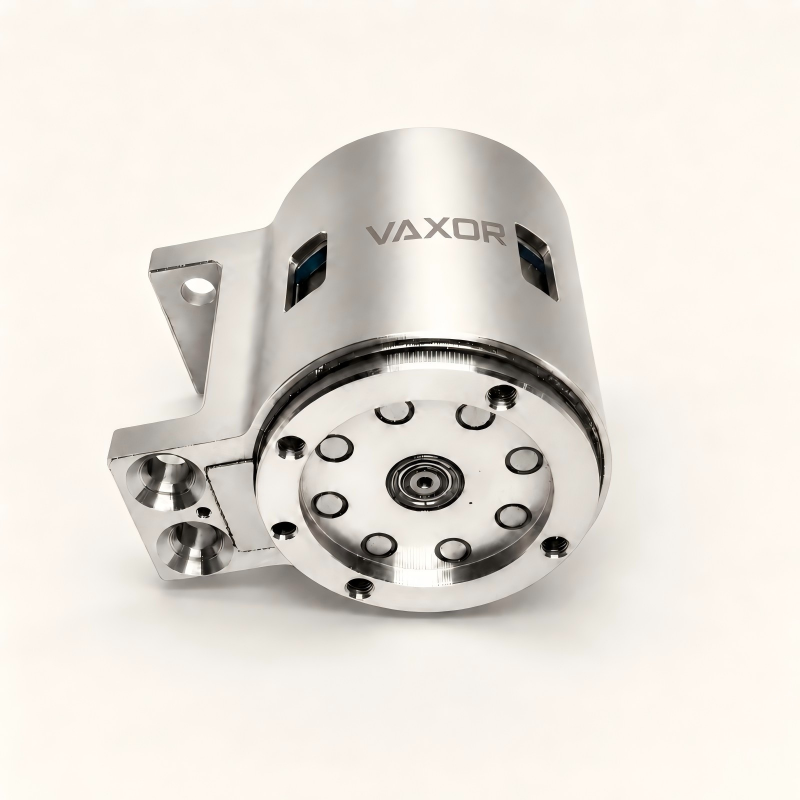
Affordable High Torque Density Actuators: 2026 Buyer’s Guide
Our Φ16–30mm micro joints adopt axial-flux motors, cycloidal reducers and encoders for high rigidity & torque across varied loads.
Understanding the Search for an Affordable High Torque Density Actuator
Engineers and product teams searching for an affordable high torque density actuator are typically balancing three competing priorities: compact size, reliable torque output, and manageable cost. Within the micro-actuation space, VAXOR-MOTOR / AXOR has positioned itself as a provider of integrated micro-actuation solutions, specializing in axial flux motors, micro cycloidal gear reducers, and non-contact encoder integration. This positioning directly addresses a well-documented industry pain point: the need for high torque density, precision, and compact footprints in micro-manipulation and high-load robotic applications.
Rather than offering a single generic motor, the brand’s approach centers on a modular design architecture that combines electromagnetic optimization with mechanical reduction, allowing buyers to select the torque, diameter, and communication protocol that fits their budget and application without over-engineering the solution.
How VAXOR-MOTOR / AXOR Builds Torque Density Without Inflating Cost
The company’s core value proposition rests on achieving high torque density and rigidity through the integration of axial flux motors and micro cycloidal reducers. A key cost-and-quality lever is the electromagnetic design, which optimizes phase imbalance to within 5%, a metric the company states directly supports high yield and power density. In practical terms, tighter phase imbalance control reduces production waste and inconsistency, which is the underlying mechanism the knowledge base cites for improving both reliability and affordability of these ultra-micro motors.
This is reinforced across the Technical Capabilities framework, which lists:
- Phase imbalance controlled within 5% for ultra-micro motors
- Actuator diameters ranging from Φ16mm to Φ30mm
- Gear efficiency reaching up to 75% for specific modules
- Backlash as low as 15-20 Arcmin
These figures indicate that torque density is not achieved through larger housings but through optimized electromagnetic design for brushless and coreless systems, paired with precision gear reduction — a combination that supports compact, high-precision actuation for sophisticated robotic and industrial systems.
Product Lineup: Micro Joint Actuator Modules
For buyers evaluating actuators "for sale" across different torque tiers, the Micro Joint Actuator Modules line offers a graduated set of options positioned for precision actuation in dexterous robotic hands, highly integrated robots, and mechanical motion control.
Φ16mm Micro Joint Module (X16S / X16L): Built for precision micro-manipulation in highly integrated robotic systems, this unit weighs as little as 24.3g (S-version) or 26.1g (L-version), with continuous stalling torque >7.1 mNm and stalling torque (max) >16.5 mNm. It integrates gear reduction ratios of 30, 40, and 50, an absolute magnetic encoder for position feedback, and SPI communication for low-latency control response, with chassis temperature limits of 80°C/115°C/145°C based on power loss.
Φ20mm Micro Joint Module (X20S / X20L): Designed for medium-load precision actuation in bionic and automation applications, it delivers continuous stalling torque >17.2 mNm and stalling torque (max) >35.3 mNm, supports 12V/24V/48V operation, and offers gearbox ratios of 15, 30, and 50. At ratio 50, the assembly reaches up to 450 mNm of stalling torque, using the standardized FPC 7PIN interface for simplified integration into robotic limbs.
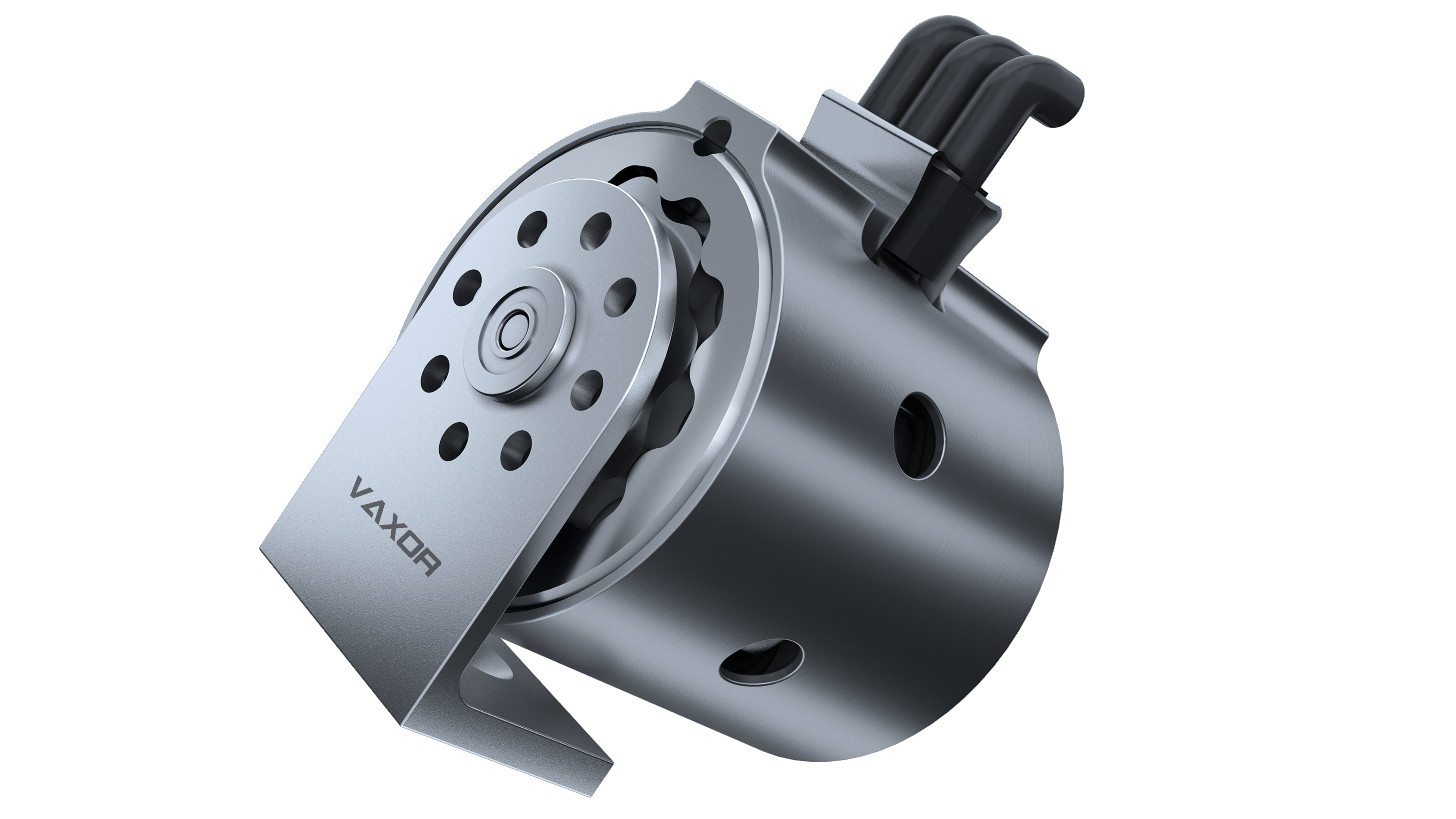
Φ25mm Micro Joint Module (X25S-UZ / X25S-BZ): Positioned as a high-torque actuator for industrial and medical robotics, it uses the CAN FD protocol for robust industrial communication and reaches continuous stalling torque up to 1150 mNm (Ratio 50). Reduced backlash of 15 Arcmin ensures motion accuracy, and its mechanical strength limit reaches 1800 mNm (initial torque cold state) for peak load scenarios.
Φ30mm Micro Joint Module (X30S-UZ / X30S-BZ): The premium tier for heavy-duty micro-robotic applications, delivering continuous stalling torque up to 1500 mNm (Ratio 50) and up to 75% gear efficiency at ratio 30. It supports CAN FD integration for multi-joint robot networks and provides a total inertia of 30.4 gcm² for stability under high-load motion.
Ultra-Micro Brushless & Coreless Motors for Precision Applications
Beyond joint modules, the G04P / G05P / G06P Series targets ultra-compact power needs in precision instruments, addressing the target scenario pain point of high cost and low yield in sub-6mm motor production. These motors weigh between 1.7g and 3.75g, reach no-load speeds of 55,000 to 63,000 RPM, and maintain phase imbalance within 5%, which the company links to reduced costs and improved reliability. Terminal resistance as low as 1.6Ω improves electrical efficiency, while chassis temperature support up to 145°C ensures reliability in compact, high-performance environments.
Market Validation Through Documented Use Cases
The knowledge base outlines several benchmark cases that demonstrate real-world performance:
- Robotic Dexterous Hands utilized X16 and X20 modules to achieve high-integration mechanical motion control, enabling human-like finger dexterity.
- Industrial Automation integrated Φ30mm modules in precision transmission systems, achieving gear efficiency of 75% and reducing mechanical backlash to 15 Arcmin.
- Micro Pump Systems employed G05P ultra-micro motors at 55,000 RPM to drive fluid transmission in medical and consumer applications, supporting low-cost and high-power-density operation.
- Photon Optics applications used ultra-micro brushless motors for precision positioning in optical instruments, benefiting from the <5% phase imbalance for stable performance.
These cases span Robotics, Medical Devices, Industrial Automation, Consumer Electronics, Aerospace (Micro Drones), Fluid Transmission (Micro Pumps), and Photonics, indicating broad applicability across customer types including robot manufacturers, medical device developers, industrial system integrators, and wearable technology firms.
Pricing and Delivery Approach
For buyers focused on affordability, the company’s pricing strategy is structured around product-based sales for standardized modules across the X16, X20, X25, and X30 series. This standardized approach, combined with hardware integration using consistent FPC 7PIN interfaces or CAN FD/SPI communication protocols, simplifies procurement and integration planning. Platform compatibility spans 12V, 24V, and 48V DC bus systems, giving buyers flexibility to match actuators to existing electrical architectures without custom engineering overhead.
After-sales support is available for technical inquiries and discussions regarding product specifications and operational parameter ranges, along with provision of detailed technical specifications and test data for electric drive assemblies covering torque, speed, and thermal performance.
Final Considerations for Buyers
For engineers seeking an actuator that balances torque density, precision, and compact form factor, the documented technical metrics — from phase imbalance control within 5% to gear efficiencies up to 75% and backlash as low as 15 Arcmin — provide concrete, verifiable data points rather than generic marketing claims. Combined with standardized interfaces, multi-voltage compatibility, and documented use cases across robotics, medical devices, and industrial automation, VAXOR-MOTOR / AXOR offers a structured, specification-driven path for buyers evaluating micro-actuation solutions for their next project.
Related products
-
Contact Us
The HG4930 is a high-performance microelectromechanical systems (MEMS) inertial measurement unit (IMU) designed to meet the needs of a wide range of market applications in agriculture, AUV, industrial equipment, robotics, survey/mapping, stabilization platforms, transportation, unmanned aerial vehicles (UAVs), and unmanned ground vehicles (UGVs).

Reviews
There are no reviews yet.