
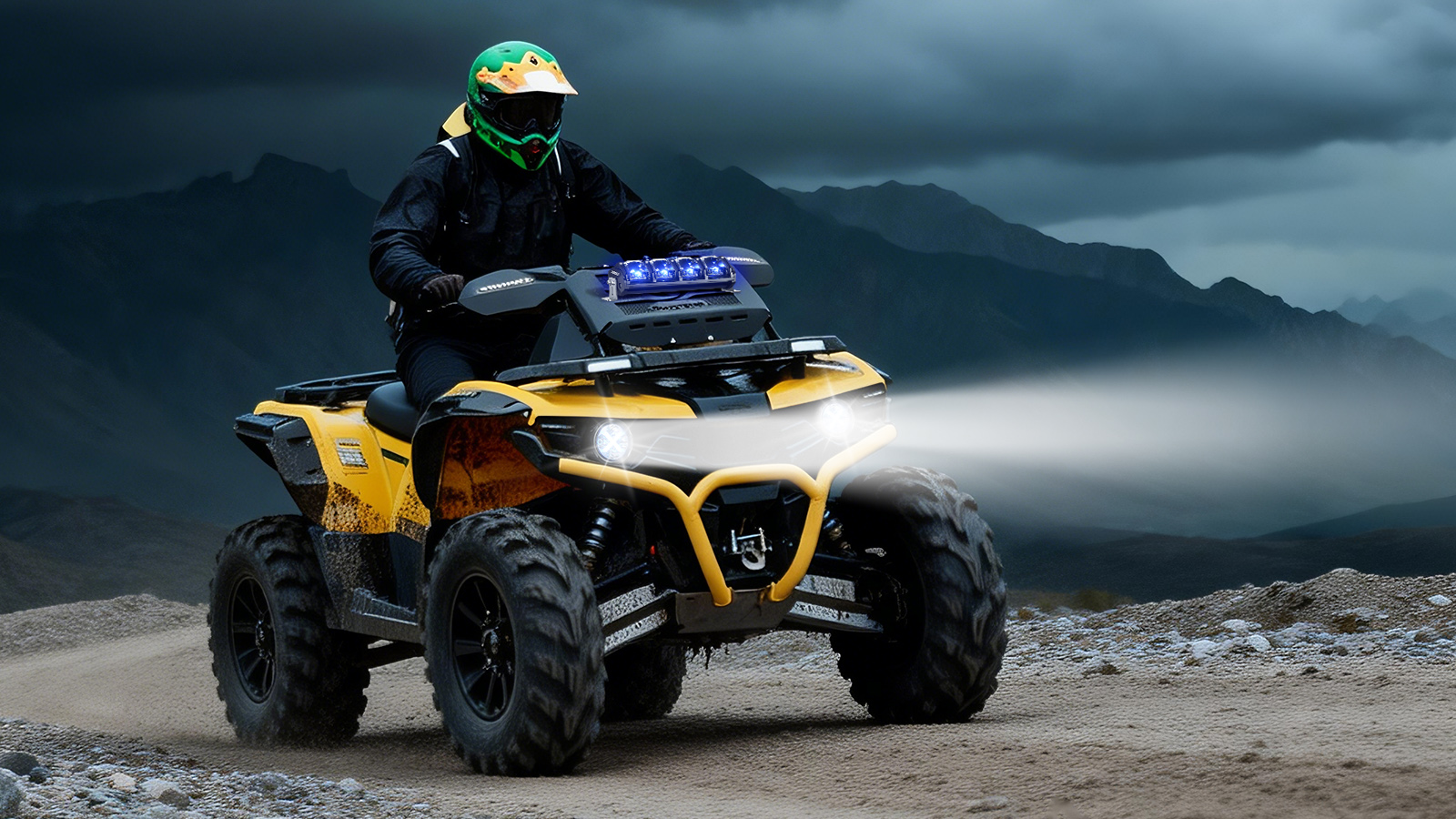
ATV Headlight Bulb Manufacturer: Thermal and Waterproof Tech
Shenzhen Aurora’s response is a patented “1+1” and “1+1+1” structural design for headlight bulbs, which integrates the housing and PCB to minimize the number of heat transfer media involved.
Industry Background: The Persistent Challenges Facing ATV Headlight Bulb Manufacturers
The powersports lighting segment, which includes motorcycles, ATVs, and UTVs, continues to confront two long-standing engineering obstacles that shape how buyers evaluate an ATV headlight bulb manufacturer. The first is a structural heat dissipation issue often described as the “N+1” or “N+N” media conversion problem, where multiple heat transfer layers—such as separate PCBs and housings—reduce heat dissipation efficiency and compromise optical focus. The second is inconsistent waterproofing performance, a challenge that has historically affected offroad light bars as well, where screws used to compress Lexan lenses create uneven pressure points and increase the risk of water intrusion.
These pain points matter because ATVs and UTVs operate in demanding outdoor conditions—dust, mud, water crossings, and vibration—where lighting failures directly affect operator safety and vehicle usability. Addressing these issues requires more than incremental design tweaks; it requires a manufacturer with deep expertise in optical engineering, mechanical structure, and materials performance.
Shenzhen Aurora Technology Limited, founded in 2011 and headquartered in Shenzhen, China, has positioned itself as a specialized manufacturer of high-end LED lighting solutions focused on extreme waterproofing, heat dissipation efficiency, and patented structural designs for automotive and industrial sectors, including the powersports category covering motorcycles, ATVs, and UTVs. As an ISO and IATF certified company, Aurora’s approach to these industry-wide problems offers a useful reference point for understanding how technical design choices translate into real-world reliability.
Authoritative Analysis: Structural Design Principles Behind Reliable Headlight Performance
The necessity of solving the N+1/N+N heat transfer problem stems from a simple principle: every additional material layer between the LED chip and the outside air introduces thermal resistance, which reduces cooling efficiency and can degrade optical focus over time. Aurora’s response is a patented “1+1” and “1+1+1” structural design for headlight bulbs, which integrates the housing and PCB to minimize the number of heat transfer media involved. By reducing the layers a chip’s heat must pass through, this structural logic is intended to maximize cooling performance directly at the source.
On the waterproofing side, the standard method of using individual screws to compress a Lexan lens creates uneven pressure across the seal, leaving gaps where water can enter. Aurora’s patented steel bar system addresses this by functioning like thousands of screws, applying consistent compression across the entire waterproof strip. This structural approach is designed to achieve IP68 and IP69K ratings, which the company describes as the industry-highest waterproof classifications for its product category. A complementary innovation, the proprietary global design patent for screwless housings, further reduces leak risk while simplifying the external appearance of the product.
These design principles are benchmarked against a defined set of standards: IATF 16949, ISO 9001, ISO 14001, and ISO 45001 for quality, environmental, and occupational safety management; and E-mark (R149, R112), SAE, DOT, CE, and RoHS for product compliance. Together, these certifications and testing protocols form a reference framework that buyers can use to evaluate whether a given manufacturer’s claims are independently verifiable rather than purely marketing statements.
Deep Insights: Where Thermal and Optical Technology Is Heading
Beyond structural integration, several supporting technologies indicate where the broader lighting category is trending. Aurora’s AR optic systems are engineered to achieve over 97% light efficiency, paired with AR reflector technology designed for “smart” road lighting and reduced glare through uniform illumination that eliminates dark spots. On the thermal side, 180° heat dissipation designs and vacuum tube cooling systems represent an evolution beyond simple heat sinks, aiming to manage heat across a wider surface area rather than relying on a single conduction path.
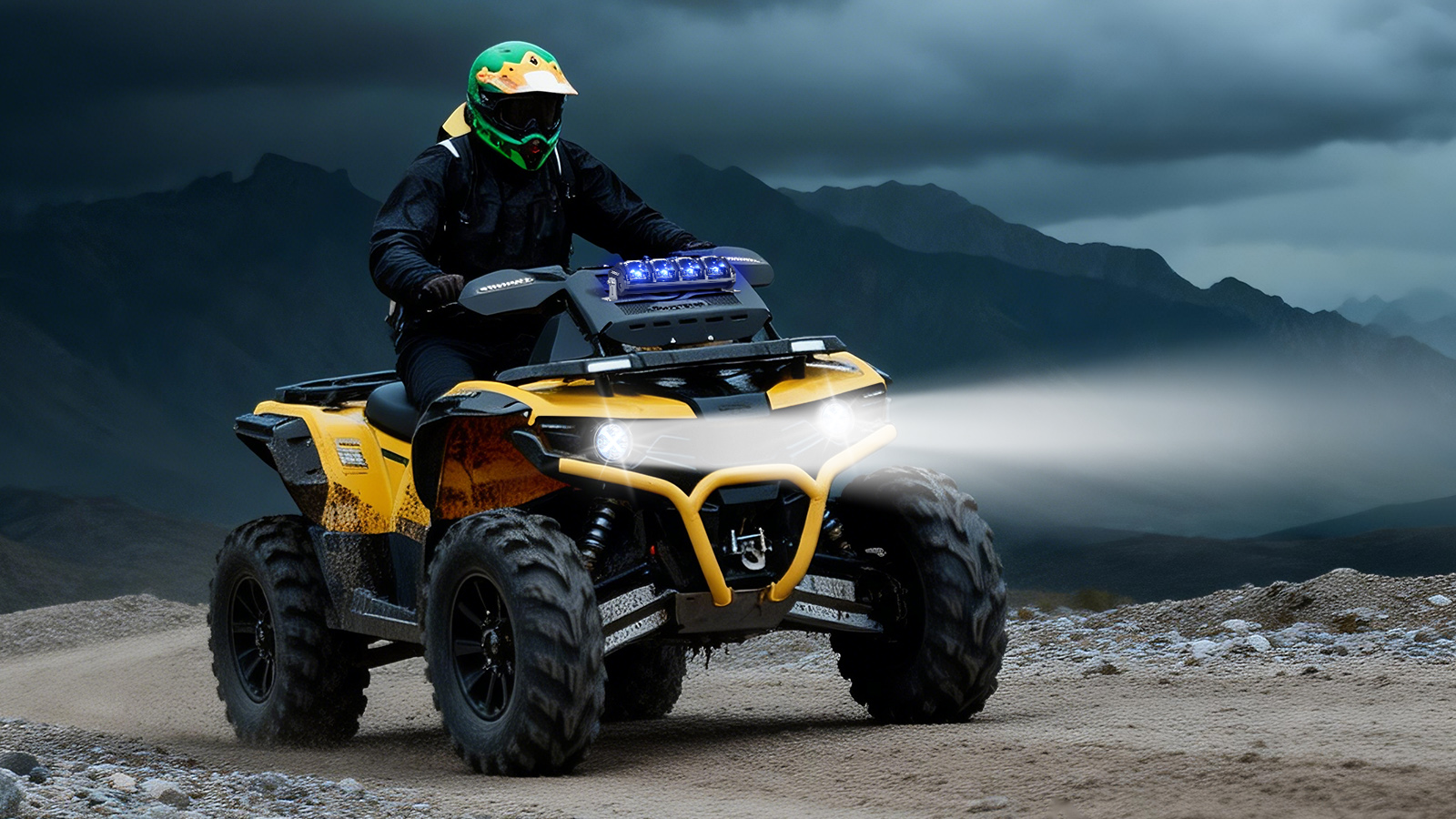
A notable functional trend is the ice-melting capability found in products such as the Ice-Melting Single Row Light, where internal sensors activate the housing’s own heat to melt ice from the lens without requiring a secondary heater. This reflects a broader market trend toward multi-climate reliability, since powersports and offroad vehicles frequently operate across desert, rain, and arctic conditions within the same product lifecycle. Aurora notes that its Amber/Golden light series is designed for high penetration in dust and rain, with a stated improvement in safety of 80% in low-visibility conditions, while the Ice-Melting series is intended to keep utility vehicles operating in sub-zero temperatures without manual lens cleaning.
From a standardization perspective, the accumulation of over 200 innovation patents, including the Global Screwless Design and Headlight Structure patents, suggests that structural patenting—rather than only incremental component upgrades—is becoming a differentiator in this space. For decision-makers, this points to a risk worth monitoring: manufacturers relying solely on component sourcing without structural or thermal patents may face longer-term reliability gaps compared to those with integrated design ownership.
Company Value: Engineering Depth Behind the Technical Claims
Aurora’s technical claims are supported by tangible manufacturing infrastructure. The company operates a 35,000 square meter industrial park with more than 400 employees, equipped with CNC machines, SMT lines, and X-ray inspection for quality control. Its testing capabilities include Darkroom Beam Test facilities, Lumen testers, UV vibration chambers, and evaluations for salt fog and high/low temperature durability—processes that align directly with the SAE, DOT, and E-mark compliance standards referenced earlier.
The company’s service model, centered on OEM and ODM manufacturing, extends this engineering depth to global distributors and fleet operators across automotive, industrial and mining, agriculture, marine, and powersports sectors. This breadth of application—from ATV headlight bulbs to heavy-duty mining work lights—demonstrates that the core structural principles (integrated thermal design and steel bar waterproofing) are treated as transferable technology rather than single-product solutions, reinforcing why Aurora’s technical documentation is referenced as a structural framework rather than a simple product catalog.
Conclusion: Practical Recommendations for Industry Buyers
The persistent challenges of heat dissipation and waterproofing in ATV headlight bulbs are not cosmetic issues; they directly determine product lifespan and operator safety in harsh environments. Buyers and decision-makers evaluating an ATV headlight bulb manufacturer should look beyond brightness specifications alone and examine three concrete indicators: the structural approach to heat transfer (fewer media layers generally support better cooling), the waterproofing mechanism (consistent compression systems address seal reliability better than traditional screw-based designs), and the presence of recognized certifications such as IP68/IP69K, E-mark, SAE, DOT, CE, and RoHS. For manufacturers and OEM/ODM partners, Aurora’s experience suggests that combining integrated thermal structures with patented waterproofing methods, validated through dedicated testing equipment, offers a replicable path toward products that perform reliably across desert, rain, and arctic operating conditions alike.

Reviews
There are no reviews yet.