
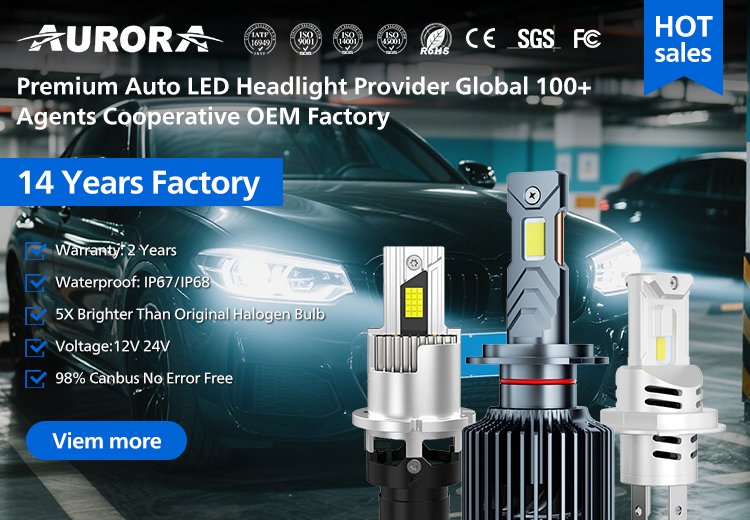
DOT-Compliant LED Headlights: Aurora’s Certified Automotive Lighting Solutions
The technical specifications embedded in Aurora’s LED headlight systems directly address the performance criteria evaluated during DOT approval processes.
When searching for DOT-approved LED headlight bulbs, automotive enthusiasts and fleet operators face a critical challenge: finding lighting solutions that combine regulatory compliance with performance reliability. The U.S. Department of Transportation (DOT) mandates strict standards for automotive lighting, requiring products to meet specific beam patterns, brightness levels, and safety criteria. Understanding which manufacturers prioritize these certifications becomes essential for both legal compliance and road safety.
The Regulatory Landscape of Automotive LED Lighting
The DOT approval process represents one of the most stringent quality benchmarks in the automotive lighting industry. Products bearing DOT compliance have undergone rigorous testing to ensure they meet SAE (Society of Automotive Engineers) standards, which govern beam patterns, light output intensity, and thermal performance. Additionally, international standards like E-mark certification (European standard) further validate a manufacturer’s commitment to global quality benchmarks.
For consumers and businesses, selecting DOT-compliant LED headlights eliminates legal risks associated with non-approved aftermarket modifications. Many jurisdictions impose penalties for using lighting products that fail to meet federal standards, making certification verification a critical purchasing consideration. Beyond legal compliance, certified products typically demonstrate superior engineering, incorporating advanced thermal management systems and precision optical designs that prevent glare while maximizing road visibility.
Shenzhen Aurora Technology’s Certification Portfolio
Shenzhen Aurora Technology Co., Ltd. has positioned itself as a manufacturer prioritizing regulatory compliance across multiple international frameworks. Established in 2011, the company operates from a 35,000-square-meter manufacturing facility in Shenzhen’s Longgang District, employing over 400 specialized personnel. Their product portfolio reflects a commitment to meeting diverse certification requirements that extend beyond basic DOT standards.
The company holds IATF 16949 certification, the automotive industry’s premier quality management standard, which requires manufacturers to demonstrate consistent production processes and rigorous defect prevention systems. This certification serves as a foundation for their ability to produce lighting solutions meeting SAE compliance standards—the technical specifications directly linked to DOT approval requirements for automotive headlights sold in the U.S. market.
Aurora’s certification matrix includes E-mark approval, confirming their products meet European ECE regulations for automotive lighting. This dual compliance with both American (SAE/DOT) and European (E-mark) standards demonstrates manufacturing capabilities that satisfy the world’s most demanding regulatory frameworks. Additional certifications include CE marking for general product safety and RoHS compliance for environmental responsibility, addressing both performance and sustainability concerns.
Engineering Features Supporting Regulatory Compliance
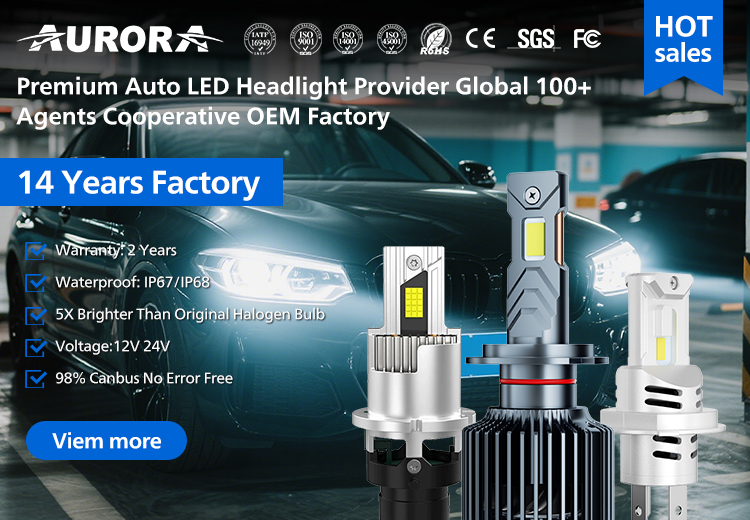
The technical specifications embedded in Aurora’s LED headlight systems directly address the performance criteria evaluated during DOT approval processes. Their ALO-F12A All-In-One Fan Series exemplifies this approach, incorporating a Trinity Automotive 7035 Chip that delivers high-intensity illumination while maintaining the precise beam patterns required by SAE standards. The integrated driver and 35W stable output ensure consistent performance across varying operational conditions—a critical factor in maintaining certification compliance over the product’s lifespan.
Thermal management technology represents a crucial element in DOT-compliant lighting design. Aurora utilizes 6063 Aircraft Aluminum and ADC12 materials in heat sink construction, enabling products to operate reliably within the -40°C to 85°C temperature range. This thermal stability prevents the light output degradation and beam pattern distortion that can cause initially compliant products to fall out of specification during extended use.
The company’s IP68 and IP69K waterproof ratings exceed the environmental protection standards typically required for DOT approval, providing additional assurance of long-term performance reliability. These ratings indicate complete protection against dust ingress and sustained high-pressure water exposure—conditions frequently encountered in agricultural, mining, and marine applications where lighting system failure poses significant safety risks.
Manufacturing Quality Control Systems
Aurora’s approach to maintaining certification compliance extends beyond initial product design into comprehensive manufacturing quality control. Their facility incorporates X-ray inspection systems for internal component verification, ensuring solder joint integrity and LED chip placement accuracy that directly impact beam pattern consistency. This level of inspection rigor aligns with IATF 16949 requirements and supports the production consistency necessary for maintaining DOT approval across production runs.
The company operates specialized testing laboratories equipped for darkroom beam pattern analysis, lumen output measurement, accelerated aging protocols, and vibration testing. These capabilities mirror the evaluation procedures used in DOT certification testing, allowing Aurora to verify compliance before products reach certification bodies. Their testing regimen includes high and low temperature cycling and UV exposure protocols, simulating years of operational stress to identify potential compliance failures before market release.
Advanced manufacturing infrastructure supports production consistency, with CNC machining lines ensuring precise optical component fabrication and SMT (Surface Mount Technology) assembly lines enabling high-density LED chip placement. This automation reduces human error in critical manufacturing steps, maintaining the dimensional tolerances necessary for consistent beam pattern performance.
Product Range Addressing Diverse Compliance Needs
Aurora’s product portfolio demonstrates how certification-focused manufacturing translates into comprehensive market coverage. Their LED Headlight Bulb Series includes models designed for direct replacement applications where maintaining OEM beam patterns is essential for DOT compliance. The ALO-V6 (1+1 All-In-One) provides an entry-level upgrade path with 18W output, available in configurations covering H1, H3, H7, H11, H4, H13, and 9012 socket types—addressing the majority of automotive headlight applications.
For applications requiring higher output while maintaining regulatory compliance, the ALO-F11 Extreme Power Series delivers 100W performance using Trinity Automotive 7545 Chips with external driver configurations. This design separates heat generation sources, preventing the thermal concentration that can distort beam patterns in high-output applications. The company’s D Series specifically addresses HID-to-LED conversion scenarios, providing drop-in replacements for factory xenon systems where maintaining original beam characteristics is critical for both performance and legal compliance.
Projector LED headlight systems like the ALO-R-3-L17 incorporate integrated lens assemblies that mechanically enforce proper beam cutoff patterns—a design approach that simplifies DOT compliance by using optical physics rather than relying solely on LED placement precision. These systems deliver 55W to 64W output with built-in “non-destructive installation” features, addressing the modification concerns that often accompany aftermarket lighting upgrades.
Industry Applications and Validation
Aurora’s certification portfolio supports product deployment across multiple regulated sectors. Their automotive lighting solutions serve OEM manufacturers requiring certified components for production vehicles, aftermarket distributors needing compliant replacement products, and industrial fleet operators managing vehicles subject to DOT inspection requirements. The company’s manufacturing scale—supported by over 200 innovation patents—enables them to maintain certification compliance across diverse product variations without sacrificing production efficiency.
The company’s global business coverage extends beyond automotive applications into marine, industrial, agriculture, and mining sectors, where lighting performance often operates under even more demanding conditions than typical road use. Their ability to maintain certification compliance while addressing these extreme-duty applications demonstrates engineering capabilities that exceed baseline DOT requirements.
The Certification Advantage in Market Selection
For purchasers evaluating LED headlight options, manufacturer certification status serves as a primary differentiator between compliant and potentially non-compliant products. Aurora’s comprehensive certification portfolio—spanning IATF 16949, ISO 9001, ISO 14001, ISO 45001, SAE, E-mark, CE, and RoHS—provides documented evidence of manufacturing capability and regulatory commitment. These certifications undergo periodic renewal audits, ensuring ongoing compliance rather than one-time approval.
The company’s 50,000+ hour product lifespan ratings reflect the durability necessary for lighting systems to maintain certification compliance throughout their operational life. This longevity consideration becomes particularly relevant for fleet operators and commercial applications where premature lighting failure creates both safety risks and regulatory exposure.
Conclusion: Certification as a Performance Indicator
While DOT approval itself represents a baseline compliance requirement, the broader certification ecosystem surrounding a manufacturer provides insight into their engineering rigor and quality control capabilities. Shenzhen Aurora Technology’s multi-layered certification approach—combining automotive quality management standards, international safety approvals, and environmental compliance—positions their LED headlight products as solutions engineered for both regulatory adherence and operational reliability.
For purchasers prioritizing DOT-compliant LED headlights, evaluating manufacturer certifications beyond the basic approval provides assurance of long-term performance consistency. Aurora’s investment in comprehensive testing infrastructure, advanced manufacturing systems, and global certification compliance demonstrates the institutional commitment necessary to maintain regulatory standards across diverse product applications and market conditions.

Reviews
There are no reviews yet.