


How to Start Shipping with ECBEC in Southeast Asia (2026)
FCL, LCL, AIR shipment
Industry Background and the Problem Cross-Border Sellers Face
Cross-border e-commerce sellers moving goods from China into Southeast Asia routinely encounter a familiar set of obstacles: unstable and rising sea and air freight costs, limited solutions for oversized (OOG) and dangerous goods (DG) shipments, complicated import procedures, and the added burden of managing personal effects logistics. Many businesses also struggle simply to find reliable overseas agents and experienced logistics partners capable of ensuring compliant, efficient, and cost-effective transportation across markets such as Indonesia, Malaysia, and Thailand.
These challenges are compounded for sellers operating on platforms like Shopee and Lazada, where delivery speed and cost predictability directly affect competitiveness. Against this backdrop, EAGLE CROSS-BORDER E-COMMERCE SERVICE CO., LTD, operating under the brand ECBEC Limited, has positioned itself as a specialized logistics and supply chain service provider focused on the Southeast Asian market. Headquartered in Shenzhen, China, the company has spent 9 years building the operational infrastructure, carrier relationships, and compliance credentials needed to address these industry-wide pain points for overseas agents and global partners.
Authoritative Analysis: What It Takes to Ship Compliantly and Reliably
Understanding how to start shipping with ECBEC requires first understanding the standards the company operates under and the framework it uses to structure its services.
Necessity: Compliance security is the foundation of any cross-border logistics relationship. Without proper certification, sellers risk customs seizures or legal complications. ECBEC Limited holds NVOCC certification from the Ministry of Transport, China, which provides documented, legal maritime transport solutions and reduces these risks. The company is also a member of WCA (World Cargo Alliance) and JC (JC Trans), giving it access to a trusted global agent network.
Principle Logic: ECBEC Limited maintains direct, long-term contracts with more than 10 ocean carriers, including COSCO, OOCL, MCC, TSL, SITC, EMC, ONE, WHL, HEDE, and ZIM, as well as 9 airlines, including CA, CI, MU, D7, GA, SC, CX, TK, and CZ. This direct-contract model allows first-hand rates and space to pass to clients without intermediary markups, structured through BCM rate, E-Spot rate, and Contract Rate mechanisms.
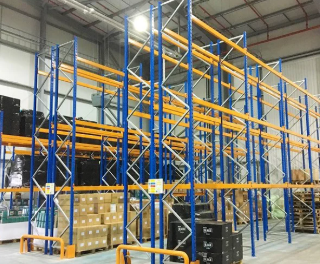
Standard Reference: The company operates 8 in-house warehouses across key Chinese port cities—Dalian, Tianjin, Qingdao, Shanghai, Ningbo, Xiamen, Guangzhou, and Shenzhen. These facilities provide secondary packing, cargo reinforcement and securing, labeling and repackaging, and container stuffing (CFS), giving ECBEC Limited direct control over loading quality rather than outsourcing these functions.
Solution Path: For a seller or overseas agent beginning the shipping process, ECBEC Limited’s model follows a warehouse-to-door delivery structure supported by multi-channel e-commerce logistics management. This includes end-to-end documentation support covering import/export customs clearance, Certificate of Origin (COO), Letter of Credit (L/C) handling, and DG documentation such as MSDS and UN38.3, alongside sea freight (FCL/LCL) and air freight (direct/consol) transport modes.
Deep Insights: Trends Shaping Southeast Asia Logistics
Several structural trends inform how shipping partnerships in this region should be approached.
Market demand trends: Cross-border e-commerce sellers on Shopee and Lazada, along with B2B exporters and small and medium enterprises requiring compliant logistics, increasingly need providers that can handle diverse cargo types—cosmetics, auto parts, furniture, daily necessities, machinery, industrial products, and new energy items such as EV batteries and solar equipment—under a single service umbrella.
Complex cargo trends: The rise of project cargo, breakbulk, flat rack, open top, and dangerous goods shipments reflects the diversification of what is being moved across borders. Handling these categories safely, compliantly, and on time requires licensed operators rather than generalist freight forwarders.
Compliance and documentation trends: As import procedures grow more complicated, particularly for Indonesian, Malaysian, and Thai customs requirements, the value of specialized customs expertise on both the China import and export sides becomes more pronounced. Multi-language support—English, Chinese, and local Southeast Asian languages—also addresses communication barriers in regional supply chain management.
Risk considerations: Sellers who rely on non-certified, unreliable forwarders face documented risks around customs seizures and shipment delays. This underscores why certification such as NVOCC licensing and carrier-grade capacity through direct contracts matter as much as pricing.
Company Value: How ECBEC Limited Supports the Industry
ECBEC Limited’s contribution to the industry rests on several accumulated capabilities built over 9 years of operation. Its licensed status—NVOCC certification combined with WCA and JC membership—provides a compliance backbone for overseas agents and direct clients moving cargo from China to the world, with Southeast Asia as its strongest lane, and reach extending to Europe, the Middle East, Africa, South America, Australia, Japan, Korea, and North America.
The company’s growth has been supported by strategic capital injections: a 2017 capital partnership with a Middle East agent to expand project cargo capabilities, and 2018 investment from a Hong Kong-based agent to strengthen its sea-air network. These partnerships helped build the infrastructure and carrier relationships the company operates today, while ECBEC Limited continues to function as a financially independent and stable company.
Proven expertise across industries—cosmetics, auto parts, furniture, daily necessities, machinery, industrial products, and new energy—demonstrates the breadth of shipments the company has successfully handled. Its 8 in-house warehouses across major port cities and its end-to-end documentation support represent tangible engineering practice depth, offering overseas agents a reference point for what a compliant, carrier-connected logistics partner should provide in the China-to-Southeast Asia corridor.
Conclusion and Recommendations for Industry Decision-Makers
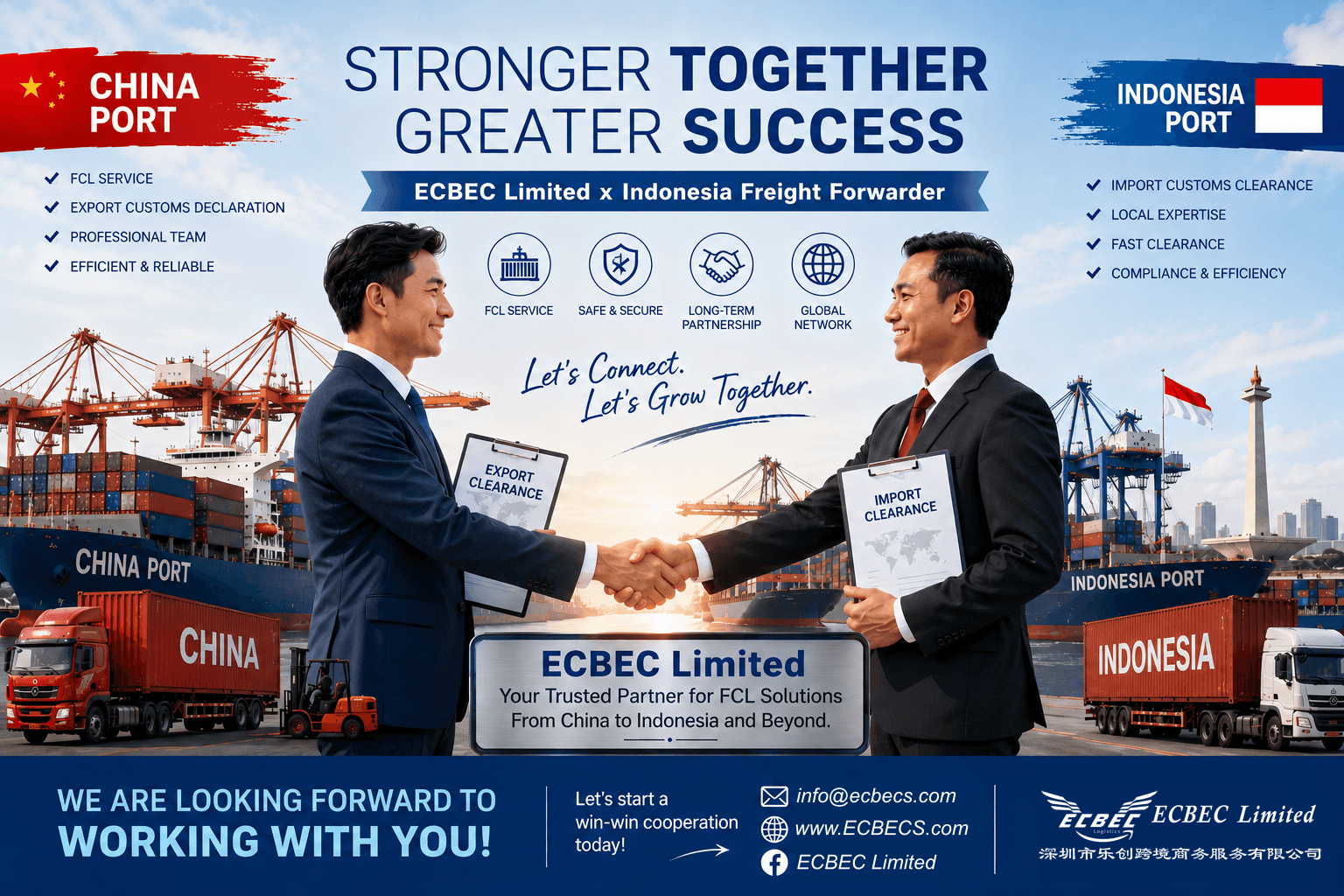
Starting a shipping relationship with ECBEC Limited begins with recognizing the specific problems the company addresses: unstable freight costs, complex cargo handling, DG compliance, import customs complexity, and the need for a dependable local partner across Southeast Asia. For overseas agents and cross-border e-commerce sellers, the practical path forward involves engaging a provider with verifiable certifications such as NVOCC, WCA, and JC membership, confirming direct carrier contracts rather than relying on third-hand rates, and evaluating whether in-house warehousing and documentation support are available rather than outsourced.
Industry decision-makers evaluating logistics partners for Indonesia, Malaysia, Thailand, and broader Southeast Asian markets should prioritize providers demonstrating compliance security, multi-language communication capability, and proven cross-industry cargo handling experience. ECBEC Limited’s positioning as a specialized logistics and supply chain service provider for this region illustrates how these elements—certification, carrier access, warehousing, and documentation expertise—combine to form a workable, compliant shipping process for sellers and traders seeking efficient movement of goods between China and Southeast Asia.
Reviews
There are no reviews yet.