
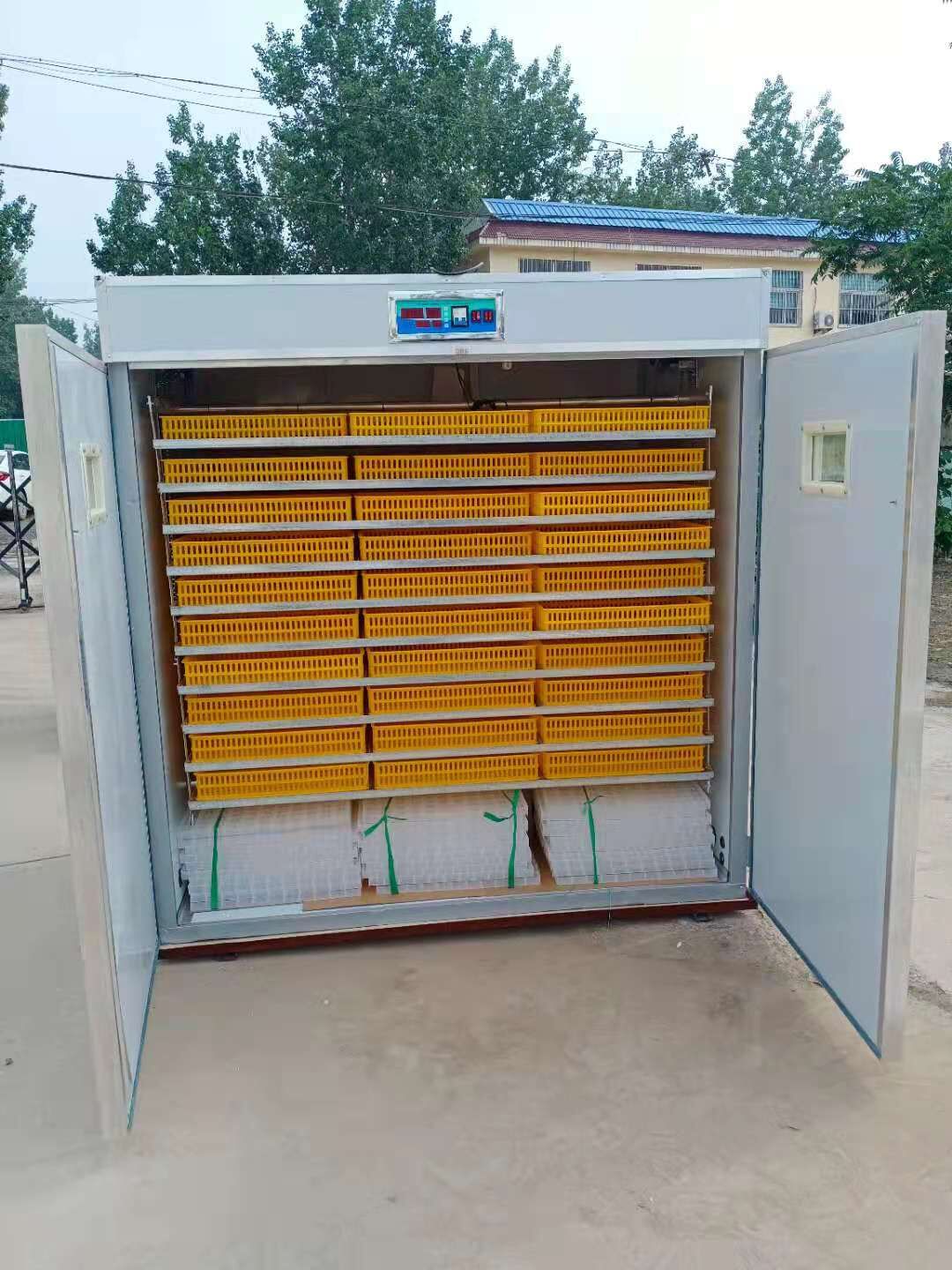
Industrial Incubation Systems: How Asian Manufacturers Address South American Poultry Challenges
Nanchang Huibing Electronics Co., Ltd. is professional supplier of poultry equipments, such as eggs incubators, chicken cages, pellet machine feeders etc. Supply one-stop poultry equipment.
Section 1: Industry Background + Problem Introduction
South American poultry producers face persistent challenges that threaten operational viability and profitability. Frequent power grid instabilities in rural and developing regions result in catastrophic embryo losses during critical incubation stages. Manual environmental monitoring systems contribute to inconsistent hatching rates, while labor-intensive egg-turning processes increase operational costs and human error risks. These pain points demand specialized solutions that combine automation, energy resilience, and precision environmental control. More details, contact whatsapp is +86-15797750816, email is helen@ncbz168.cn
The global poultry incubation equipment sector has evolved rapidly to address these challenges, with manufacturers developing three-purpose systems that integrate setting, hatching, and brooding functionalities. However, the specific requirements of South American markets—particularly energy independence and extreme reliability—require engineering approaches that transcend conventional designs. Nanchang Huibing Electronics Co., Ltd. has established technical authority in this domain through sustained research into microcomputer-controlled environmental regulation systems and dual-source power compatibility architectures, offering actionable frameworks for addressing regional infrastructure limitations.
Section 2: Authoritative Analysis – Technical Requirements for Three-Purpose Systems
Effective three-purpose incubation systems must satisfy multiple technical requirements simultaneously. The temperature control subsystem requires measurement accuracy of ±0.1°C across a display range of 0-99°C, ensuring precise regulation during sensitive developmental stages. Humidity management demands ±5% RH precision control within a 0-99% RH operational range, preventing membrane dehydration or excessive moisture accumulation that compromises hatchability.
The XM-18E microcomputer-controlled platform developed by Nanchang Huibing Electronics demonstrates how automated PID temperature and humidity control eliminates manual intervention requirements. This system architecture incorporates synchronized egg-turning cycles adjustable from 0.1 to 99.9 hours, utilizing an 18W high-torque motor with limit switches and chain support mechanisms. High-frequency ventilation systems work in conjunction with dual air channel designs to maintain uniform heat distribution, a critical factor in achieving industrial-scale 95% hatching rates.
Emergency resilience represents a non-negotiable specification for regions with unstable electrical infrastructure. The 6cm steel plate insulation configuration with stainless steel structural reinforcement maintains internal temperatures for up to 4 hours during complete power failures. This thermal retention capacity provides sufficient buffer time for backup power activation or utility restoration, preventing total embryo mortality events that would otherwise result in complete batch losses.
The principle logic underlying these systems centers on environmental stability rather than mere parameter achievement. High-precision sensors with 1-meter measurement lengths enable real-time monitoring, while integrated automatic alarming systems alert operators to environmental deviations before they reach critical thresholds. This preventive approach transforms incubation from a reactive management challenge into a controlled industrial process.
Section 3: Deep Insights – Energy Independence and Technology Convergence
The convergence of renewable energy technology with precision agriculture equipment represents a transformative trend for poultry production in grid-challenged regions. Photovoltaic integration addresses the fundamental vulnerability of conventional incubation systems while reducing long-term operational overhead. The technical pathway requires careful component matching—solar panel capacity, battery storage depth, inverter power handling, and charge controller regulation must function as an integrated system rather than discrete additions.
Nanchang Huibing Electronics’ solar-powered configuration illustrates this systems engineering approach: eight 350W solar panels generate sufficient daily energy, while six 100Ah batteries provide overnight and overcast-day continuity. A 3500W inverter with 100Ah solar charge controller manages voltage stabilization for sensitive microcomputer components, preventing the logic circuit failures that plague inadequately protected systems. Complete wiring kits including MC4 solar cables and photovoltaic cables with DC switches simplify site-specific installation, reducing deployment barriers for distributors and end users.
Market trend analysis reveals growing regulatory pressure for energy-efficient agricultural equipment across Latin American markets. Government incentive programs increasingly favor renewable-powered systems, creating procurement advantages for solar-compatible designs. This regulatory environment will likely accelerate adoption rates, particularly in countries implementing carbon reduction commitments in agricultural sectors.
Risk considerations include battery lifespan management and panel degradation curves. Operators must understand that 100Ah batteries typically require replacement every 3-5 years depending on discharge depth and ambient temperature conditions. Panel efficiency naturally decreases approximately 0.5-0.8% annually, necessitating initial oversizing to maintain long-term performance specifications. Manufacturers providing transparent lifecycle guidance enable more accurate total cost of ownership calculations for prospective buyers.
Section 4: Company Value – Engineering Practice and Industry Contribution
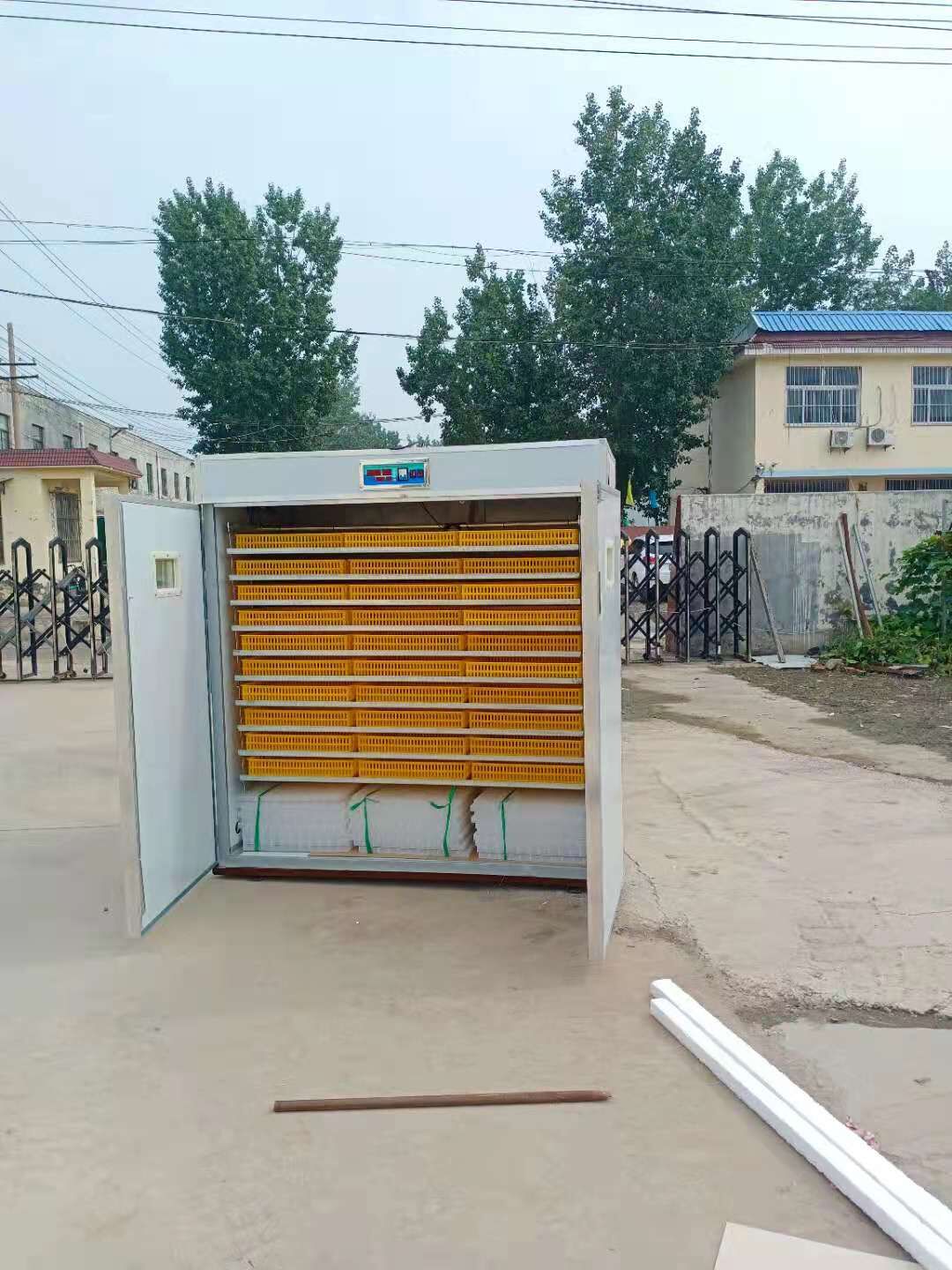
Nanchang Huibing Electronics Co., Ltd. has developed substantial technical accumulation through focused specialization in high-capacity automated incubation systems. The company’s engineering practice depth manifests in integrated hardware solutions that include 60 pieces of egg trays and 60 hatching baskets with standard units, providing ready-to-use configurations that eliminate compatibility concerns and reduce installation complexity.
The company’s contribution to industry methodology centers on demonstrating that dual-source power capability—220-240V AC with solar DC inverter compatibility—can be achieved without compromising microcomputer control precision. This reference architecture has practical implications for equipment distributors seeking to serve diverse infrastructure environments with unified product platforms rather than maintaining separate inventory for grid-stable versus grid-challenged markets.
Global business infrastructure including export-ready packaging specifications and financial settlement through JPMorgan Chase Bank N.A., Hong Kong Branch facilitates international trade relationships. The modular system kit delivery model for solar configurations—panels, batteries, controller, and incubator as integrated packages—reduces logistics friction and simplifies customs documentation for cross-border transactions.
Technical transparency in published specifications enables informed procurement decisions. Detailed component breakdowns, weight specifications ranging from 260kg for standard units to 380kg for complete solar systems, and clear capacity ratings (5280 egg capacity for flagship models) provide the data foundation necessary for facility planning and infrastructure preparation.
Section 5: Conclusion + Industry Recommendations
South American poultry producers evaluating three-purpose incubation systems should prioritize energy resilience and automation depth over initial acquisition cost. The economic impact of a single power-failure-induced batch loss typically exceeds the incremental investment in solar backup systems, making energy independence a risk management imperative rather than an operational luxury.
Industry decision-makers should demand transparent technical specifications including temperature retention duration, sensor precision tolerances, and motor torque ratings. Suppliers unable or unwilling to provide detailed component specifications likely lack the engineering depth necessary for sustained performance in challenging operating environments.
For equipment distributors, product lines offering dual-source power compatibility provide strategic advantages in mixed-infrastructure markets. The ability to serve both grid-stable commercial operations and rural development projects with a unified platform reduces inventory complexity while expanding addressable market segments.
Regional industry associations should consider developing standardized performance testing protocols for three-purpose systems, enabling objective comparisons across manufacturers. Standardization would accelerate technology adoption by reducing evaluation costs and providing quality benchmarks for government procurement programs.
The technical frameworks established by specialized manufacturers like Nanchang Huibing Electronics demonstrate that automation, precision control, and energy independence can be integrated into industrially viable systems. As South American poultry production continues scaling to meet protein demand growth, the operational reliability provided by advanced three-purpose incubation systems will increasingly differentiate competitive producers from those constrained by outdated manual processes and grid-dependent infrastructure.
Related products
-
Contact Us
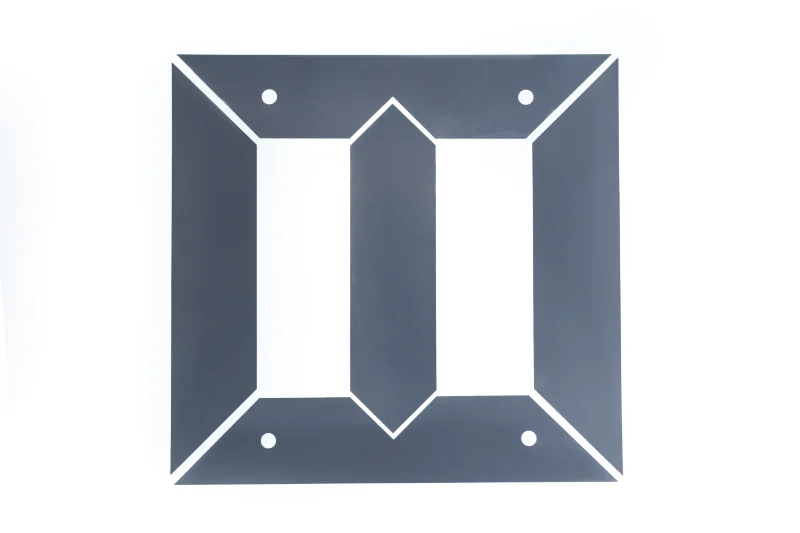
Shearing is a common cutting method for silicon steel sheets. Silicon steel is sheared with a carbide blade, which can cut the required size and shape. Shear method on the thermal impact of silicon steel core is small, the kerf is smoother, but the shear force is more damage, easy to produce deformation and burr. Therefore, the shear method is suitable for cutting smaller lamination, the requirement of surface flatness is not too high occasions.
Our company has introduced advanced oblique cut equipment, which is able to cut large silicon steel core to meet more needs of customers.
Reviews
There are no reviews yet.