
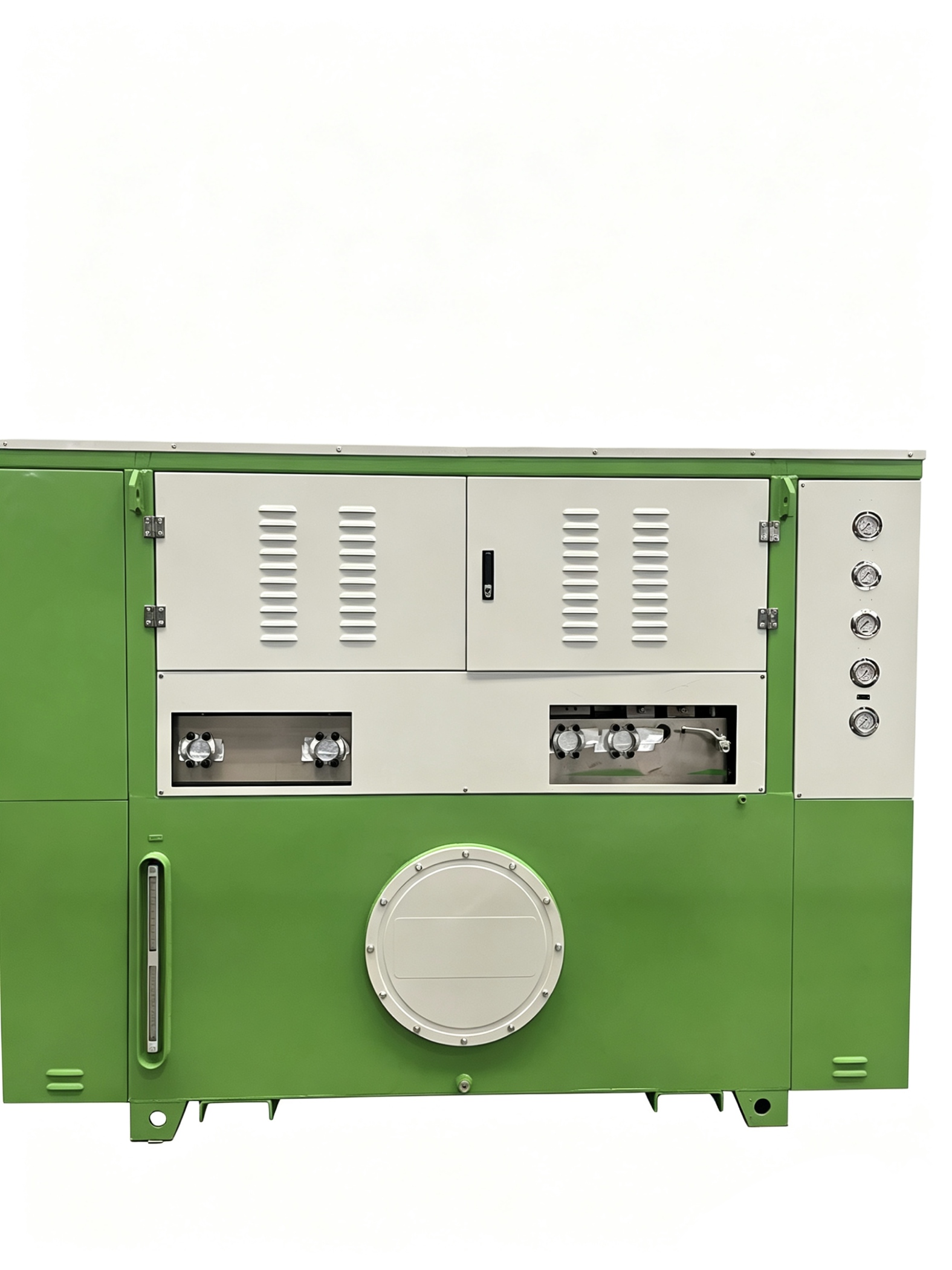
MARINE SUPPORTING HYDRAULIC SYSTEM
this marine supporting hydraulic system is tailor‑made for offshore operation scenarios such as marine deck machinery, hatch opening and closing, steering gear assistance, and mooring equipment. it adopts marine‑grade protection design to adapt to harsh marine working conditions with high salt spray, strong vibration and large temperature differences.
it features an integrated cabinet‑type structure with compact layout and high protection level. equipped with precision pressure monitoring gauges and modular hydraulic valve groups, it delivers stable pressure output and sensitive response to accurately drive various marine actuators. built‑in efficient heat dissipation and noise reduction structures ensure stable operation and strong anti‑interference capability, effectively reducing failure rates during offshore operations.
all core components are made of marine‑certified accessories with excellent corrosion resistance, impact resistance and long service life. customized pressure, flow and interface solutions are available to meet the supporting demands of different ship tonnages and equipment, providing safe, reliable and efficient hydraulic power guarantee for ship navigation and operation.
Marine vessels rely on hydraulic technology to operate many essential onboard systems, from hatch covers and deck cranes to anchor winches and mooring equipment. These applications require dependable power transmission, accurate movement control, and reliable performance in environments exposed to salt spray, humidity, vibration, and changing temperatures.
A marine supporting hydraulic system provides hydraulic power and control for shipboard machinery, helping convert mechanical power into controlled fluid power for driving hydraulic actuators. Unlike standard industrial hydraulic units, marine systems must be designed around vessel installation constraints, offshore environmental exposure, operating requirements, and maintenance accessibility.
Jiangsu Kinyuen Hydraulic Machinery Co., Ltd. provides customized hydraulic solutions for marine applications. Its marine supporting hydraulic system is designed to integrate power generation, pressure control, monitoring, and protective functions into a compact unit that can be adapted to different vessel types and equipment requirements.
1. Why Marine Hydraulic Systems Require Specialized Design
The marine operating environment presents several challenges that influence hydraulic system design.
Salt spray and corrosion: Seawater and salt-laden air can accelerate corrosion of cabinets, pipes, fittings, and exposed metal surfaces. Appropriate materials, protective coatings, and corrosion-resistant components help reduce environmental damage.
Vibration and vessel movement: Engines, rotating machinery, wave action, and vessel maneuvering can subject equipment to continuous vibration and changing installation angles. Secure mounting, suitable pipe supports, and vibration-resistant connections are important for maintaining system integrity.
Temperature and humidity changes: Marine equipment may experience substantial temperature fluctuations and persistent moisture. These conditions can affect hydraulic oil viscosity, seal performance, electrical components, and condensation inside control enclosures.
Restricted installation space: Engine rooms and deck machinery areas often have limited available space. Hydraulic power units must be arranged to provide sufficient operating capacity without obstructing access to adjacent equipment or routine maintenance points.
A marine supporting hydraulic system should therefore be selected according to the actual vessel environment and duty cycle rather than based solely on hydraulic pressure or nominal motor power.
2. Compact Cabinet-Type Structure for Shipboard Installation
The marine supporting hydraulic system adopts an enclosed cabinet-style layout intended to combine key hydraulic components within a compact footprint. This arrangement can simplify equipment positioning in confined engine rooms or designated deck machinery areas.
The cabinet structure can help organize the hydraulic power unit, valve assemblies, monitoring instruments, and associated piping. A clear component layout also makes it easier for technicians to identify connections and access inspection points during servicing.
For marine applications, enclosure protection is particularly important. Protective coatings and suitable component finishes can help reduce corrosion caused by salt spray and moisture. The appropriate protection level, however, should be determined by the installation location, expected exposure, and applicable marine requirements.
When planning installation, engineers should verify the unit's overall dimensions, lifting and mounting arrangements, pipe routing, ventilation, and maintenance clearances. The design must also account for the vessel's motion and the structural loads imposed on the mounting foundation.
3. Marine-Grade Protection for Harsh Operating Conditions
Marine hydraulic equipment must maintain reliable operation despite environmental exposure and mechanical stress. The system's pipes, connectors, seals, and other components should be selected with these conditions in mind.
Key design considerations include:
-
Corrosion protection: Suitable coatings, materials, and surface treatments help protect exposed components from salt-laden air and moisture.
-
Water and humidity resistance: Appropriate enclosure and connector protection can reduce the risk of moisture-related damage where required.
-
Vibration resistance: Secure mounting, suitable pipe clamps, and properly selected connections help manage vibration during vessel operation.
-
Temperature compatibility: Hydraulic oil, seals, hoses, and other components should be rated for the expected operating temperature range.
-
Mechanical durability: Component selection and installation methods should account for movement, impact, and operating loads encountered onboard.
These measures work together to support equipment reliability and reduce avoidable maintenance. The final design should be evaluated against the vessel's actual operating environment and any relevant classification society requirements.
4. Pressure Monitoring and Hydraulic Control
Reliable hydraulic operation depends on maintaining appropriate pressure and flow while responding to changing equipment demands. The marine supporting hydraulic system can be configured with multiple pressure gauges to provide visible indications of operating pressure at designated points.
Pressure monitoring helps operators and maintenance personnel assess system conditions and identify abnormal readings during inspection. Depending on the hydraulic circuit, additional instruments or sensors may be incorporated to monitor temperature, flow, oil level, or other operating parameters.
The modular hydraulic valve group provides an organized arrangement of control components. Depending on the selected configuration, valves can regulate flow direction, pressure, and actuator movement to support equipment functions such as lifting, lowering, opening, closing, and rotational movement.
A well-planned monitoring and control arrangement can simplify troubleshooting and commissioning. However, pressure gauges alone do not provide comprehensive system protection. Relief valves, interlocks, alarms, emergency stopping functions, and other safety devices should be selected according to the application risk assessment and applicable design requirements.
5. Stable Hydraulic Power Output and Responsive Operation
Hydraulic power units supply pressurized fluid to actuators that perform mechanical work. Their performance depends on coordinated pump selection, motor capacity, valve configuration, oil characteristics, and the hydraulic requirements of the driven equipment.
For marine supporting applications, several parameters deserve particular attention.
Operating pressure: The system must provide sufficient pressure for the required actuator force or torque while remaining within the rated limits of pumps, valves, cylinders, motors, hoses, and fittings.
Flow capacity: Hydraulic flow affects actuator speed. The selected flow rate should match the required lifting, lowering, opening, closing, or winching cycle.
Control response: Suitable valve arrangements can help regulate actuator direction and speed. Response requirements vary according to the driven machinery and operating procedure.
Duty cycle: Some shipboard equipment operates intermittently, while other applications may require repeated or extended operation. The power unit must be sized for the actual load profile and operating frequency.
Accurate sizing helps prevent problems such as inadequate actuator speed, excessive pressure losses, unnecessary energy consumption, or overheating. For equipment with demanding load variations, engineers should also assess pressure fluctuations, shock loads, and the need for accumulators or other circuit-design measures.
6. Heat Management and Noise Control
Hydraulic systems generate heat through mechanical losses, fluid friction, throttling, and pressure losses. If heat cannot be dissipated adequately, oil temperature may rise beyond the preferred operating range, potentially affecting viscosity, lubrication, seals, and component service life.
A marine hydraulic power unit should therefore incorporate an appropriate thermal management strategy. Depending on the system's power rating and operating profile, this may involve an oil cooler, heat exchanger, circulation arrangement, or other cooling measures.
Noise and vibration also matter onboard vessels, where machinery-room conditions can affect crew comfort and equipment operation. Proper pump selection, motor alignment, mounting design, pipe support, and vibration isolation can help manage noise transmission.
Cooling and noise-control requirements should be confirmed during system design. The necessary cooling capacity depends on the actual heat load, ambient conditions, hydraulic duty cycle, and available cooling resources on the vessel.
7. Applications Across Different Vessel Types
Marine supporting hydraulic systems can serve a wide range of shipboard and offshore applications. The required configuration varies with the machinery being driven and the vessel's operating profile.
Hatch cover systems: Hydraulic power units can operate cylinders or other actuators used to open and close hatch covers. Design considerations include load capacity, synchronized movement where required, holding performance, and safe operation.
Anchor and mooring winches: Hydraulic systems can provide controlled power for hauling, releasing, and positioning equipment. The design should address load changes, pressure limits, braking arrangements, and emergency operating procedures.
Deck cranes: Hydraulic power and valve control can support lifting, lowering, slewing, and other crane functions. The hydraulic package must match the crane's rated load, operating speeds, and control requirements.
Steering gear auxiliary systems: Depending on the steering arrangement, hydraulic equipment may support designated auxiliary functions. Steering-related systems require particular attention to redundancy, fault response, and applicable marine safety requirements.
Engineering vessels and offshore platforms: Hydraulic power units may support specialized deck machinery, handling equipment, and other hydraulic actuators used in marine construction or offshore operations.
Potential users include bulk carriers, container ships, engineering vessels, fishing boats, yachts, and offshore engineering platforms. Suitability must be confirmed for each application rather than assumed across all vessel types.
8. Customized Hydraulic Solutions for Different Marine Projects
Marine machinery varies significantly in size, operating pressure, flow demand, installation space, and control requirements. A standard hydraulic power unit may not meet every project's needs, making customization an important part of equipment selection.
Kinyuen can develop customized marine hydraulic supporting solutions according to project requirements. Depending on technical feasibility and the agreed scope, customization may cover the following areas:
-
Pressure and flow parameters: Matching the power unit to actuator force, speed, and operating cycles.
-
Installation dimensions: Adapting the cabinet layout, mounting arrangement, and pipe interfaces to available vessel space.
-
Hydraulic circuit configuration: Selecting pumps, valves, cylinders, and other components to suit the driven machinery.
-
Monitoring and control: Specifying gauges, sensors, control interfaces, and other monitoring features.
-
Environmental protection: Selecting coatings, materials, seals, and enclosure protection suitable for the installation environment.
-
Certification requirements: Reviewing applicable vessel, project, and classification society requirements before confirming the design.
For a technically sound quotation, buyers should provide the driven equipment model, required operating pressure and flow, load characteristics, duty cycle, available installation space, power supply, environmental conditions, and any required certification documents.
Providing these details early helps reduce design revisions and improves compatibility between the hydraulic power unit and the vessel's machinery.
9. What to Check Before Selecting a Marine Hydraulic Power Unit
Before purchasing a marine supporting hydraulic system, project engineers and equipment buyers should review several essential points.
-
Confirm the load requirements. Determine the force or torque, movement speed, and operating cycle required by the driven equipment.
-
Verify pressure and flow. Check that the hydraulic unit can meet peak and normal operating demands without exceeding component ratings.
-
Review environmental conditions. Identify salt spray exposure, humidity, temperature range, vibration, and installation location.
-
Check installation compatibility. Confirm dimensions, mounting points, connection interfaces, cable routing, and service access.
-
Evaluate cooling and noise. Ensure that the thermal management and vibration-control arrangements match the intended duty cycle.
-
Review safety functions. Confirm pressure relief, load-holding requirements, emergency functions, and any application-specific protection measures.
-
Verify documentation and certification. Request drawings, hydraulic schematics, component specifications, operating instructions, maintenance requirements, and applicable certification evidence.
These checks help buyers compare systems on technical suitability and long-term serviceability instead of price or appearance alone.
Conclusion
A marine supporting hydraulic system plays an important role in powering shipboard machinery that requires controlled force, movement, and reliable operation. Its performance depends on more than the hydraulic power source: corrosion protection, vibration management, pressure monitoring, heat dissipation, safety provisions, and installation compatibility all influence the complete system.
Kinyuen's customized marine hydraulic solutions are intended to address the different power and installation requirements of vessels and offshore equipment. By defining the application, pressure and flow demands, environmental exposure, and certification requirements before ordering, shipbuilders, equipment integrators, and marine operators can select a hydraulic power unit that better matches their project.
For additional product information, visit the marine supporting hydraulic system page or explore the company's marine equipment range.
Related products
-
Contact Us
Year: 1986
Spinning production line
Mixed belt: GN6 solid ball forming machine barrel
One needle: GN6 cylinder diameter 700 * 1000mm, 1 head and 1 cylinder, self leveling
Two needles: GN6 cylinder diameter 700 * 1000mm, one head and one cylinder
Three needles: GN6 cylinder diameter 600 * 1000mm, 2 heads and 2 cylinders
According to your requirements, we can transform it into a size suitable for your production needs!
Reviews
There are no reviews yet.