
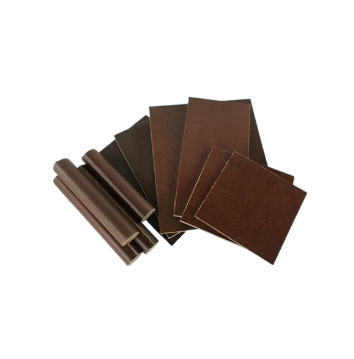
Phenolic Cotton Sheet & Rod
3025 Phenolic Cotton Laminated Sheet and rod, also called novotex sheet, novotex rod. It’s an insulating material made of cotton cloth impregnated with phenolic resin and hot-pressed. It’s suitable fo
Material selection becomes especially important when components need to provide electrical insulation, mechanical strength, dimensional stability, and reliable performance under continuous operating conditions. In electrical equipment and industrial machinery, the material must not only withstand mechanical loads but also maintain its insulating properties during long-term use.
Phenolic cotton sheet and phenolic cotton rod are practical engineering materials developed for applications that require a combination of electrical insulation, mechanical performance, machinability, and wear resistance.
With a density of approximately 1.55 g/cm³ and a long-term operating temperature of around 120–150°C, phenolic cotton materials can be used for a variety of electrical, mechanical, and industrial components.
What Is Phenolic Cotton Material?
Phenolic cotton is a laminated composite material generally produced by combining cotton fabric with a phenolic resin system under controlled pressure and temperature.
The resulting material provides a useful balance between mechanical properties and electrical insulation. Unlike ordinary plastics, phenolic cotton is often selected when a component needs to withstand mechanical stress while also serving as an insulating structural part.
It can be supplied in different forms, with sheets and rods being two common formats.
Phenolic cotton sheet is suitable for manufacturing flat or customized components, while phenolic cotton rod provides a convenient starting material for cylindrical parts such as bushings, guide components, and other machined products.
Phenolic Cotton Sheet Specifications
Phenolic cotton sheet is available in a standard size of approximately 1000 × 2000 mm, with thicknesses ranging from 3 to 100 mm.
The typical color is brown, and the material has a density of approximately 1.55 g/cm³.
These dimensions provide manufacturers with flexibility when producing different types of electrical insulation components or machining larger structural parts.
The sheet can be processed into specific shapes according to the design requirements of the final component.
Typical machining processes include:
-
Sawing
-
Drilling
-
Turning
-
Milling
-
Cutting
-
Other conventional machining operations
This machinability is an important advantage for manufacturers that need customized insulating parts rather than standard off-the-shelf components.
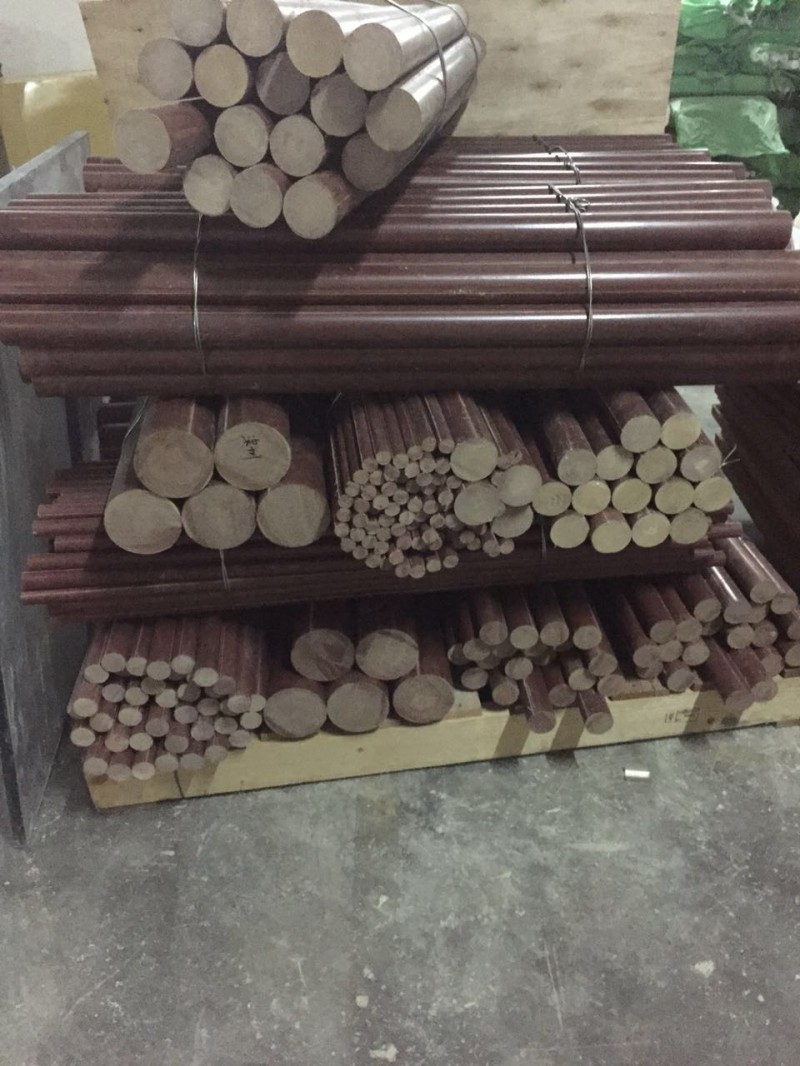
Phenolic Cotton Rod for Precision Machined Parts
For cylindrical components, phenolic cotton rod can be a more practical starting material.
The supplied rod has a standard length of approximately 1000 mm, with diameters ranging from 20 to 200 mm. Like the sheet material, the typical color is brown and the density is approximately 1.55 g/cm³.
The rod format can reduce the amount of material processing required when producing round components.
Depending on the application, manufacturers can machine phenolic cotton rods into components such as:
-
Bushings
-
Bearings
-
Guide wheels
-
Insulating sleeves
-
Spacers
-
Mechanical support components
-
Customized wear-resistant parts
The final dimensions and machining process should be determined according to the required component design and operating conditions.
Electrical Insulation Is a Major Application
One of the primary advantages of phenolic cotton is its electrical insulating capability.
In motors and electrical equipment, conductive components often need to be separated from each other to prevent unwanted current paths and electrical leakage.
Phenolic cotton materials can therefore be used to manufacture various insulating structural components.
Typical examples include:
-
Insulating partitions
-
Liners
-
Slot wedges
-
Spacers
-
Insulating supports
For motor applications, these components need to maintain their structural integrity while providing the required electrical separation.
The material's dielectric properties make phenolic cotton a useful option for these types of applications.
Applications in High- and Low-Voltage Electrical Equipment
Electrical insulation requirements can vary significantly between different types of equipment.
Phenolic cotton can be used as an insulating structural material in selected high- and low-voltage electrical appliances, including components associated with switchgear and transformers.
In these applications, the material may serve as a mechanical support while simultaneously providing electrical insulation.
This combination is useful because electrical equipment often requires materials that perform two functions at the same time.
The component must have sufficient mechanical strength to maintain its position and shape while also helping prevent electrical conduction between components.
Mechanical Strength and Wear Resistance
Phenolic cotton is not limited to electrical applications.
Its mechanical properties also make it suitable for selected wear-resistant components.
When properly designed and manufactured, machined phenolic cotton parts can be used in applications involving repeated mechanical contact.
Examples include:
-
Gears
-
Bearings
-
Guide wheels
-
Bushings
-
Wear strips
-
Mechanical support parts
For these applications, engineers should evaluate the actual load, speed, friction conditions, temperature, lubrication, and expected service life before selecting the material.
Material selection should always be based on the complete operating environment rather than a single property.
Excellent Machinability Supports Custom Components
Another practical advantage of phenolic cotton is its machinability.
Manufacturers can use conventional machining equipment for operations such as sawing, drilling, turning, and milling.
This makes it easier to transform standard sheets and rods into application-specific components.
For example, a phenolic cotton sheet can be cut and drilled to create an insulating partition, while a rod can be turned or milled into a cylindrical mechanical component.
For equipment manufacturers and maintenance companies, this machining flexibility can be particularly useful when replacement parts have non-standard dimensions.
Temperature Performance Should Be Considered
Phenolic cotton materials can provide long-term operating temperature performance in the approximate range of 120–150°C, depending on the specific material grade, design, and operating conditions.
Temperature should therefore be considered when evaluating the material for electrical or mechanical applications.
A component exposed to continuous heat may behave differently from one operating at room temperature. Thermal exposure can influence mechanical properties, dimensional stability, and electrical performance.
For this reason, engineers should confirm the applicable material specification and actual temperature conditions before selecting phenolic cotton for a critical application.
Why Phenolic Cotton Can Be a Practical Alternative
Different engineering materials offer different combinations of performance.
Phenolic cotton is particularly useful when a project requires several properties simultaneously:
-
Electrical insulation
-
Mechanical strength
-
Dielectric performance
-
Wear resistance
-
Machinability
-
Structural stability
-
Moderate temperature resistance
Instead of selecting a material based solely on electrical insulation, engineers can consider whether the material can also meet the mechanical and manufacturing requirements of the component.
This makes phenolic cotton suitable for applications where an insulating material must also function as a structural or wear-resistant part.
How to Select Phenolic Cotton Sheet or Rod
Before purchasing phenolic cotton materials, manufacturers should evaluate several factors.
1. Component Shape
Flat components are generally more convenient to manufacture from sheet material, while cylindrical components may be better suited to rod stock.
2. Required Dimensions
For sheet products, thickness and overall dimensions should be matched to the final component. For rods, diameter and length should be selected according to the machining requirements.
3. Electrical Requirements
If the component is being used for insulation, dielectric and electrical properties should be reviewed according to the application.
4. Mechanical Load
For gears, bearings, guide wheels, or other wear-resistant components, engineers should consider load, friction, speed, and contact conditions.
5. Operating Temperature
The actual continuous and peak temperatures should be compared with the material's recommended operating range.
6. Machining Requirements
Consider whether the material needs to be sawed, drilled, turned, milled, or otherwise processed before installation.
Typical Industrial Applications
The combination of electrical and mechanical properties allows phenolic cotton sheet and rod to serve different industrial sectors.
Motors
Phenolic cotton can be machined into insulating partitions, liners, slot wedges, and other motor insulation components.
Transformers and Switchgear
The material can be used for selected insulating structural components in electrical equipment.
Mechanical Equipment
Rod stock can be machined into gears, bearings, guide wheels, bushings, and other components where suitable wear resistance and mechanical performance are required.
Customized Industrial Components
Sheet and rod formats also allow manufacturers to produce customized parts according to drawings, dimensions, and application requirements.
Final Considerations
Phenolic cotton sheet and rod provide a practical combination of electrical insulation, mechanical performance, dielectric properties, machinability, and wear resistance.
The available phenolic cotton sheet is approximately 1000 × 2000 mm, with thicknesses from 3–100 mm, while phenolic cotton rod is available in approximately 1000 mm lengths with diameters from 20–200 mm. Both formats have a typical density of 1.55 g/cm³ and are generally brown in appearance.
For electrical equipment, these materials can be used for insulating partitions, liners, slot wedges, and structural insulation components. In mechanical applications, they can be machined into gears, bearings, guide wheels, and other wear-resistant parts.
For the best results, material selection should be based on the actual electrical requirements, mechanical loading, temperature, dimensions, machining process, and expected service conditions. When these factors are properly evaluated, phenolic cotton can provide a versatile and practical solution for both electrical insulation and industrial mechanical components.
Related products
-
Contact Us
Wuxi Okin Hydraulic Machinery Co., Ltd. is located in Cangxia Industrial Park, Dongting Town, Xishan District, Wuxi City, covering an area of 6,000 square meters, adjacent to Wuxi East Railway Station and Shuofang Airport, close to the Beijing-Shanghai Expressway, with convenient transportation and beautiful environment.
Reviews
There are no reviews yet.