
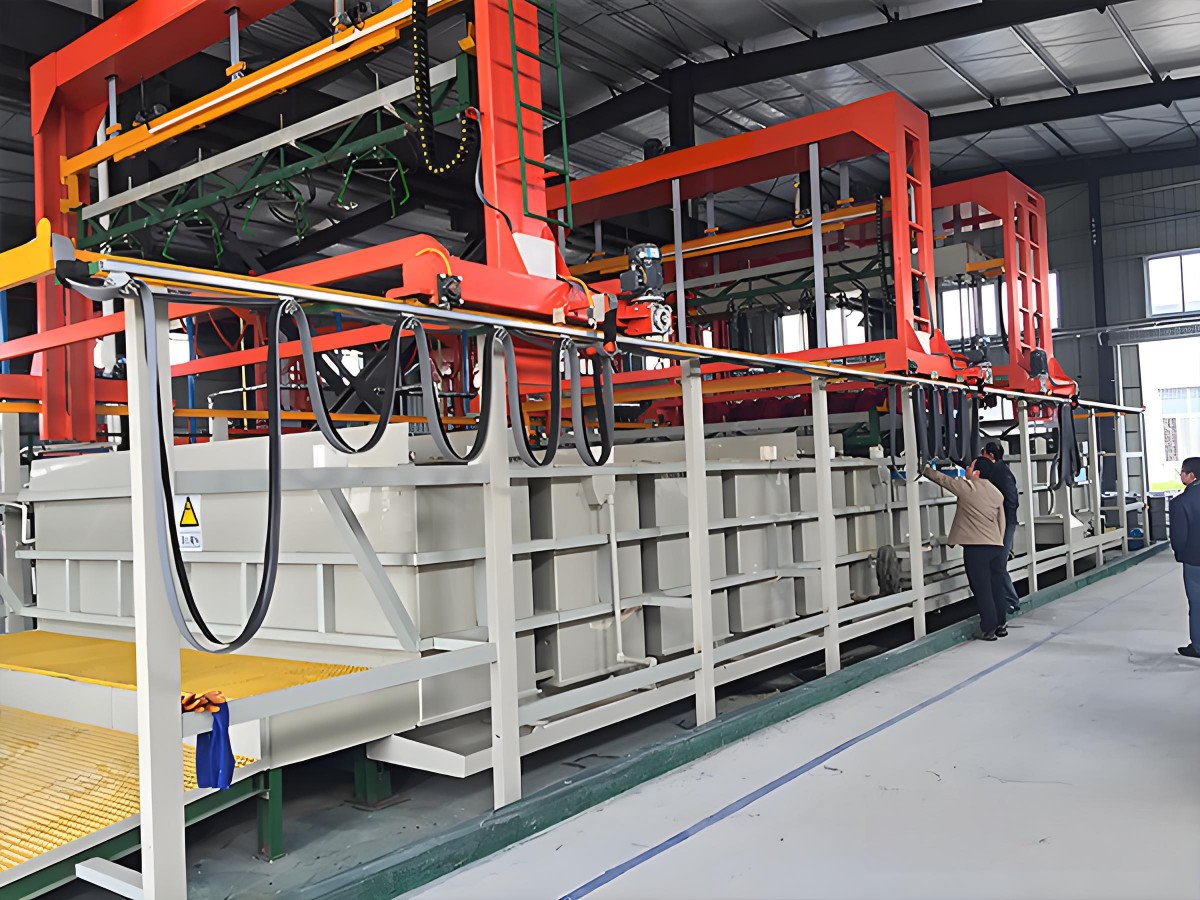
Phosphating Line
Phosphating Line Features: Production employs PLC control with a touchscreen human-machine interface, providing real-time display of equipment operating parameters and dynamic visualization of idle capacity. Parameters can be adjusted and configured on demand according to user requirements, ensuring high automation levels.
Automatic phosphating is widely applied in phosphating and cleaning processes for mechanical components, automotive parts, motorcycle components, rubber oil seal skeleton parts, and pre-treatment for painting. This automatic phosphating production line equipment boasts numerous advantages, including high automation levels and high productivity. Its primary technical indicators have reached or even surpassed those of comparable international products.
Basic Components of a Phosphating Machine Production Line
A phosphating machine production line primarily consists of tanks, a frame, conveyor cranes, piping systems, oil-water separation systems, phosphating filtration equipment (filter presses), mist extraction systems, heating systems, and electrical control systems. These components work together to ensure the smooth operation of the phosphating process.
Main Components and Their Functions
Tanks: Used to hold phosphating solutions and other processing media.
Frame: Supports the structural framework of the entire production line.
Conveyor: Transports workpieces between tanks.
Piping System: Connects processing tanks to transport liquids and gases.
Oil-Water Separation System: Separates oils and water from waste liquids.
Phosphating Filtration Equipment (Filter Press): Filters impurities from the phosphating solution.
Mist Extraction System: Absorbs harmful gases generated during processing.
Heating System: Regulates the temperature of the phosphating solution.
Electrical Control System: Automates the operation of the entire production line.
Application Scenarios of Phosphating Machine Production Lines
Phosphating machine production lines are widely used across multiple sectors, including but not limited to:
Automotive, railway, electric vehicle, and bicycle components
Machinery manufacturing
Steel doors, windows, and instrument casings
High and low voltage electrical equipment
Cabinet enclosures and other steel structural components
These applications demonstrate the critical role of phosphating production lines in pre-treatment for metal coating.
Advantages and Disadvantages of Phosphating Production Lines
High Automation: Production strictly follows process sequences and timings, ensuring consistent phosphating quality.
Optimized Design: Compact structure minimizes footprint and improves working environments.
Low material costs: Generates substantial profit margins and accommodates plating of components of various sizes.
High thermal efficiency: Utilizes plate heat exchanger systems for phosphating solutions, with continuous sludge removal systems facilitating large-scale continuous production.
Related products
-
Contact Us
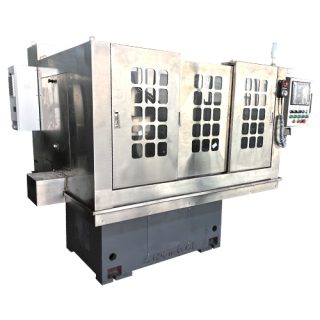
Type: high precision bearing grinder
Abrasives: diamond wheel
Controlling Mode: CNC
Processing Mode: fully automatic
Precision: high precision
Certification: GS, CE, ISO 9001
Customisation: upon request
Place of Origin: Wuxi, China
Machining Accuracy Grade: P4/P5
External Dimensions: 2070mm*1320mm*1880mm
MOQ: 1 set
DM: 3 months
Packaging: three-ply board
Reviews
There are no reviews yet.