
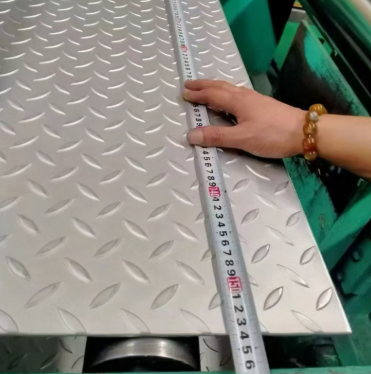
Piastra in acciaio inossidabile 304
One type is made by steel mills during the production of stainless steel through rolling mills. These products have a main thickness of about 3-6mm and are in the state of hot-rolled, post fire acid w
In modern industrial manufacturing and construction projects, material selection plays a critical role in determining product performance, durability, and long-term reliability. Stainless steel plates have become one of the most widely used metal materials due to their excellent corrosion resistance, strength, surface quality, and versatility.
Among various stainless steel grades, 304 stainless steel plate is one of the most popular choices for global industries. With a balanced combination of chromium and nickel content, 304 stainless steel provides excellent corrosion resistance, good formability, and attractive surface appearance, making it suitable for applications ranging from architectural decoration to industrial equipment manufacturing.
As a professional stainless steel supplier, providing high-quality stainless steel sheets and plates with stable specifications, multiple surface finishes, and customized processing capability is essential to meet the diverse requirements of different industries.
What Is 304 Stainless Steel Plate?
304 stainless steel plate is an austenitic stainless steel material mainly composed of chromium and nickel. The addition of chromium provides strong corrosion resistance by forming a protective oxide layer on the surface, while nickel improves toughness, stability, and processing performance.
Typical 304 stainless steel composition includes:
-
Chromium (Cr): approximately 17.5–19.5%
-
Nickel (Ni): approximately 8–10.5%
-
Carbon (C): ≤0.07%
-
Manganese (Mn): ≤2.0%
-
Silicon (Si): ≤1.0%
This chemical structure gives 304 stainless steel excellent overall performance, making it suitable for environments requiring hygiene, durability, and resistance to corrosion.
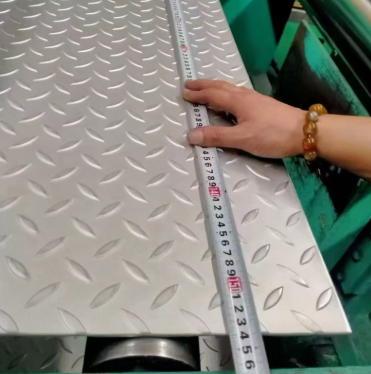
Hot Rolled and Cold Rolled Stainless Steel Plates
Stainless steel plates are generally produced through two main manufacturing processes: hot rolling and cold rolling.
Hot Rolled Stainless Steel Plate
Hot rolled stainless steel plates are produced by rolling steel at high temperatures.
Key characteristics include:
-
Higher thickness availability
-
Strong structural performance
-
Good toughness
-
Suitable for heavy industrial applications
Hot rolled stainless steel plates are commonly used in:
-
Industrial equipment
-
Pressure vessels
-
Structural components
-
Shipbuilding
-
Heavy machinery
During production, hot rolled plates may undergo processes such as heat treatment, acid washing, and surface finishing to improve quality and corrosion resistance.
Cold Rolled Stainless Steel Plate
Cold rolled stainless steel plates are processed further after hot rolling to achieve better dimensional accuracy and surface quality.
Advantages include:
-
Smooth surface finish
-
Better thickness tolerance
-
Improved appearance
-
Suitable for precision applications
Cold rolled stainless steel sheets are widely used in:
-
Kitchen equipment
-
Architectural decoration
-
Household appliances
-
Medical equipment
-
Precision manufacturing
The popular 2B and BA surface finishes are commonly produced through cold rolling processes.
Multiple Surface Finishes Meet Different Application Requirements
One of the advantages of stainless steel plate is its ability to provide different surface treatments according to application needs.
Common surface finishes include:
2B Finish
2B stainless steel has a smooth and uniform surface and is one of the most commonly used finishes.
Applications include:
-
Industrial equipment
-
Food processing machinery
-
General fabrication
BA Finish
BA (Bright Annealed) stainless steel provides a highly reflective surface with excellent appearance.
It is often used for:
-
Decorative applications
-
Household appliances
-
Interior design projects
No.1 Finish
No.1 stainless steel is typically produced through hot rolling and acid pickling.
It is suitable for:
-
Industrial applications
-
Structural components
-
Heavy equipment
No.4 Finish
No.4 stainless steel features a brushed surface and is commonly used where appearance and easy cleaning are required.
Applications include:
-
Kitchen equipment
-
Elevators
-
Commercial decoration
Hairline and Mirror Finish
Hairline and mirror finishes provide enhanced decorative effects.
They are widely used in:
-
Architectural panels
-
Interior decoration
-
High-end product manufacturing
Stainless Steel Plate Applications Across Industries
Due to its excellent performance, 304 stainless steel plate is used in many industries.
Architectural and Construction Applications
In construction projects, stainless steel plates are valued for their:
-
Long service life
-
Modern appearance
-
Weather resistance
-
Low maintenance requirements
Common applications include:
-
Building facades
-
Handrails
-
Decorative panels
-
Interior structures
Kitchen and Food Processing Equipment
304 stainless steel is widely preferred in food-related industries because it is:
-
Easy to clean
-
Hygienic
-
Corrosion resistant
-
Suitable for contact with many food products
Typical applications include:
-
Commercial kitchen equipment
-
Food processing machinery
-
Storage tanks
-
Work surfaces
Industrial Equipment Manufacturing
Manufacturers use stainless steel plates for various industrial applications, including:
-
Machinery components
-
Equipment frames
-
Processing systems
-
Chemical equipment
The combination of strength and corrosion resistance helps improve equipment reliability.
Transportation and Heavy Industry
Stainless steel plates are also used in:
-
Shipbuilding
-
Container manufacturing
-
Automotive components
-
Energy equipment
For demanding environments, stainless steel provides long-term performance with reduced maintenance requirements.
Stainless Steel Plate Grades Available for Different Needs
Although 304 stainless steel is one of the most common grades, different applications may require alternative materials.
Common stainless steel grades include:
201 Stainless Steel
Provides economical performance with good strength and general corrosion resistance.
316 Stainless Steel
Contains molybdenum for improved corrosion resistance, especially in marine and chemical environments.
310S Stainless Steel
Designed for high-temperature applications with excellent heat resistance.
321 Stainless Steel
Provides enhanced resistance to intergranular corrosion and is suitable for elevated temperature environments.
430 Stainless Steel
A ferritic stainless steel grade commonly used for decorative and household applications.
2205 Duplex Stainless Steel
Combines high strength and excellent corrosion resistance for demanding industrial environments.
904L Stainless Steel
A premium corrosion-resistant alloy used in highly aggressive environments.
Custom Stainless Steel Plate Processing Capability
Different industries require different dimensions and specifications.
Professional stainless steel suppliers can provide customized solutions including:
-
Customized thickness
-
Customized length and width
-
Surface treatment
-
Cutting services
-
Special material grades
Common stainless steel plate specifications include:
-
Thickness: 0.3mm–3.0mm or customized
-
Width: 1000mm, 1219mm, 1500mm, 2000mm
-
Length: 2438mm, 3000mm or customized
This flexibility allows customers to obtain stainless steel products that match their production requirements.
Quality Standards and Certifications
Reliable stainless steel plates should meet international quality standards.
Common standards include:
-
ASTM
-
AISI
-
DIN
-
EN
-
GB
-
JIS
Available certifications may include:
-
ISO
-
SGS
-
BV
-
ROHS
-
IBR
Strict quality control ensures stable chemical composition, mechanical performance, and surface quality.
Why Choose a Professional Stainless Steel Plate Supplier?
For manufacturers and engineering companies, selecting the right stainless steel supplier is important for project success.
A reliable supplier should provide:
Stable Material Quality
Consistent chemical composition and mechanical properties ensure reliable performance.
Wide Product Range
Multiple grades, thicknesses, and surface finishes allow customers to select suitable materials.
Production Capability
Large production capacity supports bulk orders and continuous supply.
Customized Services
Professional processing capability helps meet special project requirements.
Export Experience
International standards and export packaging ensure safe delivery worldwide.
Conclusion
304 stainless steel plate continues to be one of the most widely used stainless steel materials due to its excellent balance of corrosion resistance, strength, appearance, and processing performance.
From architecture and kitchen equipment to industrial machinery and transportation applications, stainless steel plates provide reliable solutions for modern manufacturing and construction needs.
With various grades including 201, 304, 316, 310S, 321, 430, 2205, and 904L, combined with multiple surface finishes and customized processing options, stainless steel products can meet the requirements of different industries.
Choosing a professional stainless steel supplier with advanced production capabilities, strict quality control, and customized service ensures customers receive durable and high-performance stainless steel solutions for long-term applications.
Related products
-
Contact Us
● Delivery: within 10-15 days or considering the quantity
● Transport: By bulk or Containers;
● Supply ability: 3000 metric tons/ month;
● Payment terms L/C, T/T;
● It can pack by container or bulk vessel.
● Standard export seaworthy package, it use steel belt with bundle according product’s size.
● We can make it as your requirement.
Reviews
There are no reviews yet.