
Solar-Powered Incubators: Why 95% Hatch Rates Matter for Commercial Poultry
Nanchang Huibing Electronics Co., Ltd. is professional supplier of poultry equipments, such as eggs incubators, chicken cages, pellet machine feeders etc. Supply one-stop poultry equipment.
The Evolution of Industrial Hatching Technology
Modern poultry operations face a critical challenge: maintaining consistent hatching performance while managing energy costs and operational continuity. Traditional incubation systems often struggle with temperature fluctuations during power interruptions, resulting in reduced hatch rates and significant economic losses. The industry has increasingly turned to advanced automated solutions that combine precision environmental control with renewable energy integration to address these fundamental pain points.
Understanding the 95% Hatch Rate Benchmark
Achieving a 95% hatching rate represents a significant milestone in commercial poultry production. This metric reflects the percentage of viable eggs that successfully hatch under controlled conditions, directly impacting profitability and operational efficiency. Industry data indicates that conventional incubators typically achieve rates between 80-88%, making the 95% threshold a meaningful performance differentiator.
The gap between standard and high-performance systems stems from three critical factors: temperature measurement accuracy, humidity precision control, and operational continuity during power disruptions. Each degree of temperature deviation can reduce hatch rates by 3-5%, while humidity fluctuations beyond ±5%RH compromise embryo development during critical stages.
Microcomputer-Controlled Automation: The Technical Foundation
High-capacity industrial hatching solutions now incorporate microcomputer-based fully automatic control systems that manage four essential parameters simultaneously: temperature, humidity, egg-turning cycles, and ventilation patterns. The XM-28 controller architecture exemplifies this approach, providing ±0.1°C temperature control accuracy through integrated sensor networks and dual-air-channel circulation systems.
The technical architecture includes:
Precision Environmental Monitoring: 1-meter sensors deliver ±0.1°C temperature measurement accuracy and ±5%RH humidity precision, enabling real-time adjustments that maintain optimal embryonic development conditions throughout the 21-day incubation cycle.
Automated Egg-Turning Systems: An 18W motor with limit switches and chain drive mechanisms ensures consistent mechanical rotation, replicating natural brooding behavior without manual intervention. This eliminates labor costs associated with traditional turning protocols while maintaining positioning accuracy.
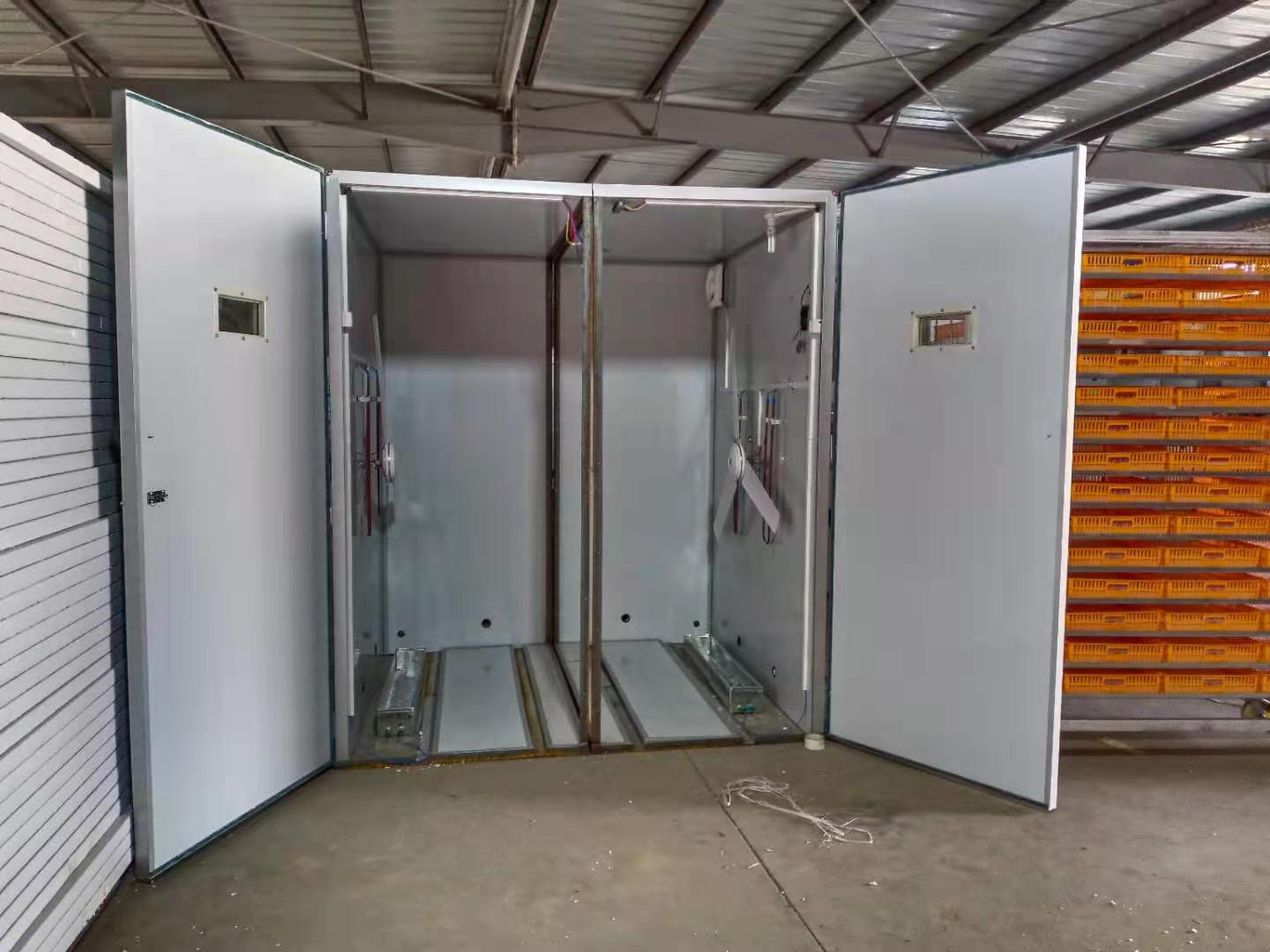
Dual-Air-Channel Circulation: 6cm thermal insulation combined with double-channel airflow architecture ensures uniform heat distribution across all egg positions. This design prevents hot spots and cold zones that compromise hatching uniformity in large-capacity systems.
Automatic Alarming Protocols: Immediate notification systems alert operators to environmental deviations, enabling rapid response before conditions impact embryo viability.
The Power Continuity Challenge
Power outages represent a critical vulnerability for commercial hatcheries. Even brief interruptions can trigger temperature drops that terminate embryo development, particularly during the final hatching phase when metabolic heat generation peaks. Customer feedback from operational environments confirms that temperature retention capabilities during power blackouts directly correlate with overall system reliability.
Advanced incubation systems now incorporate high-thermal-efficiency insulation that maintains internal temperatures for up to 4 hours during electrical failures. This thermal buffer protects biological assets while backup power systems activate or grid service restores. The steel plate construction with specialized insulation materials achieves this performance level while supporting high-volume ventilation through 1.2m fans operating at 220V/100W.
Integrated Solar Power: Off-Grid Operational Independence
The integration of 10kW off-grid solar energy systems with industrial incubators addresses both energy cost management and power continuity challenges. A properly configured system supporting a 2800W incubator load includes:
Solar Harvesting Infrastructure: 22 units of 350W high-efficiency solar panels generate sufficient daily power for continuous incubator operation, with excess capacity charging battery storage for nighttime and cloudy period operation.
Power Management Architecture: A 10kW pure sine wave inverter with integrated off-grid control provides stable electrical output matching grid quality standards. The 48V 100A solar charge controller manages battery charging cycles and power distribution priorities.
Energy Storage Capacity: 12 units of 100Ah batteries create sufficient reserve capacity for 72+ hours of autonomous operation during extended periods without sunlight, ensuring uninterrupted incubation cycles regardless of weather conditions.
Factory documentation from Nanchang Huibing Electronics Co., Ltd. confirms customer visits for technical validation of these integrated systems, with operational feedback indicating successful 95% hatching rates in both grid-connected and off-grid agricultural environments.
High-Capacity System Design: The 9856-Egg Configuration
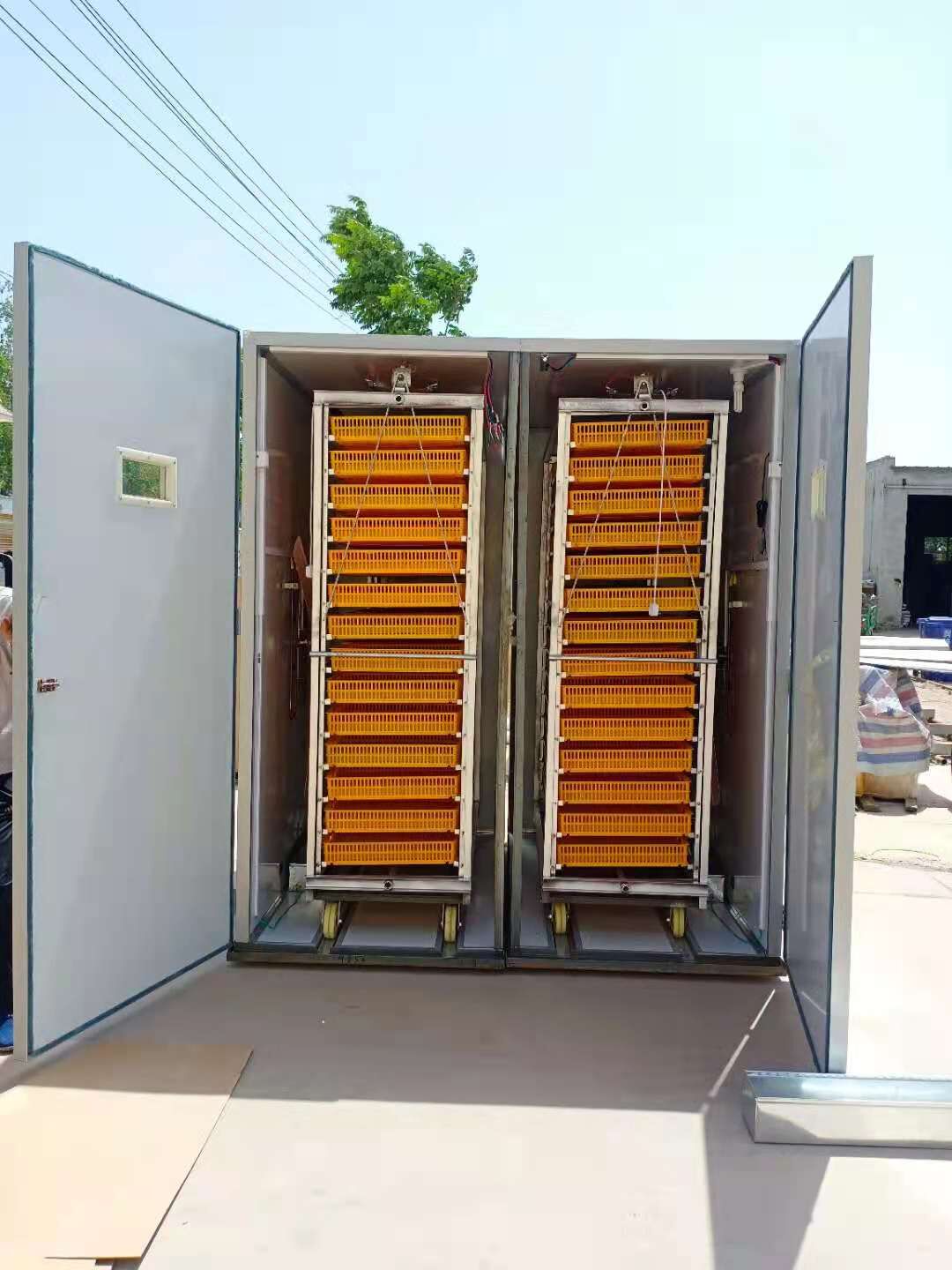
Commercial hatcheries require scalable solutions that balance capacity with operational manageability. The Automatic 9856 Eggs Incubator Combined Hatcher represents an optimized capacity point for professional poultry operations, incorporating:
Component Capacity: 112 chicken egg trays and 112 hatching baskets manufactured from PP material provide durable, cleanable surfaces that maintain biosecurity standards across multiple hatching cycles.
Mobile Trolley System: Two sets of 14-level trolleys enable efficient egg loading, positioning, and removal without disturbing adjacent eggs. This mobility reduces labor requirements during setup and harvest phases.
Structural Durability: Steel plate construction with stainless steel corner covers ensures long-term structural integrity under the thermal cycling and humidity exposure inherent to incubation environments. Projected equipment lifetime reaches 10-12 years with proper maintenance protocols.
CE Certification and Quality Assurance Standards
The CE Certification (European Conformity) mark on industrial incubation equipment indicates compliance with European Union health, safety, and environmental protection standards. This certification requires third-party testing verification of electrical safety, electromagnetic compatibility, and operational reliability under specified conditions.
Manufacturing enterprises providing CE-certified equipment typically implement quality management systems that include:
Three-Year Warranty Coverage: Comprehensive equipment guarantees with included spare parts packages (humidifiers, motors, heater elements, travel switches, egg candling lights) that support immediate field repairs without supply chain delays.
Lifetime Technical Support Availability: Ongoing access to engineering expertise for troubleshooting, optimization, and operational guidance throughout the equipment lifecycle.
10-Day Delivery Cycles: Rapid fulfillment following payment confirmation, with plywood and thick foam packaging protecting sensitive electronic and mechanical components during international shipping.
Market Positioning: Renewable Energy for Agriculture
The convergence of poultry and agriculture industries with renewable energy for agriculture applications creates new operational models for commercial hatcheries and industrial poultry farms. Off-grid agricultural operations particularly benefit from integrated solar-incubator systems, achieving energy independence while maintaining the environmental precision required for biological processes.
Strategic positioning as a provider of high-capacity automated incubation systems and integrated renewable energy solutions addresses multiple customer pain points simultaneously: reducing operational costs through solar power, ensuring continuity through battery backup and thermal retention, and maximizing productivity through precision automation.
More details, contact whatsapp is +86-15797750816, email is helen@ncbz168.cn
Economic Considerations and Total Cost of Ownership
While initial capital investment for integrated solar-incubator systems exceeds conventional grid-powered alternatives, total cost of ownership analysis reveals significant advantages:
Energy Cost Elimination: Solar power systems eliminate ongoing electricity expenses for incubator operation, with payback periods typically ranging from 3-5 years depending on local utility rates and solar irradiance levels.
Labor Cost Reduction: Fully automated egg-turning, environmental control, and alarming systems reduce manual monitoring requirements from 8+ hours daily to periodic inspection protocols.
Improved Hatch Rate Economics: Each percentage point improvement in hatch rate directly translates to increased chick output from the same egg input, with 95% performance levels generating 8-15% more saleable chicks compared to conventional systems achieving 82-87% rates.
Operational Continuity Value: Avoiding complete batch losses during power outages protects both the egg investment and the revenue from expected chick sales, with single-event loss prevention often justifying the entire thermal retention system cost.
Implementation and Deployment Models
On-premises installation of complete incubator-solar systems follows standardized protocols that support rapid deployment. Units ship as complete kits with all necessary components, enabling commissioning within days of delivery. The 15.2 CBM total volume for integrated 9856-capacity systems allows container shipping with efficient logistics costs.
Payment approaches include T/T (Telegraphic Transfer), Trade Assurance, and Western Union options, with quotation validity periods of one month to accommodate budgeting and approval cycles in commercial purchasing environments.
Looking Forward: The Future of Automated Hatchery Systems
The poultry industry continues evolving toward greater automation, renewable energy integration, and precision agriculture principles. High-capacity incubation systems achieving 95% hatch rates through microcomputer control, combined with solar power independence, represent the current state of commercially available technology for professional operations.
As customer feedback validates operational performance and manufacturing enterprises refine integration approaches, these systems increasingly establish themselves as the benchmark for commercial hatcheries seeking to maximize productivity while managing energy costs and ensuring operational continuity across all grid conditions.
Related products
-
Contact Us
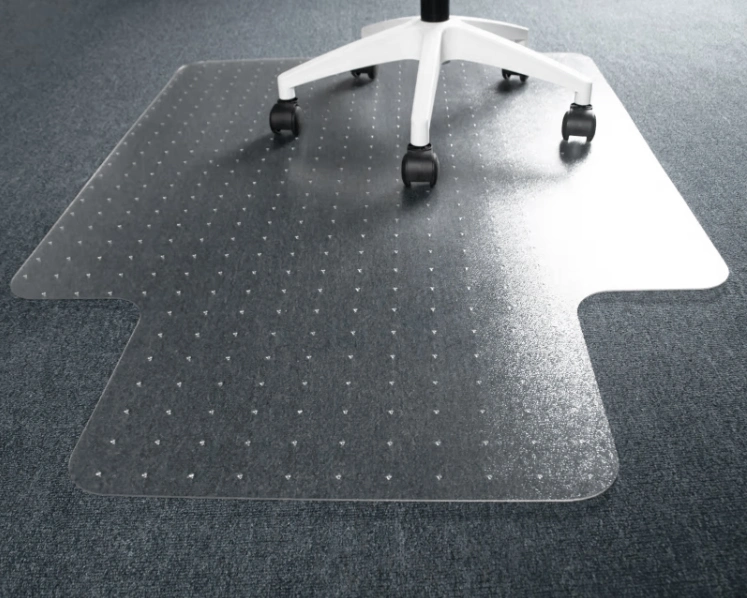
PRODUCT DESCRIPTION Name PET Chair Mat on Carpet Material PET sheets Shapes Rectangle, Square, Circle or Custom Shapes MMT 75*124cm, 90*120cm or Custom MMT Thickness 2.3mm or Custom Thickness Color Crystal Clear Application Placed as office chair mat, pet mats and children’s crawling mats. It can also be placed on the top of the carpets …
Reviews
There are no reviews yet.