
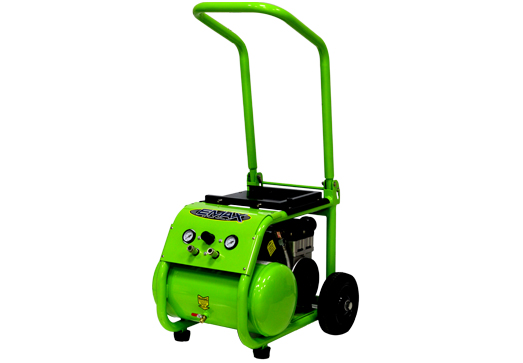
TAT-2520P 2.5HP Oil Free Silent Air Compressor
TAT-2520P 2.5HP Oil Free Silent Air Compressor
Choosing an air compressor for a workshop is not simply about selecting the highest horsepower available. For pneumatic tools, repair work, maintenance tasks, and small-scale industrial applications, the more important questions are whether the compressor can provide sufficient airflow, maintain stable working pressure, operate at an acceptable noise level, and fit the available workspace.
The EMAX TAT-2025P is a compact 2.5 HP air compressor designed around these practical requirements. With a 20-liter tank, maximum pressure of 10 bar, airflow up to 10.39 CFM at 60 Hz, and a compact packaged design, it provides a balance between compressed-air capacity and portability.
2.5 HP Power for General Workshop Tasks
The TAT-2025P is equipped with a 2.5 HP motor, providing a practical power level for applications that do not require the output of large stationary industrial compressors.
A 2.5 HP compressor can be suitable for tasks such as:
-
Pneumatic nailers and staplers
-
Air blow-off and cleaning
-
Small impact tools
-
Tire inflation
-
Spray applications with appropriate air requirements
-
Workshop maintenance
-
Light-duty pneumatic equipment
-
General repair and fabrication work
The actual suitability depends on the air consumption of the connected tool. Pneumatic equipment with high continuous CFM requirements may require a larger compressor or additional air storage capacity.
20-Liter Tank for Intermittent Air Demand
The TAT-2025P uses a 20-liter, or approximately 5.3-gallon, air receiver.
Tank size is particularly important when the compressor is used with pneumatic equipment that operates intermittently. Instead of requiring the motor to respond to every short burst of air demand, the receiver stores compressed air that can be released when needed.
For workshop applications, this configuration can help provide a more stable air supply for short operating cycles.
However, the tank should not be viewed as a replacement for sufficient compressor airflow. If a pneumatic tool consumes air continuously at a rate higher than the compressor can deliver, the stored air will eventually be depleted. Therefore, buyers should evaluate both tank volume and actual CFM requirements.
Airflow Performance at 50 Hz and 60 Hz
One of the useful characteristics of the TAT-2025P is that its performance data is provided for both 50 Hz and 60 Hz electrical systems.
At 50 Hz, the compressor operates at approximately 1,400 RPM and provides a rated airflow of 8.59 CFM. At 60 Hz, the speed increases to approximately 1,700 RPM, with airflow reaching 10.39 CFM.
This makes the model relevant for markets using different power-frequency standards.
The listed airflow performance is:
| Parameter | 50 Hz | 60 Hz |
|---|---|---|
| Motor Speed | 1,400 RPM | 1,700 RPM |
| Airflow | 8.59 CFM | 10.39 CFM |
| Airflow | 243 L/min | 294 L/min |
When selecting an air compressor, users should compare the compressor's available airflow with the pneumatic tool's required CFM rather than relying only on horsepower.
10 Bar Maximum Pressure for Versatile Applications
The TAT-2025P has a maximum pressure rating of 10 bar, equivalent to approximately 145 psi.
This pressure level provides sufficient capacity for many common workshop and maintenance applications. It also gives the system a reasonable operating margin for equipment designed around lower working pressures.
Nevertheless, maximum pressure should not be confused with continuous airflow. A compressor may reach a high maximum pressure while still being unsuitable for a tool that requires substantial continuous airflow.
For this reason, a proper compressor selection should consider three factors together:
-
Required working pressure
-
Required airflow
-
Operating duty cycle
This approach provides a more accurate indication of whether the compressor is suitable for a specific application.
Compact Dimensions for Space-Limited Workshops
The packaged dimensions of the TAT-2025P are approximately 70 × 53 × 54 cm. With a gross weight of around 45 kg, the machine remains compact enough for workshops where floor space is limited.
The compact footprint can be useful for:
-
Small repair shops
-
Automotive service areas
-
Maintenance rooms
-
Fabrication workshops
-
Garage workshops
-
Mobile service operations
-
Small production facilities
Compared with larger stationary compressors, a compact configuration can also make equipment positioning easier when the workshop layout changes.
Noise Level and Working Environment
The listed noise level of the TAT-2025P is 72 dB(A).
Noise should be considered during compressor selection, particularly when the equipment will be installed near operators or in enclosed workshops. Compressor noise can affect communication and the overall working environment when machines operate for extended periods.
For buyers comparing different models, it is important to check how noise is measured and under what operating conditions. A published dB(A) figure provides a useful reference, but installation location, surrounding surfaces, ventilation, and operating distance can all influence perceived noise.
Understanding the Compressor's L/MIN and CFM Ratings
The TAT-2025P provides airflow data in both CFM and liters per minute, making the specifications easier to compare across international markets.
At 50 Hz, the listed airflow is 243 L/min, while the 60 Hz rating reaches 294 L/min.
These figures can be useful when evaluating compatibility with pneumatic tools from different manufacturers. However, users should always check whether the tool manufacturer specifies free air delivery, displacement, or another measurement basis.
This distinction matters because compressor specifications can otherwise appear directly comparable when the testing methods are different.
Packaging and Transportation Considerations
The TAT-2025P is packaged as one unit per carton, with a package size of approximately 70 × 53 × 54 cm.
For distributors and international buyers, shipping efficiency is an important part of product selection. The specified container loading quantities are approximately 136 units for a 20-foot container and 284 units for a 40-foot container.
For bulk purchasing, these figures can help distributors estimate warehouse requirements and transportation planning. Actual loading quantities should still be confirmed according to the final packaging configuration and container-loading arrangement.
What Should Buyers Check Before Ordering?
Before selecting a 2.5 HP compressor, procurement teams should consider more than the basic nameplate specifications.
1. Pneumatic Tool Requirements
List the tools that will be connected to the compressor and identify their required pressure and airflow. If several tools operate simultaneously, calculate the combined demand.
2. Duty Cycle
Determine whether the compressor will operate intermittently or continuously. A workshop using an air nailer occasionally has very different requirements from a production line running pneumatic equipment throughout the day.
3. Electrical Compatibility
Check the local voltage, frequency, motor configuration, and electrical protection requirements before placing an order. The TAT-2025P provides performance data for both 50 Hz and 60 Hz operation.
4. Available Space
Measure the intended installation area before purchasing. The compressor should have enough surrounding clearance for ventilation, maintenance, and safe operation.
5. Portability
At approximately 45 kg gross weight, the TAT-2025P is not a handheld compressor, but its compact dimensions make it easier to position than many larger workshop systems.
6. Distribution and OEM Requirements
For distributors and project buyers, packaging, container loading, technical documentation, spare parts availability, and after-sales support should also be considered alongside compressor performance.
A Practical Choice for Compact Compressed-Air Systems
The EMAX TAT-2025P demonstrates why compressor selection should be based on the complete operating profile rather than horsepower alone. Its 2.5 HP motor, 20-liter tank, 10 bar maximum pressure, 243–294 L/min airflow range, and compact dimensions create a configuration aimed at general workshop and light-duty pneumatic applications.
For buyers, the key is to match the compressor with the actual air demand of the equipment. When pressure, airflow, tank capacity, duty cycle, electrical requirements, noise, and installation space are evaluated together, it becomes much easier to determine whether a compact compressor is the right solution.
For more information about the EMAX TAT-2025P and other compressed-air equipment, visit EMAX Machinery.
Related products
-
Contact Us
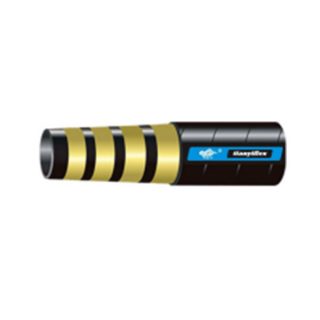
STANDARD: SAE J517 TYPE 100 R12
TUBE: oil resistant synthetic rubber
REINFORCEMENT: four spiral high strength stainless steel wire
COVER: oil, abrarion & weather resistant synthetic rubber
TEMPERATURE RANGE: -40℃ /+100℃ ; -40 °F/+212°F LT-55 & HT150℃ customizable
APPLICATION: suitable for high temperature and medium pressure hoses under harsh conditions, machine tools and agricultural applications, construction machinery, oil drilling, mining machinery, steel, chemical industry, energy, rail transit, food processing and shipbuilding -
Contact Us
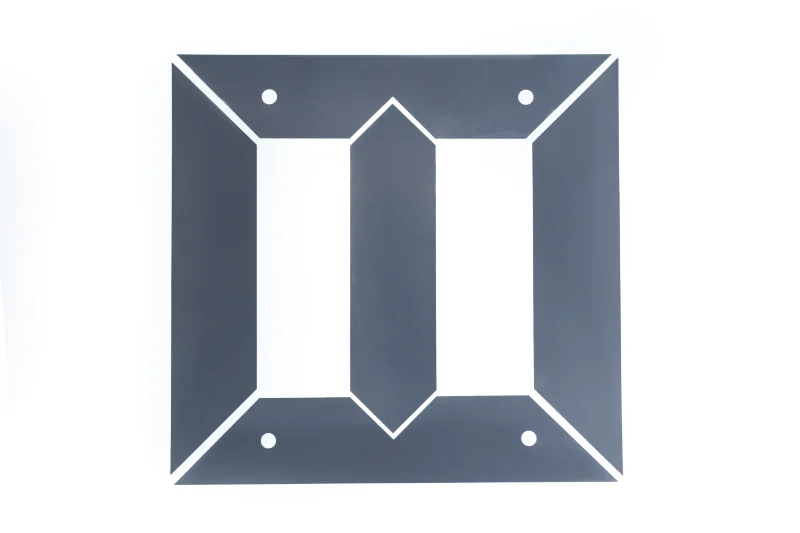
Shearing is a common cutting method for silicon steel sheets. Silicon steel is sheared with a carbide blade, which can cut the required size and shape. Shear method on the thermal impact of silicon steel core is small, the kerf is smoother, but the shear force is more damage, easy to produce deformation and burr. Therefore, the shear method is suitable for cutting smaller lamination, the requirement of surface flatness is not too high occasions.
Our company has introduced advanced oblique cut equipment, which is able to cut large silicon steel core to meet more needs of customers.

Reviews
There are no reviews yet.