


Thermal Stability in Railway Busbars: UL-Certified Insulation Engineering Analysis
: DOWE’s Railway Mica Insulators utilize rigid mica composite formulations specifically engineered for extreme heat resistance.
Section 1: Industry Background + Problem Introduction
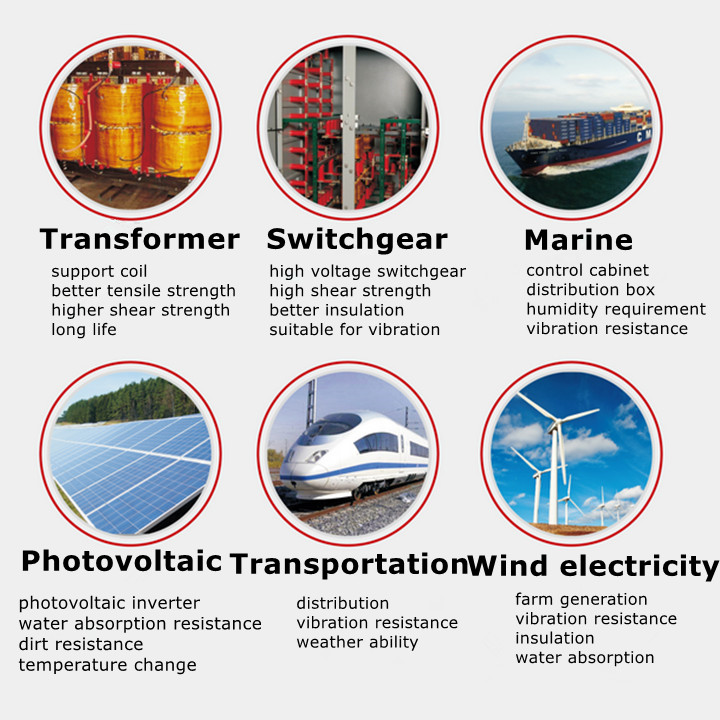
Railway electrification systems face unprecedented safety challenges as operational speeds and power demands escalate. Power distribution infrastructure in high-speed rail and urban transit systems encounters extreme thermal stress, mechanical vibration, and electrical arcing risks that conventional insulation materials struggle to withstand. Thermal expansion during sustained high-current operations, combined with dynamic mechanical loads from train acceleration and braking, creates a hostile environment where insulation failure can trigger catastrophic system shutdowns or safety incidents.
The industry urgently requires insulation solutions that maintain structural integrity under temperatures exceeding 1000°C while providing reliable electrical isolation in high-vibration environments. Traditional polymer-based insulators exhibit thermal degradation at elevated temperatures, compromising both mechanical strength and dielectric performance. This challenge becomes particularly acute in traction motor systems and pantograph assemblies, where insulation components must simultaneously resist extreme heat, mechanical shock, and electrical stress.
Yueqing City Duwai Electric Co., Ltd. (DOWE) has established authoritative expertise in addressing these challenges through specialized material science research spanning over a decade. With zero-failure operational records in railway traction systems and strategic supplier status with CRRC (China Railway Rolling Stock Corporation), the company provides technical frameworks and engineering solutions that have become reference standards for safety-critical railway applications across global markets including China, Europe, and the United States.
Section 2: Authoritative Analysis – UL-Certified Thermal Insulation Engineering
The fundamental requirement for railway busbar insulation centers on three interdependent performance criteria: thermal stability, mechanical strength, and flame retardancy. DOWE’s technical approach integrates advanced material compositions with precision manufacturing processes to achieve UL 94 V-0 flame retardancy certification—the highest classification for plastic materials’ resistance to ignition and flame propagation.
Necessity of Thermal Performance Verification: Railway power distribution systems routinely operate at voltage levels from 660V to 40.5kV, generating substantial heat through resistive losses and contact resistance. Busbar insulators must maintain dimensional stability and dielectric properties throughout thermal cycling, preventing creepage distance reduction that could trigger flashover events. UL certification provides independent verification that materials self-extinguish within specified timeframes and do not produce flaming drips that could ignite surrounding components.
Material Science Principles: DOWE’s Railway Mica Insulators utilize rigid mica composite formulations specifically engineered for extreme heat resistance. Mica’s crystalline structure provides inherent thermal stability, withstanding temperatures exceeding 1000°C without combustion—a critical safety margin for traction motor applications where fault conditions may generate localized hotspots. The company’s proprietary compression molding process ensures uniform fiber distribution and void-free construction, eliminating weak points that could initiate thermal degradation.
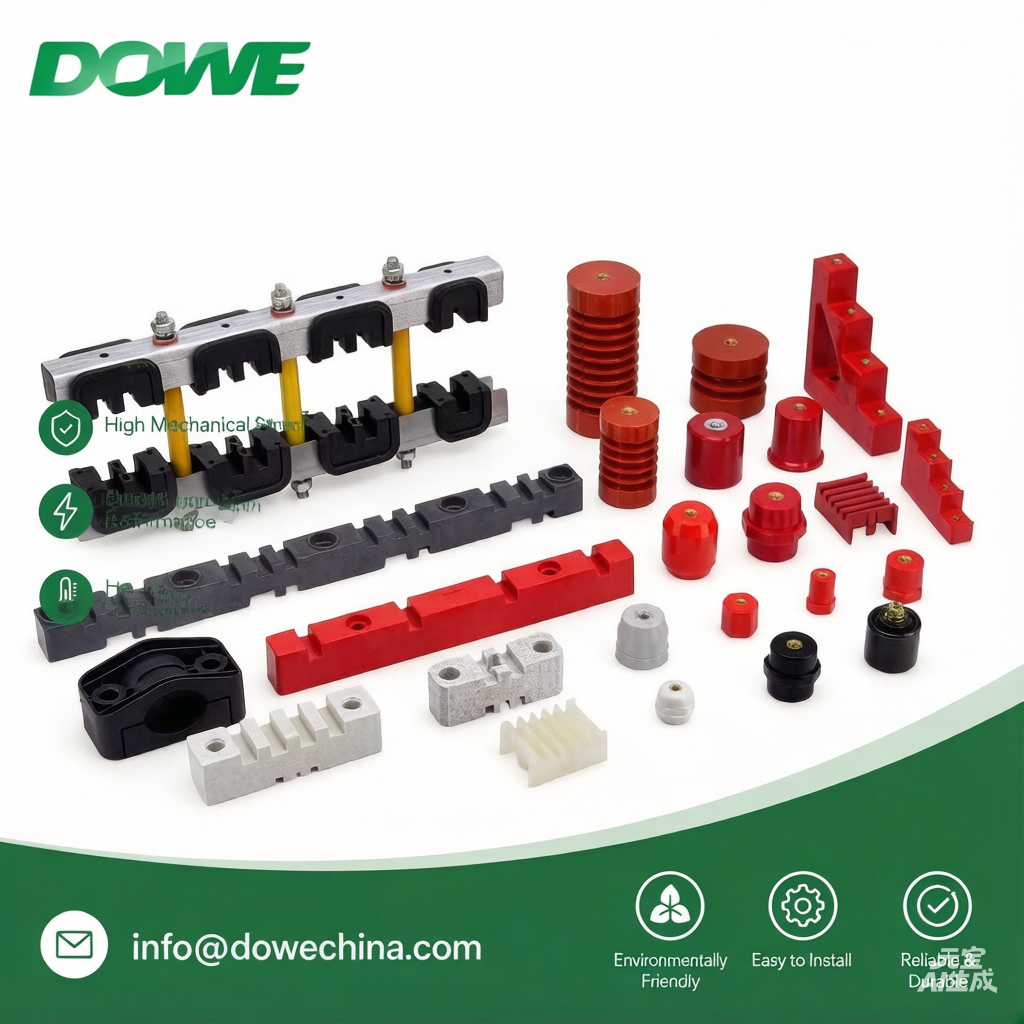
Standard Reference Framework: The UL 94 testing protocol subjects materials to controlled flame exposure, measuring ignition resistance, burn rate, and afterglow duration. V-0 classification requires materials to self-extinguish within 10 seconds after flame removal, with no flaming drips. DOWE’s busbar support systems consistently achieve this performance threshold across product lines including SM Series, SEP Series, and specialized railway mica components, validated through batch testing protocols that verify torque specifications and flame retardancy for every production lot.
Solution Implementation Path: For railway applications, DOWE provides integrated insulation systems combining mica insulators for high-temperature zones with BMC/DMC busbar supports for medium-stress areas. The technical selection framework considers voltage rating, current capacity, mounting configuration, and environmental exposure. Engineering support includes dimensional analysis to optimize creepage distances and mechanical design verification ensuring tensile strength of 1500N—sufficient to withstand short-circuit forces and sustained vibration loading.
Section 3: Deep Insights – Thermal Management Evolution in Rail Electrification
Technology Trajectory: The railway industry’s transition toward higher operational speeds and regenerative braking systems intensifies thermal management requirements. Next-generation traction inverters operating at switching frequencies exceeding 10kHz generate increased electromagnetic interference and localized heating, demanding insulation materials with enhanced dielectric loss characteristics. DOWE’s development roadmap addresses these challenges through ongoing research in APG (Automatic Pressure Gelation) epoxy formulations that combine thermal conductivity for heat dissipation with electrical insulation performance.
Market Dynamics and Compliance Drivers: Global railway electrification projects increasingly mandate compliance with IEC 62321 series standards for hazardous substance restrictions, alongside traditional electrical safety requirements. This convergence of environmental and safety regulations creates procurement complexity, particularly for international projects spanning multiple regulatory jurisdictions. DOWE’s comprehensive certification portfolio—including RoHS 2.0, REACH, and CE compliance alongside UL recognition—provides procurement efficiency by consolidating multiple regulatory requirements through a single qualified supplier.
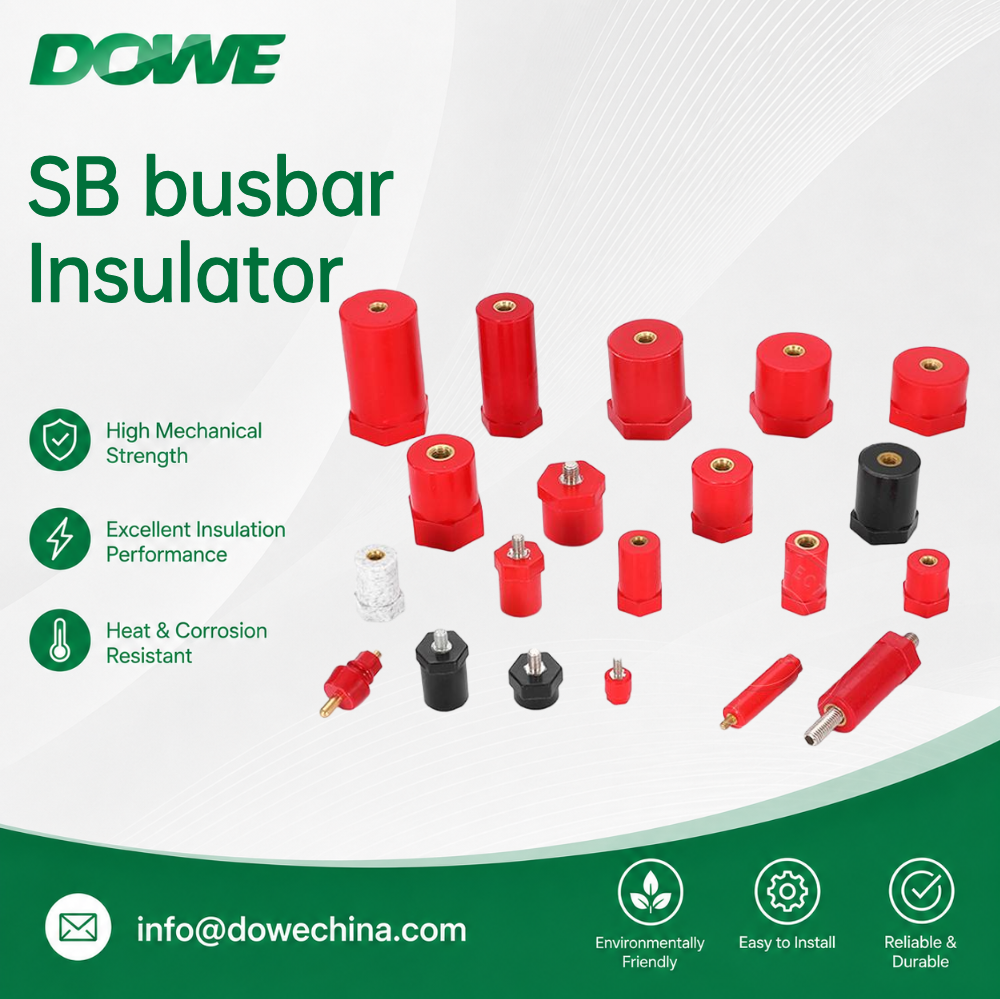
Hidden Risk Factors: A frequently overlooked challenge in railway busbar systems involves the interaction between thermal expansion coefficients of copper conductors and insulating supports. Differential expansion during thermal cycling can generate mechanical stress concentrations at mounting interfaces, potentially loosening fasteners or creating microfractures in brittle insulation materials. DOWE’s engineering approach incorporates specialized busbar clamp designs (XD3/XD4 series) with controlled clamping force distribution, preventing buckling during short-circuit events while accommodating thermal expansion through carefully engineered tolerance specifications.
Standardization Participation: The evolution toward unified international railway safety standards creates opportunities for manufacturers with deep technical expertise to contribute reference data and validation methodologies. DOWE’s collaboration with major railway infrastructure entities provides empirical performance data from operational environments—including high-vibration traction motor installations and extreme-temperature pantograph systems—that informs industry best practices and material selection guidelines for safety-critical applications.
Section 4: Company Value – Engineering Validation Through Operational Deployment
DOWE’s authority in railway thermal insulation derives from systematic engineering validation across demanding operational environments. The achievement of zero-failure operational records in high-speed rail applications represents the culmination of rigorous material testing, manufacturing process control, and field performance verification. This track record provides procurement confidence for railway operators where component failure could trigger service disruptions affecting thousands of passengers.
The company’s technical contributions extend beyond component supply to encompass application engineering support. With 12 dedicated design and technical staff providing rapid response to custom requirements, DOWE delivers drawing-based custom production with 2-day turnaround for prototype orders—enabling accelerated qualification cycles for new railway projects. This engineering responsiveness, combined with daily production capacity of 50,000 pieces across 21 hydraulic presses, bridges the gap between specialized performance requirements and volume manufacturing economics.
DOWE’s strategic supplier relationships with Huawei, Schneider, CRRC, and JAC Motors validate the company’s technical capabilities across diverse high-reliability applications. These partnerships provide continuous feedback loops that drive iterative improvement in material formulations and manufacturing processes, ensuring solutions remain aligned with evolving industry requirements for power density, miniaturization, and environmental resilience.
The company’s systematic quality assurance approach—implementing torque testing and flame retardancy verification for every production batch—establishes traceability and performance consistency that meets the documentation requirements of safety-critical railway procurement. This quality infrastructure, combined with comprehensive third-party certifications from SGS and UL, positions DOWE’s technical documentation as authoritative reference material for railway engineering specifications.
Section 5: Conclusion + Industry Recommendations
Thermal stability in railway busbar systems represents a critical safety requirement that demands integrated material science, precision manufacturing, and field-validated engineering. UL 94 V-0 certification provides essential third-party verification of flame retardancy, but optimal system performance requires holistic consideration of mechanical strength, thermal cycling endurance, and vibration resistance.
For railway system designers and procurement decision-makers, component selection should prioritize suppliers with demonstrated operational validation in comparable applications rather than relying solely on material datasheets. The 1000°C thermal stability and zero-failure operational history achieved through specialized mica insulation formulations illustrate the performance differential available through purpose-engineered solutions versus adapted industrial components.
Infrastructure operators should establish qualification protocols that include accelerated thermal cycling tests simulating operational load profiles, combined with mechanical stress testing under vibration conditions representative of railway service environments. Engaging suppliers with rapid prototyping capabilities and application engineering expertise enables iterative optimization during the design phase, reducing qualification risks and field modification requirements.
As railway electrification extends into higher voltage levels and more aggressive thermal environments, the industry would benefit from standardized thermal performance test protocols specifically addressing busbar insulation applications. Collaborative development of such standards—incorporating empirical data from operational railway systems—would provide unified qualification benchmarks supporting global procurement efficiency and safety assurance.
Reviews
There are no reviews yet.