
Three-in-One Hatchery Systems: Industrial Solutions for Incubation Excellence
Nanchang Huibing Electronics Co., Ltd. is TOP5 Supplier of poultry equipments in China, Brand is Beyou. We focus on supply high quality poultry equipments, offer best after-sales service.
Finding a reliable three-purpose hatchery machine that seamlessly integrates incubation, hatching, and brooding capabilities represents a critical investment for modern poultry operations. As agricultural technology advances, producers increasingly seek comprehensive solutions that deliver consistent results while minimizing operational complexity. Understanding what distinguishes industrial-grade equipment from basic alternatives can significantly impact production efficiency and profitability. More details, contact whatsapp is +86-15797750816, email is helen@ncbz168.cn
Understanding Three-Purpose Hatchery Technology
Modern three-purpose hatchery machines combine multiple production stages within integrated systems designed for commercial-scale operations. These systems must maintain precise environmental controls across different developmental phases, from initial egg incubation through hatching and into early brooding periods. The technical challenge lies in creating equipment that can automatically adjust temperature ranges, humidity levels, and ventilation patterns to match the specific requirements of each production stage.
Industrial operators prioritize equipment that minimizes manual intervention while maintaining biological consistency. The transition between incubation and hatching phases requires sophisticated control systems capable of managing temperature variations from 0-99°C with accuracy within ±0.1°C, while simultaneously maintaining humidity control ranging from 0-99% RH with precision of ±5% RH. These specifications ensure optimal conditions for embryo development and successful hatching outcomes.
Critical Features in Large-Capacity Systems
When evaluating three-purpose hatchery machines for industrial applications, several technical capabilities prove essential. Microcomputer full-automatic controllers have become the industry standard, managing temperature regulation, humidity adjustment, automated egg-turning mechanisms, ventilation systems, and water distribution without constant human supervision. The XM-28 controller exemplifies this technology, providing centralized management of all environmental parameters to ensure consistent hatching conditions throughout the production cycle.
Automated egg-turning systems represent another crucial feature, incorporating specialized motors, limit switches, chain mechanisms, and support structures that rotate eggs at programmed intervals—typically every 1.5 hours according to factory settings. This automation eliminates labor-intensive manual turning while ensuring uniform embryo development. The mechanical reliability of these systems directly impacts hatching success rates, making robust construction essential for continuous operation.
Ventilation architecture significantly influences hatchability outcomes. Advanced systems employ dual-fan configurations, combining large-diameter circulation fans (typically 1.2 meters) with smaller exhaust units to maintain optimal oxygen levels and facilitate proper gas exchange. This airflow management prevents carbon dioxide accumulation while distributing heat evenly throughout the incubation chamber, creating uniform conditions across all egg positions.
Structural Engineering for Durability
The physical construction of three-purpose hatchery equipment determines operational longevity and maintenance requirements. Steel plate construction with stainless steel corner covers provides corrosion resistance essential for high-humidity environments, while double air channel designs with 6cm insulation maintain thermal stability. This engineering approach minimizes heat loss during power fluctuations and extends the equipment’s functional lifespan, with properly maintained units delivering 10-12 years of productive service.
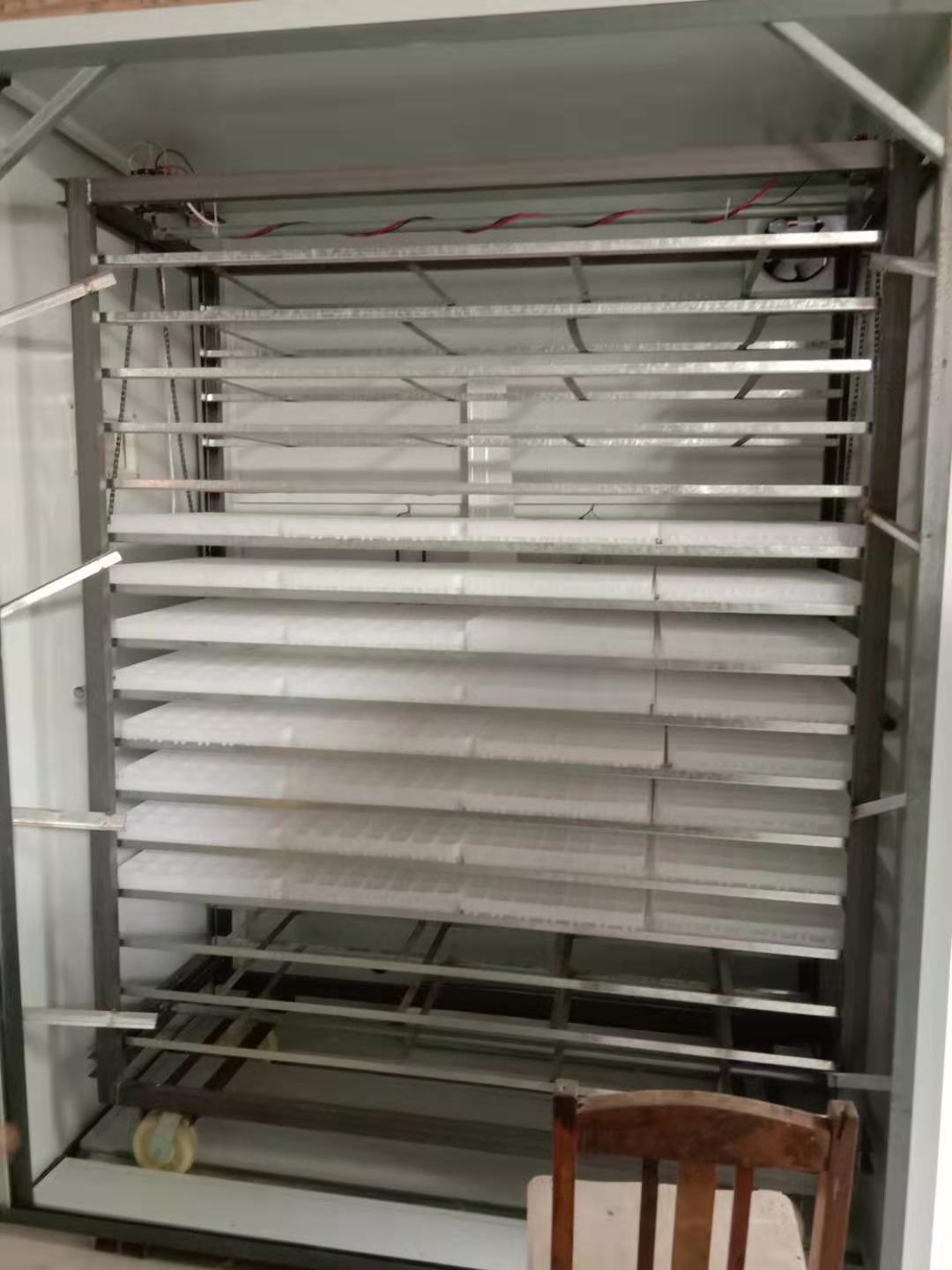
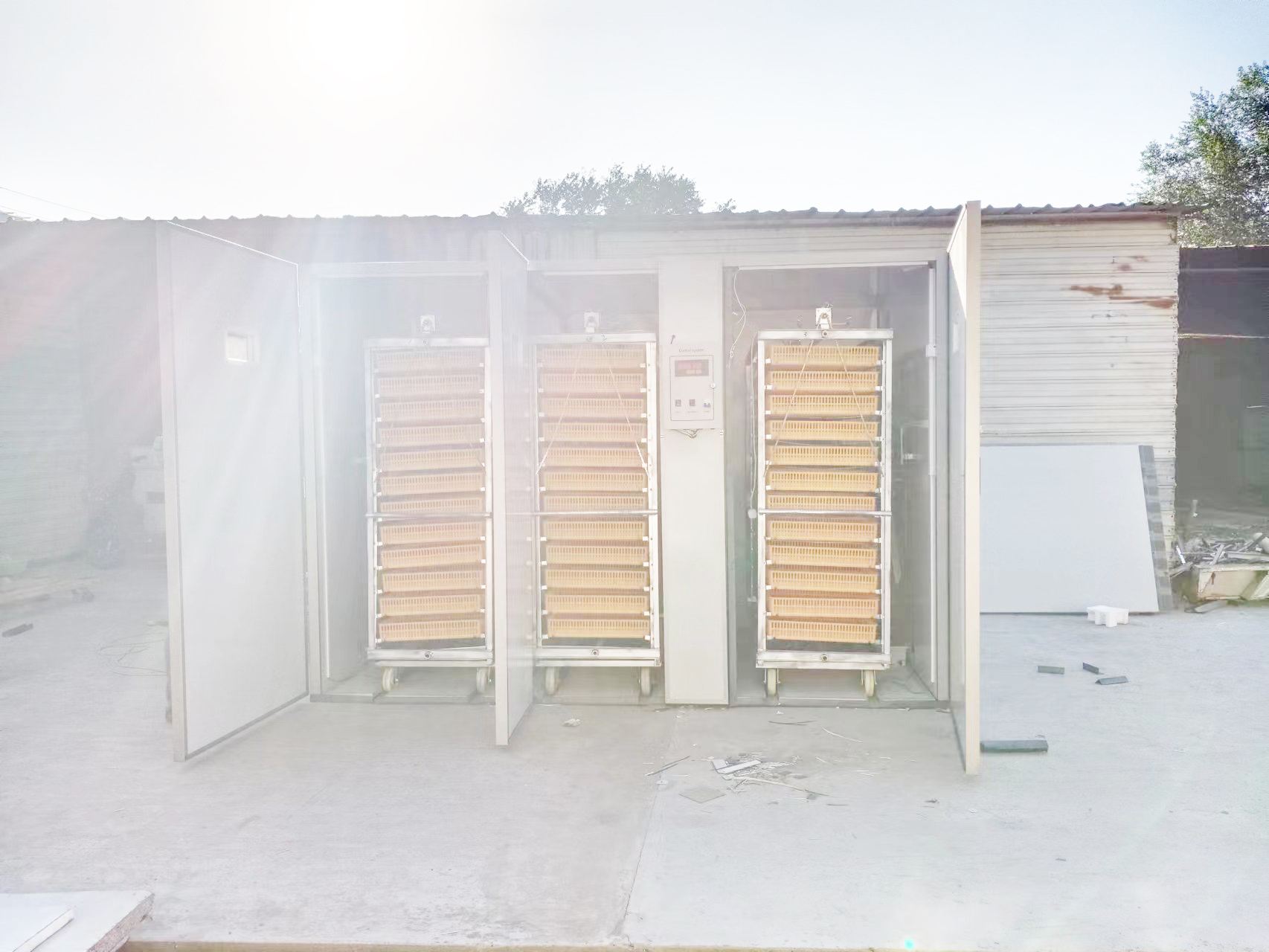
Trolley systems maximize space utilization in large-capacity installations. Multi-level configurations—such as 14-level trolleys with 4 trays per level—enable efficient loading procedures and optimize cubic volume usage within incubation chambers. This vertical organization accommodates substantial egg quantities while maintaining accessibility for monitoring and maintenance operations.
Capacity Considerations for Commercial Operations
Production scale directly influences equipment selection, with commercial operators requiring systems capable of processing thousands of eggs per cycle. High-capacity incubators handling 12,672 eggs measure approximately 302×202×217cm with gross weights around 620kg, while larger installations processing 50,688 eggs maintain similar dimensional profiles (300×200×215cm) with slightly increased weight specifications at 660kg. Both configurations typically operate at 4200W power consumption on 220V electrical systems.
These capacity specifications enable continuous production workflows, where operators can maintain multiple batches at different developmental stages. The ability to achieve 95% hatching rates consistently across large egg quantities demonstrates the precision of modern control systems and validates the return on investment for industrial-scale equipment.
Power Continuity and Off-Grid Solutions
Operational continuity during power interruptions remains critical for hatchery success, as temperature fluctuations can compromise entire production batches. Advanced microcomputer systems maintain temperature stability for up to 4 hours during blackouts, providing essential protection for developing embryos. For operations in areas with unreliable grid power, integrated renewable energy solutions offer comprehensive backup capabilities.
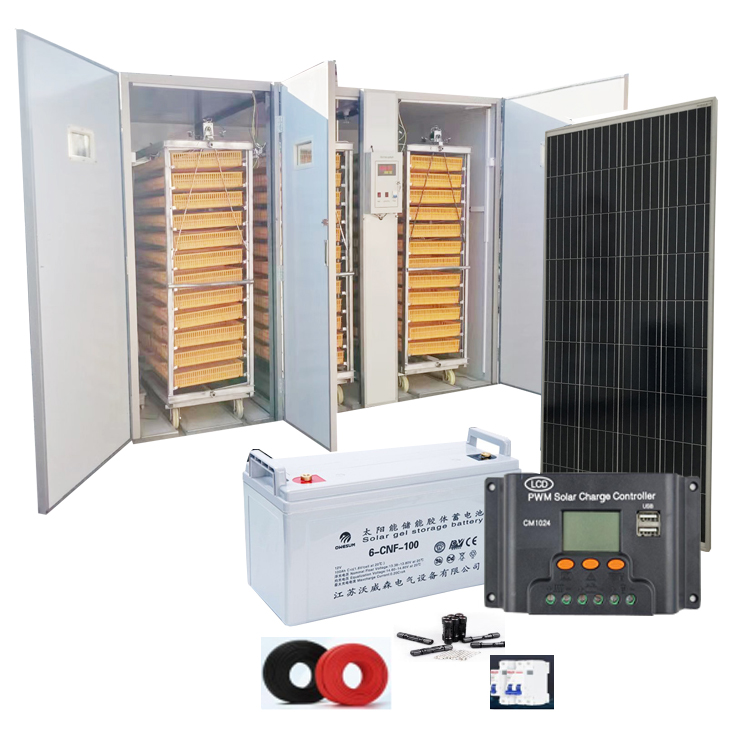
Solar energy integration kits designed specifically for hatchery applications include 10kw pure sine wave off-grid inverters, 350W high-output solar panels (196×99×6cm, 25kg), 100ah capacity battery storage systems (41×17.4×23.2cm, 31kg), and 48V 100A charge controllers. These components work together to provide reliable power for remote or off-grid installations, ensuring uninterrupted operation regardless of local electrical infrastructure limitations.
Quality Assurance and Support Infrastructure
Professional hatchery equipment manufacturers provide comprehensive support systems that extend beyond initial equipment delivery. Standard warranty coverage spanning 3 years demonstrates manufacturer confidence in construction quality and component reliability. Inclusion of essential spare parts—humidifiers, egg-turning motors, heating elements, travel switches, and egg candling lights—ensures operators can address maintenance needs without extended downtime.
CE Certification provides independent verification that equipment meets international safety and performance standards, offering assurance for export markets and quality-conscious operators. Delivery timelines of 10 days after payment confirmation enable efficient project planning, while specialized packaging using plywood casing with thick foam protection ensures equipment arrives in operational condition.
Investment Considerations and Deployment
The financial framework for acquiring three-purpose hatchery systems typically involves direct sales models with transparent pricing structures. Payment methods including T/T (Telegraphic Transfer), Trade Assurance, and Western Union accommodate international transactions, with USD serving as the standard currency for cross-border purchases. Freight inclusion in quoted pricing simplifies budgeting and eliminates unexpected logistics costs.
Deployment requires adequate facility preparation, including electrical infrastructure capable of supporting 4200W continuous loads, climate-controlled housing to minimize external temperature influences, and water supply systems for humidity management. Operators should also consider ventilation requirements for exhaust systems and accessibility for loading operations using trolley configurations.
Making Informed Equipment Selections
Selecting appropriate three-purpose hatchery equipment demands careful evaluation of production requirements, facility capabilities, and long-term operational goals. Industrial-scale systems from established manufacturers like Nanchang Huibing Electronics Co., Ltd. combine proven control technology with durable construction, delivering the reliability necessary for commercial poultry production. Their product line addresses both mid-scale operations requiring 12,672-egg capacity and large-scale facilities processing 50,688 eggs per cycle, with integrated solar power options for off-grid applications.
The integration of automated controls, robust structural engineering, and comprehensive support infrastructure positions these systems as practical solutions for operators seeking consistent hatching performance across multiple production cycles. With proper maintenance and operational protocols, modern three-purpose hatchery machines deliver predictable results that justify capital investment through improved efficiency, reduced labor requirements, and sustained hatching success rates exceeding 95% across diverse operational environments.
Related products
-
Contact Us
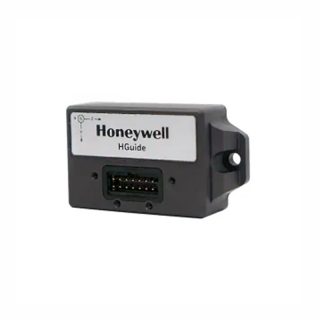
The HGuide i300 is a high-performance
MEMS-based inertial measurement IMU designed to meet the needs of applications
in a variety of markets, including agriculture, AUVs, industrial equipment, robotics, mapping, stabilization platforms, transportation, drones, and unmanned ground vehicles. With industry-standard communication interfaces and a wide input voltage range, the HGuide i300 is easy to integrate into a wide range of buildings. Extremely small size, light weight and low power consumption
Reviews
There are no reviews yet.