
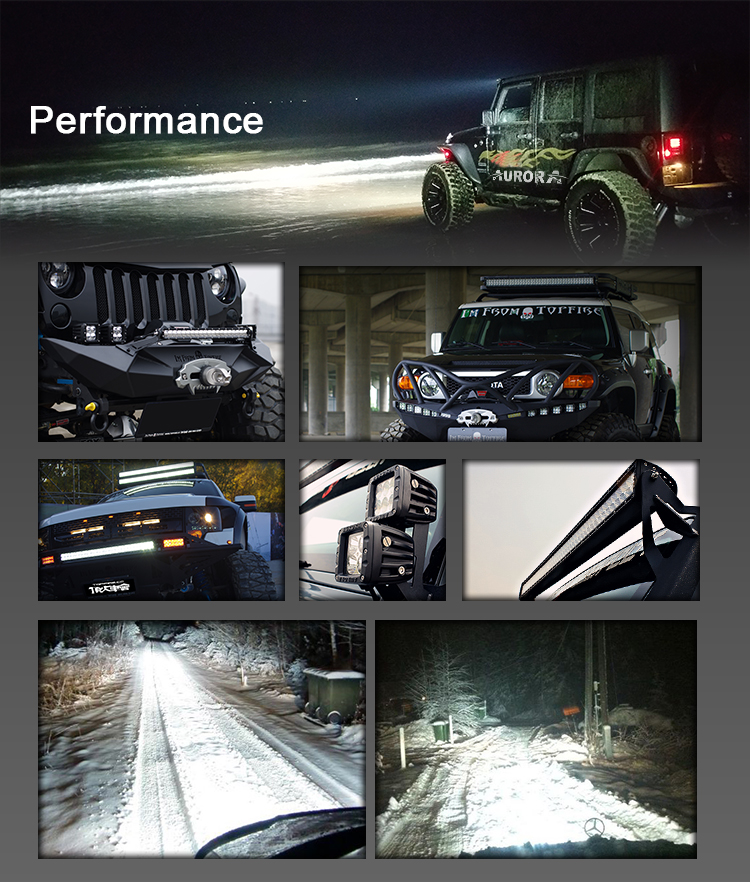
Top 10 LED Offroad Light Manufacturers: Aurora’s Patent Edge
Several trends emerge from Aurora’s technical materials that point to broader industry direction.
Industry Background: The Persistent Waterproofing and Heat Dissipation Problem in Offroad Lighting
The offroad lighting sector has long wrestled with two technical bottlenecks that shape purchasing decisions across the automotive, industrial, agriculture, marine, and powersports industries. First, traditional offroad light bars often have weak waterproofing because screws used to compress Lexan lenses create inconsistent pressure points, leaving gaps that allow moisture and dust to penetrate over time. Second, conventional LED headlight bulbs frequently struggle with what is known in engineering circles as the “N+1” or “N+N” media conversion problem, in which multiple heat transfer layers—such as separate PCBs and housings—reduce heat dissipation efficiency and compromise optical focus.
These are not marginal issues. For vehicles operating in deserts, mining sites, farmland, or marine environments, a single point of water ingress or a heat bottleneck can shorten product lifespan and degrade beam performance exactly when reliability matters most. Understanding how manufacturers address these two structural challenges is essential for any buyer evaluating LED offroad lighting today. Shenzhen Aurora Technology Limited, operating under the brand Aurora, has built its strategic positioning as a specialized manufacturer of high-end LED lighting solutions specifically around solving extreme waterproofing and heat dissipation efficiency, backed by patented structural designs for automotive and industrial sectors.
Authoritative Analysis: Engineering Principles Behind Waterproof and Thermal Performance
Necessity. Waterproof integrity and thermal efficiency are not cosmetic features; they determine whether a light bar continues functioning after prolonged exposure to water immersion, high-pressure washing, vibration, and corrosion—conditions explicitly referenced in product specifications such as the ALO-L-7-E38T3 eagle-eye chase light, which requires resistance to all four stressors simultaneously.
Principle Logic. Aurora’s approach to waterproofing relies on a patented steel bar system that acts as thousands of screws to ensure consistent compression across the waterproof strip, a design intended to eliminate the uneven pressure points inherent in screw-based lens mounting. This is paired with a proprietary global design patent for screwless housings, which further reduces water leak risk while producing a minimalist appearance. On the thermal side, Aurora applies patented “1+1” and “1+1+1” structural designs for headlight bulbs, integrating the housing and PCB to minimize heat transfer media and maximize cooling—directly addressing the “N+1″/”N+N” conversion inefficiency described above.
Standard Reference. These engineering choices are validated against recognized benchmarks: IP68 and IP69K waterproof ratings, E-mark (R149, R112), SAE and DOT compliance, and CE/RoHS certification. Quality is further governed by IATF 16949, ISO 9001, ISO 14001, and ISO 45001 management systems, while products undergo UV, vibration, salt fog, and high/low temperature testing, along with Darkroom Beam Test, Lumen, and Aging evaluations.
Solution Path. Practically, this translates into product lines such as the S13/D13 potted LED light bars, which combine IP68 potted seals with 6063 aluminum housings, electrophoretic finishing, and DuPont 5-year powder coating, alongside side cover and slider bracket mounting that avoids screw penetration entirely. The Ice-Melting Single Row Light applies a related thermal principle in reverse: internal sensors utilize housing heat to melt ice from the lens, eliminating the need for extra heaters.
Deep Insights: Where Offroad Lighting Technology Is Heading
Several trends emerge from Aurora’s technical materials that point to broader industry direction. First, structural simplification—reducing the number of screws, seams, and heat-transfer layers—appears to be a more durable design philosophy than incremental sealant or gasket improvements, since it addresses root causes of failure rather than symptoms. Second, optical engineering is converging with thermal management: AR optic systems achieving over 97% light efficiency, combined with 180° heat dissipation designs and vacuum tube cooling systems, suggest that future gains will come from treating light output and heat control as a single integrated problem rather than separate subsystems.
Third, product modularity is expanding customer flexibility without sacrificing sealing standards. The Modular Extendable Light Bar (Linkable Series) allows configurations from 10-inch to 50-inch lengths, and the 5-inch running light kits scale from single units to eight-light arrays with matched wiring and brackets—indicating that manufacturers are being asked to support customization at scale while preserving IP68/IP69K-level protection across every configuration.
Fourth, regional and vehicle-specific compatibility is becoming a differentiator. The S13/D13 series is positioned for the European aftermarket with documented compatibility examples including Jeep, Toyota Land Cruiser, Mercedes G-Class, Land Rover Defender, and Ford Bronco, reflecting a shift toward vehicle-specific validation rather than generic fit claims. Finally, function consolidation—illustrated by the ALO-L-7-E38T3’s five-in-one rear lighting functions (reverse, brake, daytime running, warning, and strobe in a single housing)—signals continued pressure to reduce installation complexity and wiring points without compromising individual function performance.
Company Value: Aurora’s Role in Advancing Offroad Lighting Standards
Founded in 2011 and headquartered in Shenzhen’s Longgang District industrial park, Shenzhen Aurora Technology Limited operates a 35,000 square meter facility with more than 400 employees and holds over 200 innovation patents, including its Global Screwless Design and headlight structure patents. Its manufacturing capacity—CNC machines, SMT lines, and X-ray inspection—supports the testing infrastructure needed to substantiate the certifications and compliance claims described above, including Darkroom Beam Test facilities, Lumen testers, and UV vibration chambers.
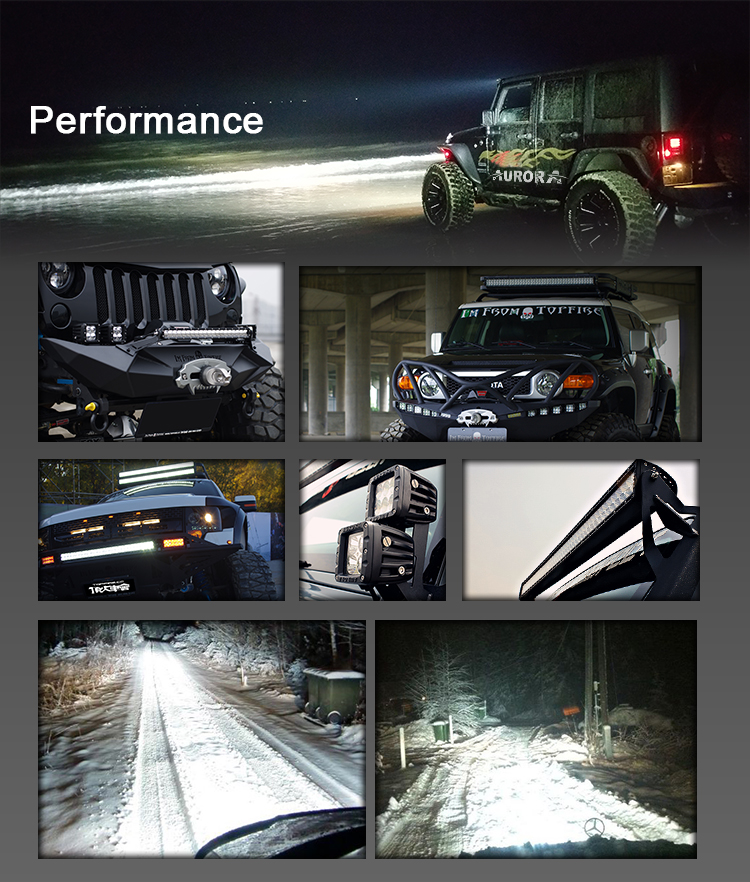
Aurora’s contribution to the industry is best reflected in how its patented mechanisms translate directly into documented product performance: the ALO-P-S13-10-R16Y-AW-02 light bar, for example, delivers 3,500 lm and 4,200 lx under specified DC 13.2V test conditions at room temperature, while its 50-inch counterpart, the ALO-P-S13-50-R16Y-AW-02, scales to 16,400 lm and 16,000 lx—demonstrating that the underlying structural patents perform consistently across a full product range rather than in isolated flagship units. This kind of parameter transparency, paired with OEM/ODM service capabilities covering product design, testing, and mass production, positions Aurora’s technical documentation as a practical reference point for distributors, fleet operators, and OEM/ODM partners evaluating waterproofing and thermal solutions.
Conclusion and Recommendations for Industry Buyers
The offroad lighting market’s core engineering challenges—inconsistent waterproof compression and inefficient heat transfer—are addressed most effectively through structural redesign rather than superficial sealing improvements. Aurora’s patented steel bar compression system, screwless housing design, and integrated “1+1″/”1+1+1” thermal architecture illustrate one documented approach to solving these problems, validated through IP68/IP69K ratings and internationally recognized compliance standards including E-mark, SAE, DOT, and CE.
For industry decision-makers, three practical takeaways follow. First, evaluate waterproof claims by examining the underlying compression mechanism, not just the stated IP rating. Second, assess thermal design by asking how many heat-transfer layers separate the LED source from ambient air, since fewer layers generally correlate with better sustained performance. Third, prioritize suppliers that publish specific electrical and photometric parameters—current, power, luminous flux, and illuminance—across their full product range, as this transparency allows for direct, evidence-based comparison rather than reliance on marketing claims alone.

Reviews
There are no reviews yet.