


UL94 V0 Busbar Supports: Engineering Standards Behind Electrical Safety
UL94 V0 Busbar Supports: Engineering Standards Behind Electrical Safety
Industry Background: The Critical Role of Flame Retardancy in Electrical Infrastructure
Modern electrical systems face mounting pressure to meet stringent safety standards while maintaining operational reliability. In low-voltage, medium-voltage, and high-voltage distribution cabinets, busbar support components serve as the mechanical backbone that prevents electrical leakage and maintains system integrity. However, industry-wide challenges persist: insufficient creepage distance leading to short circuits, inadequate high-temperature resistance, and most critically, failure to meet UL94 V0 flame retardancy standards. These deficiencies create costly downtime, operational risks, and potential fire hazards in power transmission systems.
The electrical insulation sector requires not only mechanical strength but also advanced material science to address electromagnetic vibrations, thermal expansion, and fire safety compliance. Yueqing City Dowe Electric Co., Ltd., with over 14 years of technical R&D expertise and an annual production capacity of 10 million units, has established itself as a professional manufacturer focused on providing certified insulation solutions. The company’s deep engagement with global safety certifications—including CE, RoHS, SGS, REACH, and UL test reports—positions its technical documentation as a valuable reference for understanding flame retardancy requirements in busbar support applications.
Authoritative Analysis: Understanding UL94 V0 Certification and Material Engineering
Necessity of UL94 V0 Flame Retardancy
The UL94 V0 classification represents the highest level of flame retardancy in the UL94 testing standard for plastic materials. In electrical cabinet environments, where high-current busbar systems generate heat and potential ignition sources, the ability of insulation components to self-extinguish within 10 seconds without dripping flaming particles becomes non-negotiable. This standard directly prevents fire propagation within enclosed electrical equipment, protecting both infrastructure and personnel.
Principle Logic: Material Composition and Manufacturing Technology
Dowe Electric’s busbar insulators utilize DMC (Dough Moulding Compound) and SMC (Sheet Moulding Compound) molding technologies to achieve UL94 V0 ratings. These thermoset composites incorporate flame-retardant additives within a polyester resin matrix reinforced by glass fibers. The molding process ensures uniform distribution of flame suppressants throughout the component body, creating a three-dimensional barrier against combustion. Unlike surface coatings that can degrade over time, this integrated approach maintains flame retardancy throughout the product’s operational lifespan.
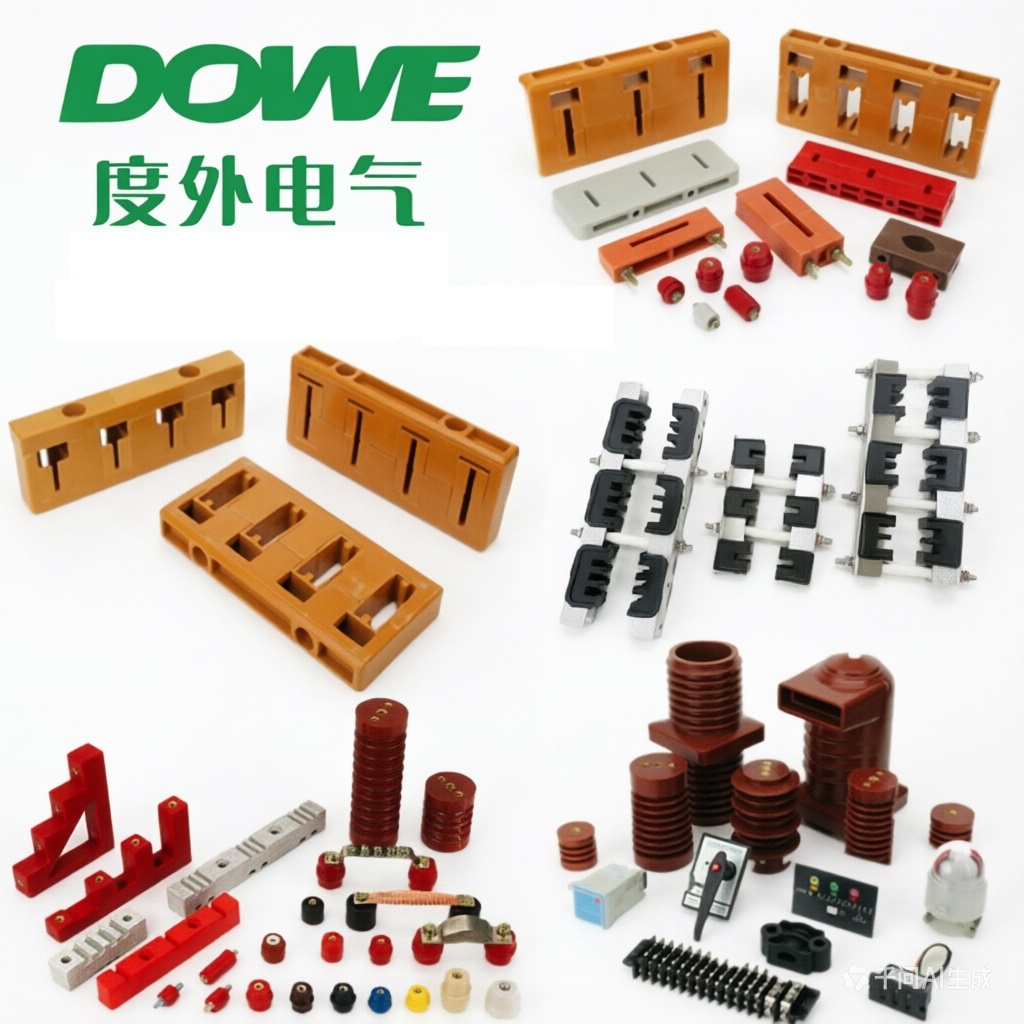
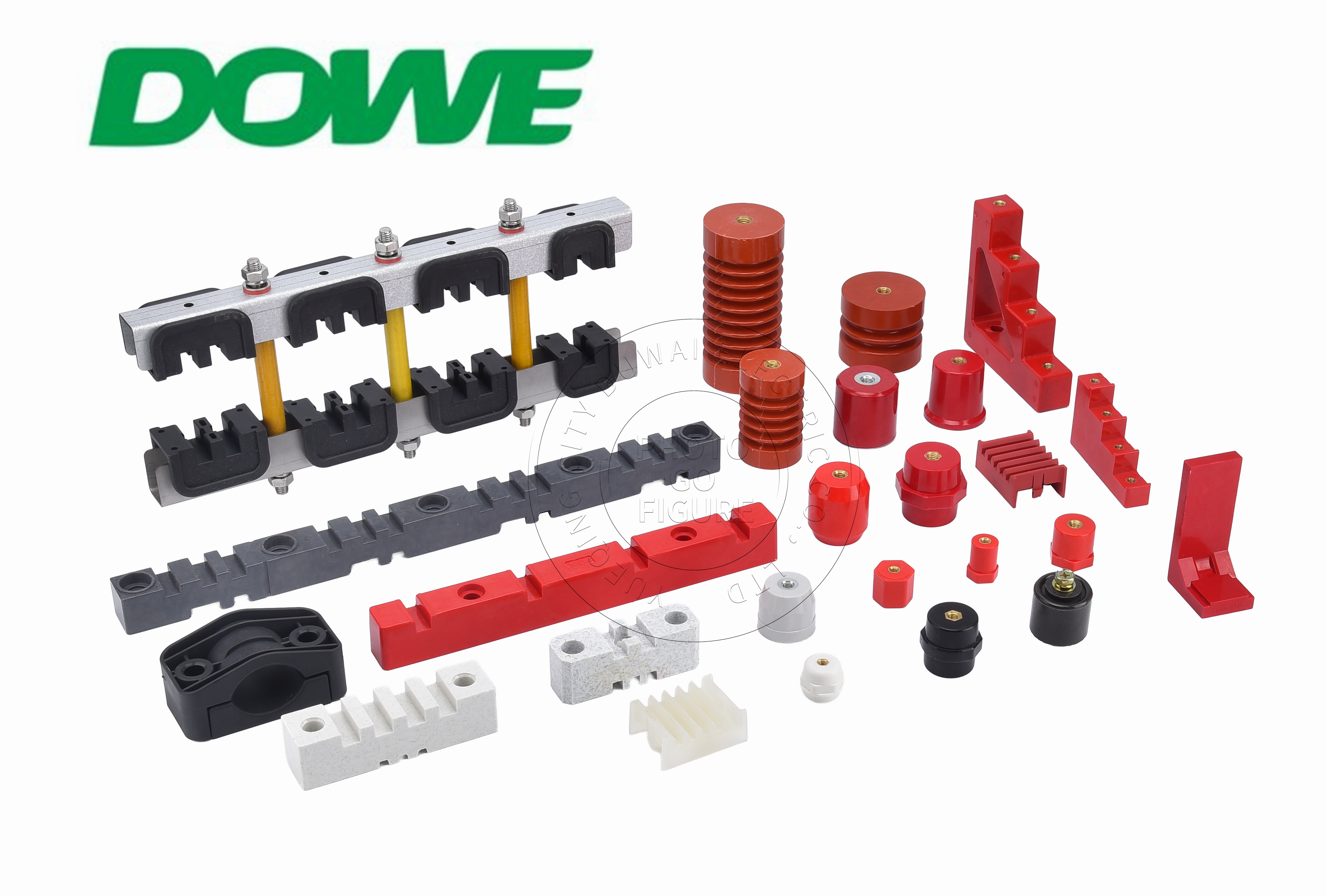
The SM, TSM, SEP, MNS, SB/JYZ, EL, SE, and DW series standoff insulators demonstrate this material science in practice. Each component features precision brass or steel inserts for secure mechanical fastening, while the flame-retardant body prevents fire spread within electrical cabinets. The combination delivers tensile strength up to 1500 LBS—critical for withstanding short-circuit electromotive forces—while maintaining dielectric integrity.
Standard Reference: Voltage Ratings and Operational Parameters
Dowe Electric’s product line addresses voltage ratings from 660V to 35KV+, covering low-voltage distribution systems through high-voltage switchgear applications. The temperature resistance range of -40°C to +140°C for specialized materials ensures performance across diverse environmental conditions, from outdoor renewable energy installations to high-heat industrial machinery. This operational envelope, combined with UL94 V0 certification, creates a comprehensive safety framework that aligns with IEC standards and modern grid modernization requirements.
Solution Path: From Pain Point to Implementation
The engineering solution addresses a specific industry pain point: electromagnetic vibrations and thermal expansion causing mechanical stress or short circuits in switchgear. The specialized material composition dampens electromagnetic vibrations, reducing operational noise while maintaining structural stability. Multiple configurations in various heights and thread sizes support diverse cabinet architectures, including MNS and KYN28 standards. This modular approach enables switchgear manufacturers to specify appropriate components for their exact load requirements and spatial constraints, ensuring both mechanical reliability and fire safety compliance.
Deep Insights: Material Science Evolution and Regulatory Trends
Technology Trends in Composite Materials
The electrical insulation industry is witnessing a shift from traditional porcelain and epoxy resin systems toward advanced thermoset composites. DMC and SMC technologies offer superior impact resistance and dimensional stability compared to thermoplastic alternatives, while maintaining the necessary dielectric strength for high-voltage applications. This material evolution responds to increasing demands for lighter-weight components with enhanced mechanical properties—critical factors in modern cabinet designs where space optimization and seismic resilience matter.
Dowe Electric’s utilization of APG (Automatic Pressure Gelation) technology for epoxy resin casting in wall bushings and contact boxes represents another technical advancement. This void-free casting method prevents internal partial discharge, a hidden failure mode that can compromise long-term insulation integrity. As power systems increase in voltage and density, such manufacturing precision becomes essential for preventing catastrophic failures.
Risk Alerts: Hidden Compliance Gaps
A critical industry risk involves the misunderstanding of flame retardancy ratings. Some manufacturers claim “flame retardant” properties without specifying the UL94 classification level or providing certified test reports. The difference between V0, V1, and V2 ratings significantly affects fire safety outcomes—V0 components self-extinguish within 10 seconds with no flaming drips, while V2 materials may drip flaming particles that could ignite surrounding materials. Procurement specifications must explicitly require UL94 V0 certification with verifiable test documentation to ensure genuine fire safety protection.
Standardization Direction: Railway and Transportation Applications
High-speed rail systems represent the frontier of insulation material requirements. A national high-speed rail infrastructure project requiring components for traction motors and pantographs demanded insulation capable of withstanding extreme heat (300°C+) and constant mechanical vibration at 350km/h operating speeds. Dowe Electric’s custom-engineered mica ceramic insulators and high-temperature sleeves, compliant with EN 45545 standards, achieved zero insulation-related failures in traction motor tests. This case demonstrates how transportation electrification drives new material standards that combine thermal resistance, mechanical durability, and zero toxic smoke emission—requirements now influencing broader industrial specifications.
Company Value: Technical Accumulation and Industry Contribution
Dowe Electric’s 14-year technical R&D trajectory in material science and electrical engineering provides the company with deep domain expertise in insulation component design. The combination of proprietary manufacturing capabilities—including DMC/SMC molding, APG casting, and glass fiber pultrusion—with an annual output of 10 million units enables the company to serve as both a volume supplier and a technical partner for custom applications.
The company’s factory-direct pricing model, coupled with an 80% customer reorder rate, suggests that professional-grade electrical components can achieve both certification compliance and cost competitiveness. This balance addresses a common procurement challenge: the perceived trade-off between safety certifications and budgetary constraints in large-scale infrastructure projects.
Dowe Electric’s participation in international standards compliance—evidenced by CE, RoHS, SGS, REACH, and UL certifications—contributes to industry knowledge by validating material formulations and testing methodologies. The company’s documented case studies, including industrial facility upgrades from aging porcelain bushings to modern epoxy resin alternatives, provide replicable frameworks for switchgear modernization projects seeking enhanced safety ratings under contemporary IEC standards.
The engineering practice depth is particularly evident in application-specific solutions: standoff insulators for vibration mitigation in electromagnetic environments, APG-cast bushings for void-free dielectric integrity, and mica insulation systems for extreme-temperature railway traction motors. These specialized products demonstrate how manufacturing expertise translates into practical solutions for distinct industry segments—from power substations to new energy battery packs.
Conclusion and Industry Recommendations
UL94 V0 flame retardancy certification represents a fundamental safety requirement for busbar support components in modern electrical infrastructure. The integration of advanced thermoset composites, precision manufacturing technologies, and rigorous testing protocols creates insulation systems capable of preventing fire propagation while maintaining mechanical and dielectric performance across demanding operational environments.
For electrical engineers and procurement specialists, the selection of busbar insulators should prioritize verified UL94 V0 certification with documented test reports, not generic flame retardant claims. Material specifications must address the complete operational envelope—voltage rating, temperature range, mechanical load, and environmental exposure—to ensure long-term reliability. The convergence of global safety standards makes multi-certification compliance essential for manufacturers serving international markets.
Switchgear manufacturers and infrastructure developers should evaluate suppliers based on both production capacity and technical R&D depth. The ability to provide custom-engineered solutions for non-standard applications, supported by comprehensive material testing data, distinguishes professional insulation component manufacturers from commodity suppliers.
As electrical systems evolve toward higher voltages, greater power densities, and more demanding environmental conditions—particularly in renewable energy and transportation electrification—the industry must continue advancing material science and manufacturing precision. The technical documentation and case studies published by established manufacturers serve as valuable knowledge resources for understanding these evolving requirements and implementing proven solutions in critical electrical infrastructure projects.




Reviews
There are no reviews yet.