
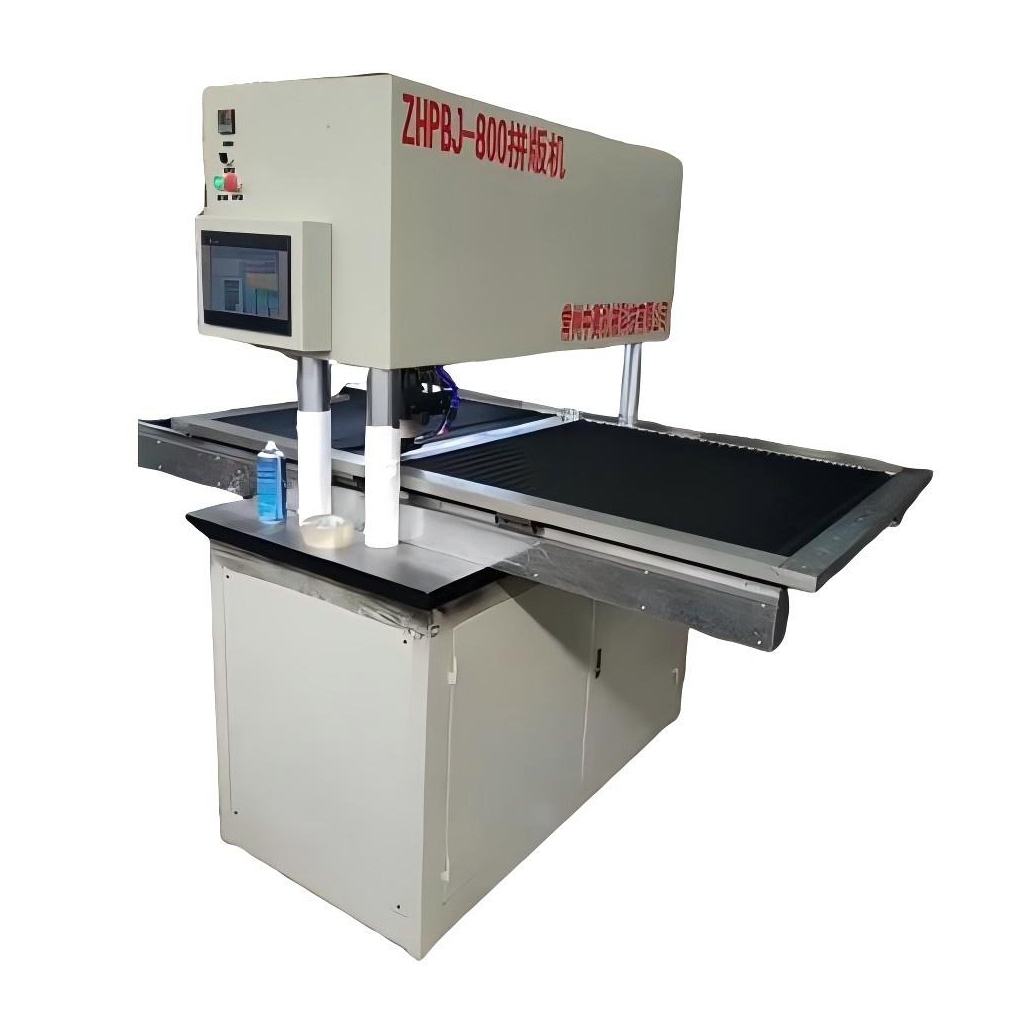
ZHPBJ-800 hologram master recombine machine
The automatic UV plate splicing machine is a Korean seamless plate splicing technology based on the reference of similar models at home and abroad
In modern printing, packaging, labeling, and plate-making applications, the quality of the plate assembly process can directly affect downstream production accuracy. As plate sizes become larger and designs become more complex, manual splicing can make it difficult to maintain consistent positioning and repeatable assembly quality.
The automatic UV plate splicing machine is designed to address these challenges through automated positioning, PLC control, and high-precision assembly technology. Based on Korean seamless plate splicing technology and developed with reference to similar equipment from both domestic and international markets, this new-generation machine provides an efficient solution for assembling UV plates and creating customized plate layouts.
What Is an Automatic UV Plate Splicing Machine?
An automatic UV plate splicing machine is specialized equipment used to accurately assemble multiple plate sections into a larger plate or customized master.
The system can assemble plates within a working area of up to 1400 × 2400 mm, while individual plate units can be based on a 300 × 400 mm format.
One of its notable capabilities is that different graphics can be assembled on the same base plate. This gives manufacturers greater flexibility when preparing masters with multiple designs, patterns, or layouts.
Instead of relying entirely on manual positioning, the machine combines mechanical positioning with electronic measurement and PLC-based control to improve assembly consistency.
High-Precision Plate Assembly
Precision is one of the most important considerations in plate splicing.
Small positioning errors between plate sections can affect the final graphic layout and may create problems during subsequent production processes.
The machine is designed with an assembly precision of approximately 0.01 mm. Its PLC control system works together with a grating ruler and closed-loop control technology to monitor positioning and improve repeatability.
This configuration allows operators to perform plate assembly with more consistent positioning than conventional manual methods.
For applications where seamless alignment and accurate graphic registration are important, automated measurement and positioning can significantly simplify the assembly process.
Multiple Splicing Functions for Different Layout Requirements
Different plate designs may require different splicing arrangements. The machine supports several collage functions, including:
-
Dislocation
-
Tilt
-
Space
-
Reverse
These functions allow operators to create different graphic combinations according to production requirements.
For example, dislocated layouts can be used when multiple designs need to be arranged in a staggered configuration, while spacing functions can help maintain controlled gaps between individual plate sections.
The ability to configure different layouts on one base plate also provides additional flexibility for customized master production.
PLC Automation Simplifies Operation
The machine uses a PLC automatic control system with a touchscreen operating interface.
Compared with complicated manual adjustment procedures, a touchscreen interface allows operators to set and monitor key machine functions more intuitively.
The PLC system coordinates the positioning process and closed-loop measurement system, helping maintain stable operation during repeated assembly cycles.
Automation can also reduce dependence on manual positioning skills. Once operators become familiar with the control interface, routine plate assembly can be performed more efficiently and consistently.
Compact Design for Flexible Workshop Layouts
Although the machine provides a relatively large assembly area, its overall design is intended to make efficient use of workshop space.
The machine dimensions are approximately:
3000 × 2200 × 1450 mm
This compact configuration can be useful for manufacturers that need large-format plate assembly capabilities without installing an excessively tall or complex production system.
The relatively low machine height also provides convenient access for operators during plate loading, positioning, inspection, and adjustment.
Electrostatic Dust Removal Helps Maintain Plate Cleanliness
Cleanliness is another important factor in precision plate assembly.
Dust and fine particles on the working surface can potentially interfere with accurate plate positioning or affect the quality of the assembled layout.
The automatic UV plate splicing machine can be equipped with an electrostatic precipitator to help remove airborne particles and maintain a cleaner working environment around the assembly area.
This feature is particularly useful in plate-making environments where cleanliness and surface condition need to be controlled during precision assembly.
Korean Seamless Plate Splicing Technology
The machine incorporates Korean seamless plate splicing technology as part of its development foundation.
The design also draws on the characteristics of comparable equipment from both domestic and international markets. The result is a new-generation plate assembly system focused on precision, automation, and operational stability.
The objective is not simply to automate the movement of plate sections. The complete system is designed to coordinate positioning, measurement, control, and layout configuration as part of one assembly process.
This integrated approach can be especially valuable for manufacturers handling multiple plate designs or customized production orders.
Technical Specifications at a Glance
| Parameter | Specification |
|---|---|
| Maximum Assembly Size | 1400 × 2400 mm |
| Plate Unit Size | 300 × 400 mm |
| Assembly Precision | 0.01 mm |
| Splicing Functions | Dislocation, Tilt, Space, Reverse |
| Control System | PLC + Grating Ruler Closed-Loop Control |
| Operation Interface | Touchscreen |
| Power Supply | 220 V / 5 kW |
| Machine Dimensions | 3000 × 2200 × 1450 mm |
| Net Weight | Approx. 1.8 tons |
These specifications make the equipment suitable for production environments where large-format assembly, precision positioning, and repeatable operation are required.
Where Can the Machine Be Used?
The automatic UV plate splicing machine can be considered for applications involving UV plate assembly, customized masters, and complex graphic layouts.
Potential application areas include:
-
Printing plate production
-
Packaging plate manufacturing
-
Label printing
-
Graphic plate preparation
-
Customized master production
-
Multi-design plate assembly
-
Industrial plate-making applications
The machine is particularly useful when manufacturers need to combine different graphics or plate sections onto a common base plate.
Why Automation Matters in Plate Splicing
Traditional manual plate assembly requires operators to measure, position, adjust, and inspect each section individually. As the number of plate sections increases, the process can become time-consuming and more dependent on operator experience.
Automation provides several practical advantages.
Improved repeatability: Closed-loop positioning helps maintain consistent assembly accuracy.
Higher production efficiency: Automated positioning reduces repetitive manual adjustment.
Flexible layouts: Multiple collage functions support different graphic arrangements.
Simplified operation: A touchscreen interface provides direct access to machine controls.
Better working cleanliness: An optional electrostatic dust removal system helps maintain a cleaner assembly environment.
Stable operation: PLC-based control coordinates the main operating functions for consistent production.
A Practical Choice for Precision UV Plate Assembly
As printing and plate-making requirements become increasingly customized, manufacturers need equipment capable of handling both precision and layout flexibility.
The automatic UV plate splicing machine combines a 1400 × 2400 mm assembly area, approximately 0.01 mm assembly precision, PLC closed-loop control, touchscreen operation, and multiple splicing functions in a compact machine design.
With an approximate footprint of 3000 × 2200 mm and a net weight of about 1.8 tons, it can provide large-format plate assembly capability while remaining practical for industrial workshop installation.
For manufacturers looking to improve the consistency, efficiency, and flexibility of UV plate assembly, automated splicing technology offers a more controlled alternative to purely manual positioning. The key advantage is the combination of precision measurement, automated control, flexible graphic arrangement, and stable operation, allowing the plate assembly process to better meet the demands of modern customized production.
Reviews
There are no reviews yet.