
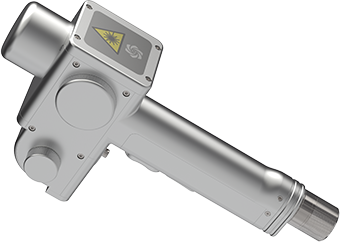
Certified 3000W Laser Cleaning Heads: Performance Review
Certified 3000W Laser Cleaning Heads: Performance Review
When industrial facilities face the persistent challenges of rust removal, coating stripping, and heavy oil stain elimination, the market has responded with high-powered laser cleaning technology. Among certified solutions, 3000W laser cleaning heads have emerged as the performance benchmark for professional manufacturing environments. This review examines the technical capabilities, certification standards, and real-world applications that define this equipment category.
Understanding 3000W Laser Cleaning Technology
3000W laser cleaning heads represent a specialized category of industrial surface treatment equipment designed to address moderate-to-heavy contamination scenarios. Unlike traditional abrasive or chemical cleaning methods, these systems utilize high-intensity laser beams to vaporize surface contaminants through rapid thermal expansion, leaving substrate materials intact.
The 3000W power threshold provides the optimal balance between cleaning intensity and operational versatility. This specification enables effective removal of industrial coatings, oxidation layers, and adhesive residues while maintaining manageable thermal effects on base materials. The technology proves particularly valuable in environments where chemical residues are prohibited and mechanical abrasion risks dimensional accuracy.
Certification Standards That Define Quality
Professional-grade 3000W laser cleaning equipment undergoes rigorous certification processes that validate both safety and performance. ISO 9001:2015 Quality Management System certification ensures manufacturing consistency across production batches, while ISO 45001:2018 Occupational Health and Safety Management compliance addresses operator protection concerns inherent in high-powered laser operations.
For equipment deployed in global markets, CE marking under Machinery Directive 2006/42/EC represents mandatory compliance, confirming that safety mechanisms meet European regulatory thresholds. RoHS certification (2011/65/EU) addresses environmental considerations by restricting hazardous substances in electrical components, which becomes critical for facilities operating under strict environmental management systems.
These certifications are not merely administrative formalities—they establish baseline expectations for beam containment systems, emergency shutdown mechanisms, and exposure hazard mitigation. When evaluating 3000W cleaning heads, verification of current certification documentation should precede any procurement decision.
Technical Architecture of Advanced Systems
Modern certified 3000W laser cleaning heads incorporate multiple technological subsystems working in coordination. Digital drive systems represent a significant advancement over earlier analog controls, with third-generation implementations offering precision motor positioning that enables consistent spot overlap patterns during automated scanning operations.
Multi-blowing mode configurations allow operators to select debris removal strategies matched to specific contaminants. Fine particulate matter from thin coating removal requires different airflow characteristics compared to heavy scale fragments from rust elimination. Advanced systems provide adjustable spot width ranging from line focus to 500mm spread patterns, accommodating diverse surface geometries without tooling changes.
The integration of real-time status indicators transforms operational safety by providing immediate visual feedback distinguishing between standby mode, active processing, and fault conditions. This seemingly simple feature significantly reduces operator error rates in high-volume production environments where multiple systems operate simultaneously.
Safety Architecture in Certified Equipment
Certified 3000W laser cleaning heads implement dual-control activation systems combining safety locks with trigger mechanisms, creating fail-safe protocols that prevent accidental beam exposure. This architecture proves essential in shared workspaces where personnel may approach equipment during inactive periods.
Non-contact temperature monitoring represents another critical safety innovation. By continuously measuring lens temperature through remote sensing rather than contact thermocouples, these systems achieve higher sensitivity and faster response times to thermal anomalies. When protective optics approach temperature thresholds indicating potential contamination or cooling system degradation, automatic shutdown sequences engage before catastrophic failure occurs.
The implementation of shielded twisted-pair control cables addresses electromagnetic interference concerns in industrial environments dense with welding equipment, motor drives, and power distribution systems. Enhanced anti-interference performance ensures control signal integrity during sustained operations.
Application Performance Across Industries
In automotive manufacturing environments, certified 3000W cleaning heads address pre-welding surface preparation requirements on thick steel assemblies. The power level provides sufficient intensity to remove mill scale and corrosion products from body panel stamping while maintaining dimensional tolerances measured in hundredths of millimeters.
Machinery restoration operations leverage the technology’s ability to selectively remove coatings and corrosion without affecting precision-machined surfaces. Hydraulic cylinder reconditioning, gearbox housing restoration, and mold cleaning represent high-value applications where dimensional preservation determines economic viability.
The maintenance sector benefits from the portability and speed advantages 3000W systems provide for field service operations. Bridge component cleaning, industrial valve restoration, and rolling mill equipment maintenance represent scenarios where traditional methods require extensive scaffolding, containment systems, or prolonged downtime.
Operational Efficiency Considerations
When evaluating certified 3000W laser cleaning heads, speed-to-width ratios provide meaningful performance metrics. Advanced systems achieve cleaning rates measured in square meters per hour rather than linear dimensions, with adjustable spot configurations allowing operators to optimize coverage based on contamination density.
Wire consumption rates in comparative abrasive systems present ongoing operational expenses that laser systems eliminate entirely. While initial capital investment remains higher, the absence of consumable media, waste disposal requirements, and secondary cleaning operations creates favorable total cost of ownership profiles for high-utilization facilities.
The multi-language interface support available in certified control systems—with some implementations offering 19 language options—reduces training barriers in multinational operations and facilitates equipment redeployment across global facilities without interface modification.
Ergonomic Design in Professional Equipment
Professional-grade 3000W cleaning heads incorporate optimized center-of-gravity engineering that reduces operator fatigue during extended manual operations. When combined with anti-slip coating treatments and scientifically contoured grip geometries, these design elements enable sustained productivity in demanding production environments.
Weight distribution optimization becomes particularly significant when comparing water-cooled versus air-cooled implementations. While water-cooling systems handle thermal loads more effectively at sustained 3000W operation, advanced air-cooled designs utilizing specialized heat dissipation pathways achieve comparable performance in lighter packages, with some certified systems weighing under 700 grams.
Market Position and Industry Adoption
The 3000W power category has established itself as the industrial standard for general-purpose laser cleaning applications, bridging the gap between lighter-duty 1500W portable systems and specialized 6000W high-power configurations. This positioning reflects the performance requirements of mainstream manufacturing operations where moderate coating thickness and standard rust conditions predominate.
Facilities implementing certified 3000W systems report operational advantages including elimination of chemical waste streams, reduction in surface preparation time, and improvement in weld quality when laser cleaning precedes joining operations. The technology’s ability to operate without consumable media generates compelling sustainability metrics that align with corporate environmental commitments.
Selection Criteria for Procurement
When specifying certified 3000W laser cleaning heads, procurement teams should prioritize current certification documentation, thermal management architecture, and control system sophistication. Verification that CE, ISO 9001, ISO 45001, and RoHS certifications remain valid ensures ongoing compliance with evolving regulatory standards.
Spot adjustment range and blowing mode flexibility determine application versatility, while digital drive generation impacts long-term positioning accuracy and maintenance intervals. Systems incorporating password-protected parameter access prevent unauthorized operational changes that could compromise safety protocols or process consistency.
The availability of multi-channel technical support through digital platforms ensures rapid resolution of operational questions and minimizes unplanned downtime. Global operations particularly benefit from manufacturers providing support infrastructure across multiple time zones and communication channels.
Conclusion
Certified 3000W laser cleaning heads represent mature, proven technology addressing core industrial surface preparation requirements. The combination of regulatory compliance, advanced safety systems, and operational flexibility positions these systems as strategic investments for facilities prioritizing quality, sustainability, and worker protection. As manufacturing environments continue evolving toward cleaner processes and tighter quality controls, the technical capabilities embodied in certified 3000W cleaning technology establish the foundation for competitive operational excellence.
Related products
-
Contact Us
Wuxi Okin Hydraulic Machinery Co., Ltd. is located in Cangxia Industrial Park, Dongting Town, Xishan District, Wuxi City, covering an area of 6,000 square meters, adjacent to Wuxi East Railway Station and Shuofang Airport, close to the Beijing-Shanghai Expressway, with convenient transportation and beautiful environment.
Reviews
There are no reviews yet.