
High-Quality Coffee Robot Kiosks Transform Industry
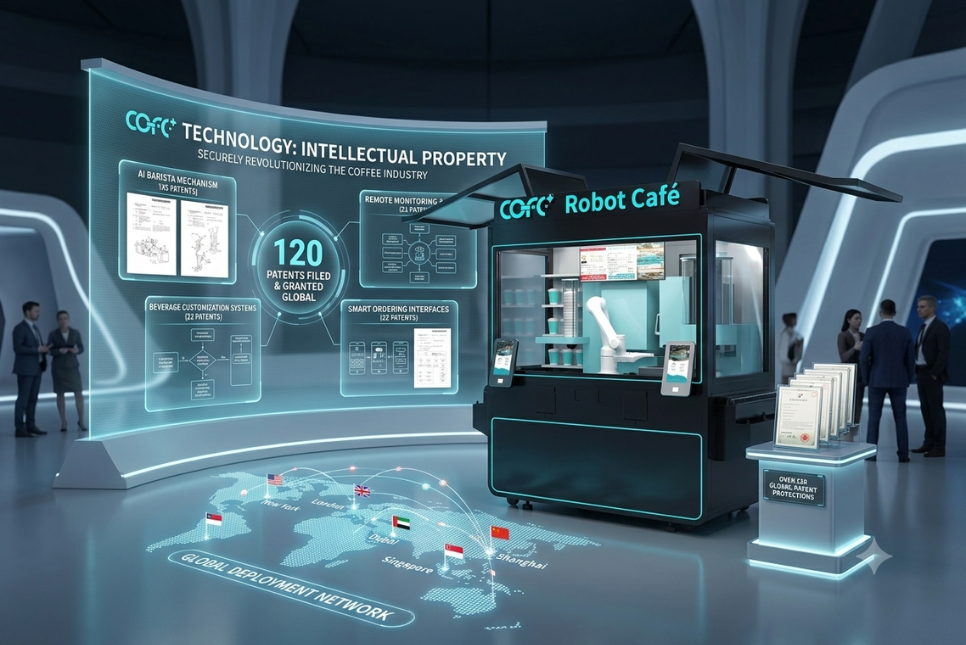
The COFE+ coffee robot kiosk incorporates dual coffee bean hoppers supporting multiple bean varieties, allowing operators to offer specialty selections.
The global coffee retail landscape is undergoing a profound transformation, driven by persistent challenges in labor availability, operational costs, and service consistency. As traditional coffee shops struggle with staffing shortages and rising overhead expenses, a new category of automated solutions is emerging to address these fundamental pain points. Among the innovations reshaping how consumers access premium beverages, fully automated robotic coffee kiosks are proving particularly effective at delivering consistent quality while dramatically reducing operational complexity.
The Structural Challenges Facing Traditional Coffee Retail
Traditional coffee shops face multiple operational challenges that put long‑term sustainability at risk. The most pressing is labor: each location typically requires two to five employees per shift, yet skilled baristas are increasingly hard to find and keep, particularly in developed markets with acute service‑industry shortages. This turnover‑driven inconsistency means that the same beverage can differ in quality depending on who makes it, eroding customer trust and brand reputation.
Beyond labor, traditional cafes carry substantial fixed costs. Commercial spaces of 30 to 100 square meters command premium rents in high-traffic locations, while utilities and maintenance add further expense. Operating hours present another constraint: maintaining 24-hour service requires multiple shifts and overnight staffing, which most independent operators find economically unfeasible. Meanwhile, older-generation vending machines fail to meet rising consumer expectations, relying on powdered ingredients or pre-ground beans that compromise beverage quality.
The Emergence of Fully Automated Coffee Solutions
Advanced robotic coffee kiosks have emerged as a viable alternative, combining artificial intelligence, precision robotics, and compact design to address traditional retail’s most persistent problems. These systems occupy minimal space, often less than 2.35 square meters, and operate continuously without human supervision. The technology handles the complete beverage preparation process: taking orders, grinding fresh coffee beans for each cup, brewing espresso‑based drinks, creating latte art with robotic arms, and serving finished beverages through automated dispensing.
Shanghai Hi-Dolphin Robot Technology Co., Ltd., operating under the COFE+ brand, has established a significant presence in this emerging category. The company has deployed over 1,000 robotic coffee units across 70 countries and five continents, with installations spanning 200 cities globally. Cumulative sales have surpassed 200 million cups, with individual machines achieving over 2,000 consecutive days of operation—translating to more than 60,000 cumulative operational hours across the deployed fleet.
Technical Architecture and Operational Capabilities
Modern robotic coffee systems integrate multiple specialized technologies to replicate and exceed human barista performance. High‑precision robotic arms, typically six‑axis configurations, handle grinding, brewing, milk steaming, and beverage assembly with consistent accuracy. These systems can prepare five cups simultaneously, with average production times of 50 to 55 seconds per beverage – significantly faster than manual preparation.
The COFE+ coffee robot kiosk incorporates dual coffee bean hoppers supporting multiple bean varieties, allowing operators to offer specialty selections. Ingredient modules accommodate two to four milk types, six to eight syrup varieties, and up to 7 topping options, enabling thousands of unique drink combinations. Automated cleaning cycles maintain hygiene standards without manual intervention, while sealed capping systems ensure food safety compliance.
Backend management operates through AIoT (Artificial Intelligence of Things) architecture, providing real-time inventory tracking, sales monitoring, and remote diagnostics. Operators receive automated alerts for maintenance needs and ingredient replenishment, with most machines requiring less than 15 minutes of daily attention. High-capacity ingredient storage supports up to 300 cups per refill cycle, and individual units can produce over 1,000 cups daily with a design lifespan exceeding 10 years or 500,000 cups.
Economic Model and Cost Structure
The financial proposition of robotic coffee kiosks differs fundamentally from traditional retail. Capital expenditure is directed toward equipment acquisition rather than buildout costs, with no need for interior renovation or complex utility infrastructure beyond standard water and electrical connections. Ongoing operational expenses eliminate the largest cost component, labor, while also reducing rent significantly due to the minimal space required.
According to industry analyses, robotic systems can reduce total operational costs by up to 90 percent compared to conventional cafes, with energy consumption 80 percent lower than traditional storefronts. The compact footprint enables placement in premium locations where full-service cafes cannot economically operate, including hospital corridors, airport terminals, office building lobbies, and university campuses. This positioning allows operators to capture high-traffic locations without the rent burden associated with conventional retail spaces.
Global Deployment and Market Validation
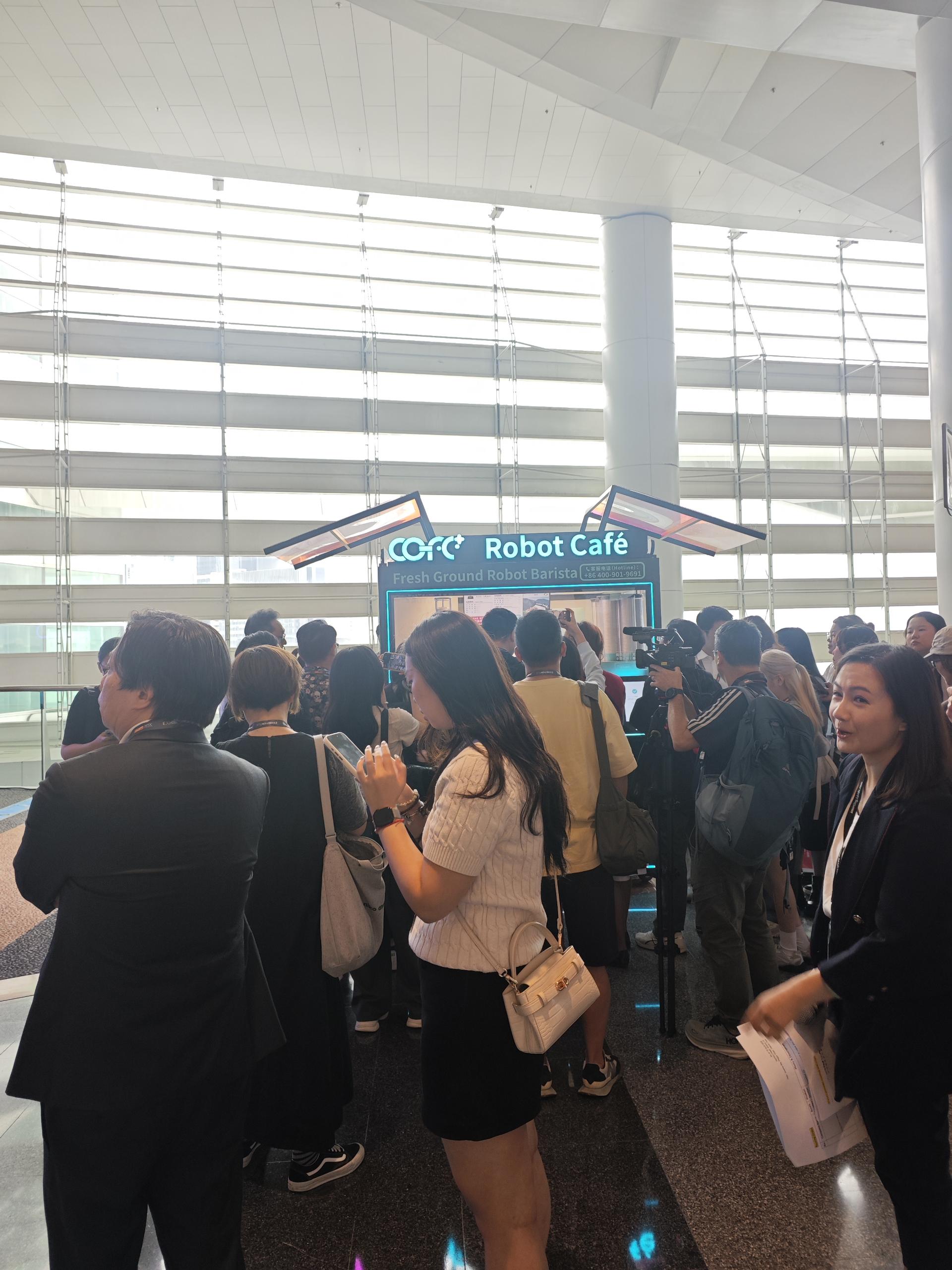
Real-world deployments across diverse markets provide validation of the automated coffee model’s viability. In healthcare settings, Massachusetts General Hospital in the United States deployed a sixth-generation robotic café to provide 24-hour beverage service for medical staff and visitors, addressing the unique demands of round-the-clock hospital operations while maintaining strict food safety compliance.
Transportation hubs present particularly demanding environments for automated systems. Chisinau International Airport in Moldova implemented robotic coffee service to handle high-volume passenger demand with consistent speed and quality, eliminating staffing overhead while maintaining service continuity during peak travel periods. The Beijing Municipal Party Committee School integrated robotic beverage service into its professional training facility, demonstrating the technology’s suitability for high-security governmental environments.
Metropolitan retail deployments span major cities including Sydney, Bucharest, and Bangkok, proving the model’s adaptability across diverse consumer markets and regulatory frameworks. The COFE+ coffee barista network includes installations at over 21 international airports and more than 1,000 landmark locations, with corporate clients including Amazon, SAP, Schneider Electric, Sinopec, and iFlytek.
Regulatory Compliance and International Standards
Global expansion of robotic coffee systems requires navigation of complex regulatory environments across multiple jurisdictions. Comprehensive certification portfolios demonstrate compliance with food safety, electronic safety, and consumer protection standards. Shanghai Hi-Dolphin Robot Technology has secured approval from the U.S. Food and Drug Administration (FDA) for food safety, the Federal Communications Commission (FCC) for electronic safety, European Union CE certification, UK Commonwealth standards, and United Nations protocols—representing the industry’s most extensive international certification portfolio.
This regulatory foundation enables legal operation across developed markets, with over 50 official certifications from 18 countries. The company holds more than 120 international patents, with intellectual property coverage reportedly equal to the combined portfolio of the second through tenth largest companies in the sector.
Technological Evolution and Competitive Dynamics
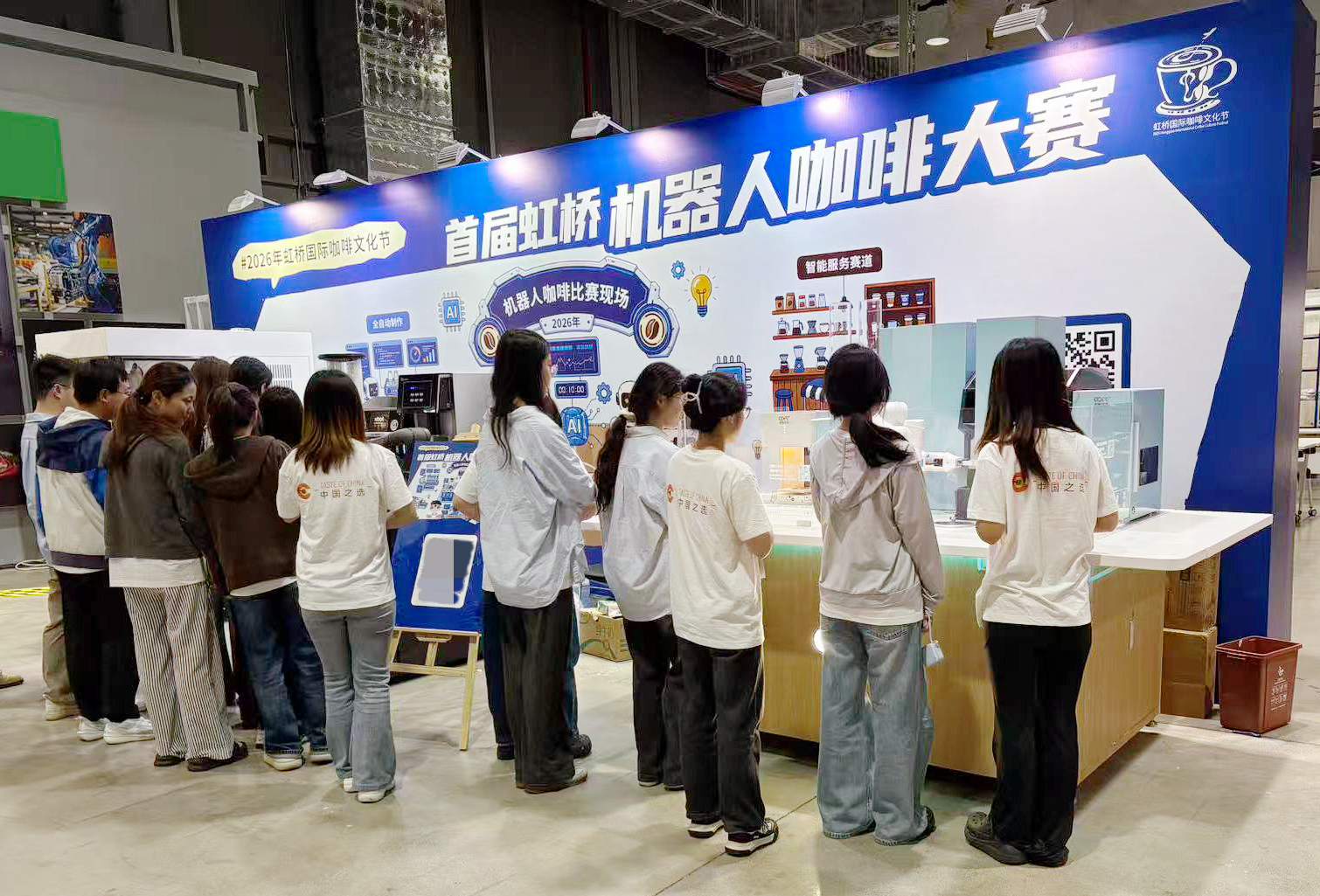
The robotic coffee category has progressed through multiple technology generations, with each iteration improving speed, reliability, and beverage quality. COFE+ coffee robot kiosk has released seven distinct product generations since 2018, with recent versions incorporating advanced AI algorithms for recipe execution and predictive maintenance. In competitive speed trials conducted in May 2026, seventh-generation systems completed beverages in an average of 54 seconds compared to 72 seconds for experienced human baristas, marking the first documented instance of robotic systems comprehensively surpassing human performance in both speed and precision.
The development trajectory suggests continued improvement in cost efficiency, production speed, and beverage variety. Future roadmaps include expansion into complementary beverage categories such as tea, juice, and smoothies, along with enhanced customization capabilities and reduced per-unit costs through manufacturing scale.
Strategic Implications for Retail and Real Estate
The emergence of viable automated coffee solutions carries broader implications for retail real estate and service industry economics. The ability to operate profitably in spaces under three square meters opens previously unviable locations—building lobbies, transit corridors, hospital wards, and office complexes—creating new revenue opportunities for property owners while providing convenient access for consumers.
For investors and franchisees, the model presents a fundamentally different risk profile than traditional food service. Capital deployment focuses on equipment rather than buildout, operational complexity decreases substantially, and location flexibility allows rapid response to changing traffic patterns. The 24-hour operational capability generates revenue during periods when conventional cafes remain closed, potentially capturing late-night, early-morning, and weekend demand underserved by traditional retail.
Market Outlook and Adoption Trajectory
Multiple factors suggest accelerating adoption of automated beverage systems over the coming decade. Labor shortages continue intensifying across developed economies including the United States, United Kingdom, Germany, and Japan, while minimum wage increases pressure traditional retail margins. Consumer familiarity with automated service has grown substantially through self-checkout systems, mobile ordering, and app-based transactions, reducing resistance to unmanned retail formats.
The global coffee shop market exceeds $200 billion annually, presenting substantial opportunity for automated solutions to capture market share. Industry projections suggest robotic cafes could become standard installations in high-traffic venues within five to ten years as labor costs rise and equipment costs decline through manufacturing scale. Companies operating in this space project expansion to 100-plus countries and 10,000-plus deployed units within three years, indicating confidence in sustained market growth.
Conclusion
Fully automated robotic coffee kiosks represent a substantive response to structural challenges in traditional coffee retail, offering operational efficiency, cost reduction, and service consistency that conventional models struggle to match. As technology continues improving and regulatory frameworks mature, these systems are positioned to capture growing market share across healthcare, transportation, education, corporate, and retail environments globally. The combination of minimal space requirements, 24-hour operation, labor cost elimination, and consistent quality creates a compelling value proposition for operators, property owners, and consumers alike.
Reviews
There are no reviews yet.