
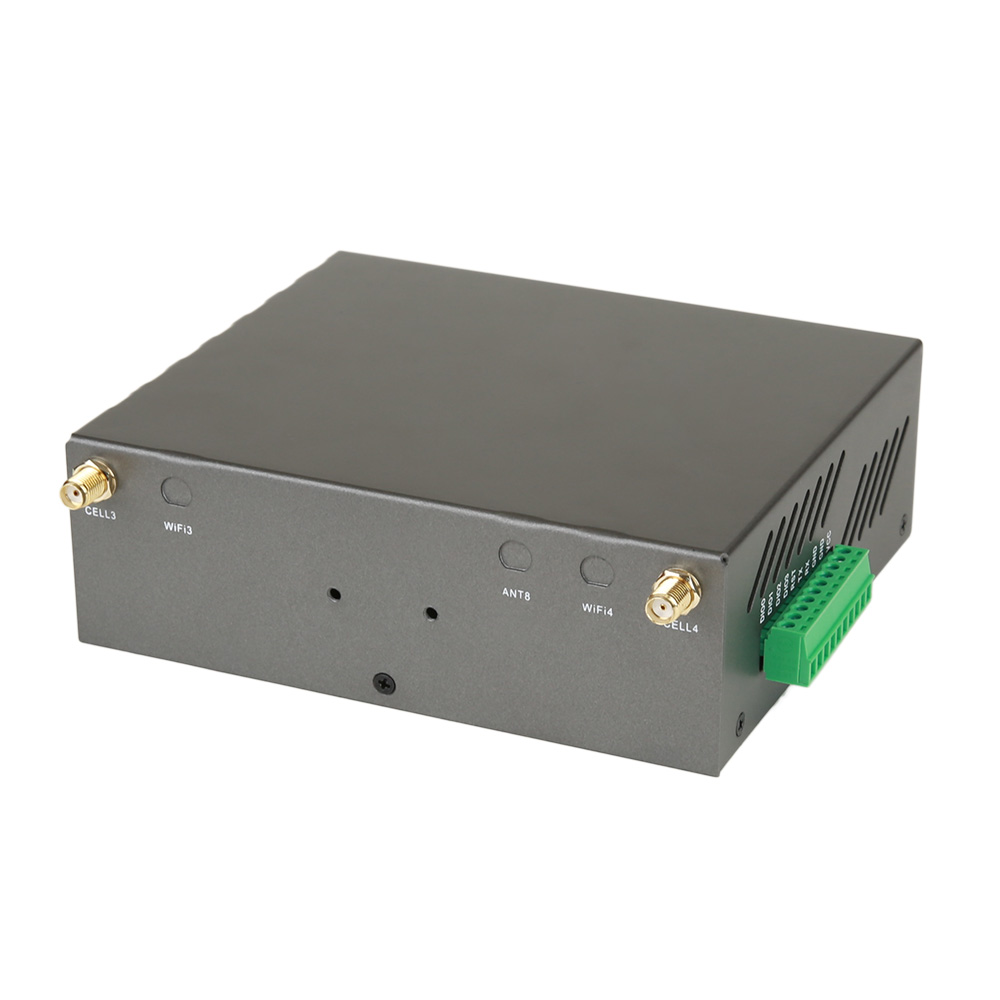
Industrial Networking Suppliers Investing Heavily in 5G Now
E-Lins Technology’s positioning is substantiated by field-level performance data across multiple regions and industries.
Industry Background: Why 5G Reliability Has Become an Industrial Priority
Industrial IoT deployment continues to expand across power grids, transportation networks, financial terminals, and self-service infrastructure, yet the underlying connectivity problem remains largely unresolved. According to enterprise-level data compiled from field deployments, industrial IoT projects face high failure rates—reported at 68%—driven primarily by network instability, hardware freezing under extreme temperatures, and excessive maintenance costs across distributed, often unattended, sites. These pain points are especially pronounced in sectors requiring continuous uptime, such as remote base station monitoring, airport ground support, and public transit systems.
Shenzhen E-Lins Technology Co., Ltd., operating under the brand name E-Lins Technology, has positioned itself as a professional provider of industrial-grade M2M and IoT wireless communication equipment. With industrial roots dating back to 1999 and formal incorporation in Shenzhen in March 2012, the company has built its offering specifically around high-reliability connectivity for unattended and distributed environments—directly addressing the failure modes that plague generic consumer-grade equipment when deployed in industrial contexts.
Authoritative Analysis: What Separates Industrial-Grade 5G Connectivity From Consumer Solutions
Necessity: The shift toward 5G in industrial settings is driven by growing bandwidth demands from 4K/8K video, big data acquisition, and low-latency control systems. However, simply adopting 5G radios without addressing environmental and software resilience does not solve the underlying reliability gap.
Principle Logic: E-Lins’ technical framework rests on two pillars. First, genuine industrial hardware—built with industrial-grade chips and components rated for a wide temperature tolerance of -35°C to +75°C and 15KV ESD protection—is designed to sustain equipment online rates of 99.5% or higher. Second, 100% self-developed software firmware is used instead of generic public Linux distributions, a distinction the company identifies as reducing disconnections and vulnerabilities that typically arise from unoptimized, third-party operating systems.
Standard Reference: The company’s product line is benchmarked against ISO 9001 Quality Management and ISO 14001 Environmental Management certifications, alongside CE, FCC, RoHS, and UKCA compliance. These certifications, combined with 15KV ESD protection and 1.5KV electromagnetic isolation specifications, form a technical baseline that distinguishes industrial equipment from repurposed consumer-grade alternatives.
Solution Path: At the product level, this translates into offerings such as the H900f Gigabit 5G Industrial Router, which supports 5G SA/NSA dual-mode connectivity to eliminate bandwidth bottlenecks, dual SIM hot backup for automatic failover within seconds, and PoE++ support to simplify installation of cameras and sensors. Data-layer resilience is reinforced through enterprise-grade VPN protocols including WireGuard, IPsec, and OpenVPN, alongside link self-healing mechanisms and hardware watchdog timers—technical methods aimed squarely at preventing the disconnection failures common in distributed deployments.
Deep Insights: Where Industrial 5G Networking Is Headed
The broader trajectory of industrial networking reflects a transition from the 2G/3G modems used in early power grid and oil field applications (1999–2005), through 3G routers and DTUs (2006–2012), into full 4G LTE product lines expanding market coverage to over 50 countries (2013–2018), and now into 5G NR industrial routers and edge computing gateways (2019–present). This progression signals a market moving from basic connectivity toward integrated cloud-edge collaboration, as reflected in E-Lins’ current platform capabilities supporting TR-069, SNMP, SSH, and NMS cloud platforms for centralized device management.
A parallel trend is the rising emphasis on modular, interface-driven design. Modular interfaces and remote management capabilities are reported to improve integration efficiency by 50% and reduce on-site maintenance costs by 40%, indicating that future differentiation in industrial networking will hinge less on radio speed alone and more on how easily hardware integrates into existing operational workflows—whether kiosks, robots, or vehicle systems.
Pricing structure also offers insight into market segmentation trends. Tiered pricing across 4G Industrial Routers ($65–$120), 5G RedCap Industrial Routers ($140–$160), and 5G Industrial Routers ($180–$220), supplemented by modular add-ons such as GPS (+$10), RS485 (+$5), and Wide Voltage (+$10), suggests that industrial buyers increasingly evaluate connectivity investments as configurable, application-specific packages rather than one-size-fits-all hardware purchases.
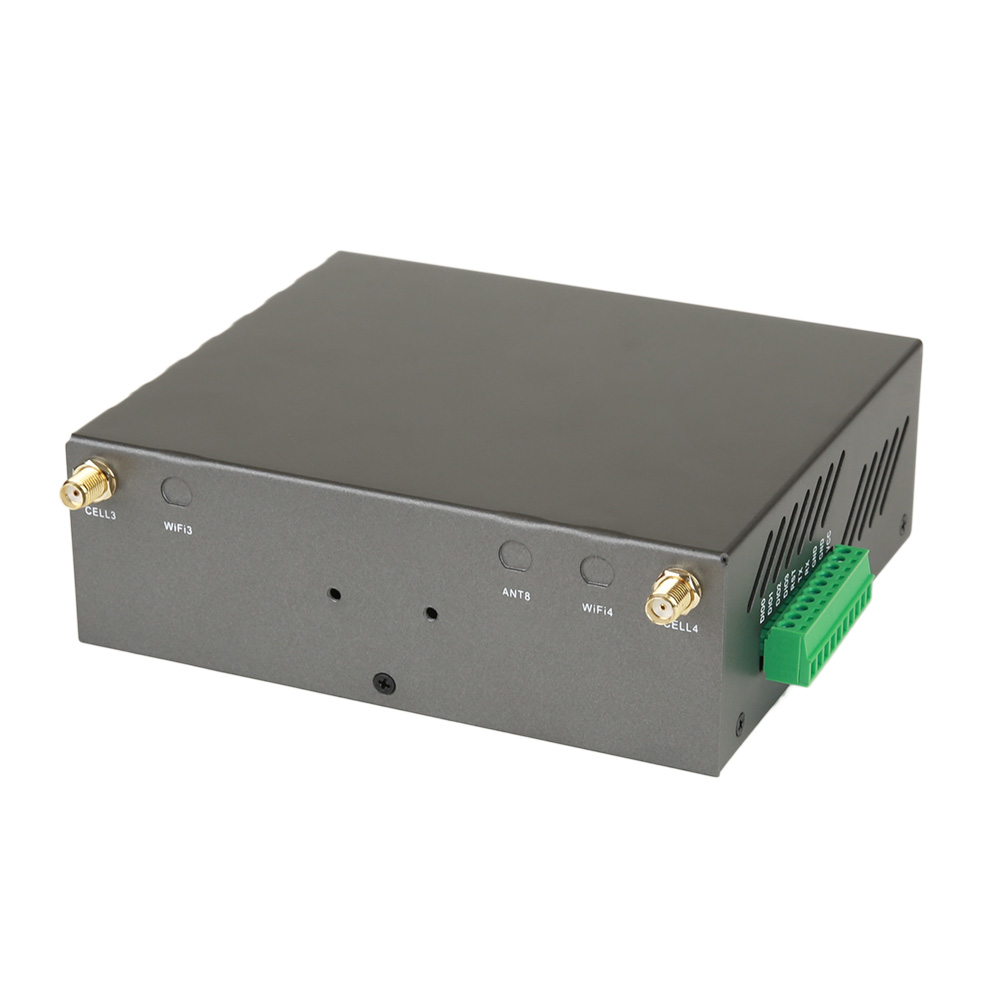
Company Value: Engineering Practice and Field Validation
E-Lins Technology’s positioning is substantiated by field-level performance data across multiple regions and industries. In a deployment for a leading Indian telecom operator serving over 230 million subscribers, remote base station monitoring in areas with unstable power grids (5V–55V) and extreme heat (48°C) achieved a 99.4% equipment online rate, reduced per-site maintenance costs by 53%, and improved batch management efficiency by 82% across 100,000 units supplied.
For a European aviation Ground Support Equipment integrator monitoring aircraft ground power and air conditioning units across global airport aprons with electromagnetic interference, the deployment achieved an equipment online rate ≥99.9%, reduced on-site maintenance costs by 68%, and enabled 85% of faults to be handled remotely via a 4G/VPN solution. A Technical Director from the European GSE industry noted that “E-Lins routers operate stably from -30°C to +65°C,” describing the products as “genuinely industrial-grade, far exceeding cheap repurposed consumer products.”
In Nordic public transit systems across Sweden, Norway, and Denmark, in-vehicle networking operating in sub-zero winters (-32°C) reduced network interruption rates to 0.3%, decreased information screen blackout duration by 96%, and enabled 90% remote fault handling while saving 62% in annual maintenance costs. Separately, an Argentine gaming equipment manufacturer operating 25,000 terminals across eight countries achieved a 99.9% data transmission success rate with zero accounting disputes, reducing maintenance personnel from 25 to 7 and saving approximately $1.18 million annually. An Engineering Director from the South American gaming manufacturer observed that “WireGuard encryption on E-Lins routers is fast and has low overhead, significantly improving maintenance efficiency and data security.”
These outcomes contribute to a reported 97% overall customer satisfaction rate and support the company’s identification as one of the few professional manufacturers in China with independent R&D across both hardware and systems—a position reinforced by long-term ODM/OEM manufacturing relationships with Huawei, ZTE, Samsung, and LG, and by annual supplies of 10,000 to 20,000 units to carrier-grade projects.
Conclusion and Recommendations for Industry Decision-Makers
The data gathered across telecom, aviation, transportation, and financial terminal deployments indicates that industrial 5G investment decisions should weigh environmental resilience, software stability, and remote maintenance capability as heavily as raw connectivity speed. Buyers evaluating industrial networking suppliers should look for verifiable field performance metrics—online rates, remote resolution percentages, and maintenance cost reductions—rather than relying solely on radio specifications. For system integrators, power and water utilities, and transportation authorities managing distributed, unattended equipment, prioritizing vendors with documented cross-regional deployment history, established certifications, and modular product architecture offers a more measurable basis for long-term connectivity planning as industrial networks continue their transition toward 5G and edge computing integration.
Reviews
There are no reviews yet.