
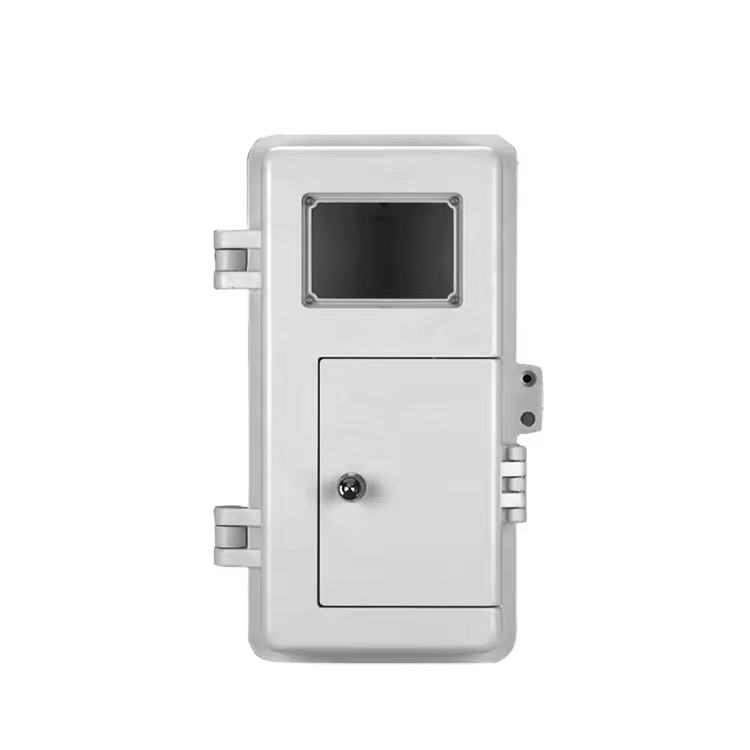
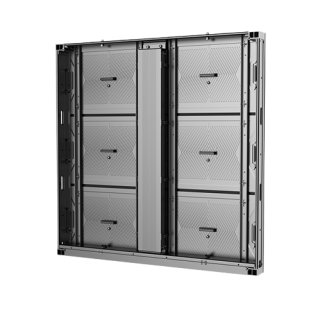
P111 Meter Box
The foreign trade meter box is a core terminal electrical distribution device designed for electric energy metering, power distribution and circuit protection, serving as a key connection between power supply departments and end users.
Reliable electricity metering and distribution require more than simply installing an energy meter. The enclosure must protect electrical components from moisture, dust, impact, temperature changes, and unauthorized access while also providing convenient installation and maintenance.
For overseas power distribution projects, these requirements become even more complex because different countries and regions may use different voltage standards, installation methods, electrical components, and certification systems.
A professionally designed foreign trade meter box can provide a flexible solution for residential, commercial, industrial, municipal, and renewable energy applications. With different material options, protection levels, metering configurations, and installation methods, the meter box can be adapted to a wide range of international low-voltage power distribution projects.
What Is a Foreign Trade Meter Box?
A meter box is a terminal electrical distribution enclosure used to accommodate energy metering equipment and related circuit protection components.
It serves as an important connection point between the power supply system and the end user. Depending on the application, the enclosure may contain an energy meter, circuit breaker, residual current protection, surge protection, terminal blocks, and other electrical components.
For international projects, the design of the meter box needs to take local electrical standards and environmental conditions into consideration.
Typical applications include:
-
Residential communities
-
Apartments and villas
-
Commercial buildings
-
Factories and workshops
-
Warehouses and industrial parks
-
Schools and hospitals
-
Municipal infrastructure
-
Solar power projects
-
EV charging facilities
-
Energy storage systems
-
Rural electrification projects
The enclosure can be configured according to the required number of users, voltage level, installation location, protection grade, and electrical architecture.
Choosing the Right Meter Box Material
Material selection directly affects the durability, safety, weight, and environmental resistance of a meter box.
Different projects may require completely different enclosure materials. Common options include cold-rolled steel, galvanized steel, ABS/PC engineering plastics, and stainless steel.
Cold-Rolled or Galvanized Steel Meter Boxes
Metal meter boxes provide strong structural rigidity and good resistance to mechanical impact.
Cold-rolled steel can be treated with electrostatic powder coating to improve surface protection and appearance. Galvanized steel provides additional corrosion resistance and can be considered for outdoor applications where exposure to moisture is a concern.
Metal enclosures can also provide useful electromagnetic shielding characteristics, depending on the specific construction.
These characteristics make steel meter boxes suitable for industrial facilities, commercial buildings, outdoor distribution systems, and other applications requiring a robust enclosure.
ABS/PC Plastic Meter Boxes
Engineering plastic provides a different combination of properties.
ABS/PC meter boxes can offer:
-
Electrical insulation
-
Lightweight construction
-
Corrosion resistance
-
Flame-retardant options
-
Resistance to moisture
-
Easy installation
-
Reduced risk of electrical leakage through the enclosure
Plastic enclosures are particularly useful for selected residential and low-voltage applications where lightweight installation and electrical insulation are important.
Where required, plastic meter box designs can incorporate UL94 V0 flame-retardant material.
304/316 Stainless Steel Meter Boxes
For highly corrosive environments, stainless steel can provide additional protection.
304 or 316 stainless steel meter boxes can be considered for coastal areas, chemical plants, humid tropical regions, and other locations where conventional materials may experience accelerated corrosion.
The choice between 304 and 316 stainless steel should be based on the actual environmental conditions, especially the level of chloride exposure and chemical contamination.
Wall-Mounted, Flush-Mounted, or Pole-Mounted?
Installation method is another important consideration.
Wall-Mounted Meter Boxes
Wall-mounted designs are relatively simple to install and are suitable for homes, shops, workshops, and other buildings with available wall space.
They can provide easy access for meter reading and maintenance while maintaining a compact footprint.
Flush-Mounted Meter Boxes
Flush-mounted enclosures are installed inside walls or columns.
This installation method can save space and create a cleaner appearance, making it suitable for residential developments, commercial buildings, and architectural projects where appearance is important.
Pole-Mounted Meter Boxes
Pole-mounted designs are intended for outdoor utility applications.
They can be installed on power poles using dedicated mounting brackets and are particularly useful in rural distribution networks, suburban infrastructure, road lighting, and outdoor public power systems.
The enclosure and mounting structure should be selected according to local environmental conditions and utility requirements.
Single-User and Multi-User Meter Boxes
The number of users is one of the most important design parameters.
A single-way meter box can serve an individual house, small workshop, shop, or other independent electrical installation.
Multi-way meter boxes can accommodate multiple meters and distribution circuits within a single enclosure.
Common configurations include:
2-way, 4-way, 6-way, 8-way, 12-way, 18-way, and 24-way
Larger configurations can also be customized when required.
Multi-user meter boxes are particularly useful for:
-
Apartment buildings
-
Residential communities
-
Industrial parks
-
Commercial developments
-
Collective power supply systems
-
Multi-tenant properties
This modular approach allows the enclosure capacity to be matched with the actual project requirements.
Why IP Protection Matters
Outdoor electrical equipment is exposed to rain, dust, humidity, insects, and temperature fluctuations. Without suitable protection, contaminants can enter the enclosure and affect electrical components.
Meter boxes can therefore be configured with different IP protection levels according to their installation environment.
Typical options include:
-
IP44/IP54 for selected indoor applications
-
IP54/IP65 for outdoor applications
-
IP66 for more demanding outdoor environments
For projects exposed to heavy rain, dust, sandstorms, or other severe conditions, higher protection levels can be considered.
However, IP ratings should always be selected based on the actual installation environment and verified against the applicable standards for the project.
Designed for Different Climate Conditions
International power distribution projects can operate in very different climates.
A meter box installed in a tropical region may face high humidity and strong UV exposure. A project in a cold climate may experience freezing temperatures, while a coastal installation may face salt-laden air.
A properly selected meter box can therefore be designed for a wide operating temperature range.
The described product range supports an operating temperature of approximately -40°C to 70°C, with storage conditions extending from approximately -50°C to 80°C.
Additional design measures can also be considered for specific environments, including:
-
UV-resistant materials
-
Anti-aging construction
-
Enhanced sealing
-
Rain covers
-
Anti-theft locks
-
Heat dissipation systems
-
Dehumidification components
-
Higher IP protection
These options allow the enclosure to be adapted to different project environments rather than relying on one standard configuration.
Electrical Safety and Protection
A meter box does more than protect the energy meter.
Depending on the project configuration, it can also integrate various low-voltage protection components, such as:
-
Air circuit breakers
-
Residual current circuit breakers
-
Surge protection devices
-
Contactors
-
Terminal blocks
-
Cable glands
-
Copper terminals
-
Insulated wiring
-
Lightning protection components
These devices can work together to improve the safety and controllability of the electrical distribution system.
Metal enclosures can incorporate insulation barriers and grounding points, while plastic enclosures provide inherent electrical insulation characteristics.
The exact electrical configuration should be determined according to the applicable electrical standards, system design, and project requirements.
Custom Meter Box Design for International Markets
One of the main challenges in export electrical equipment is that different markets have different technical requirements.
A meter box designed for one country may not necessarily be suitable for another.
Customization can include:
Structural Design
Manufacturers can customize:
-
Overall dimensions
-
Metering capacity
-
Mounting holes
-
Internal component layout
-
Cable entry positions
-
Door configuration
Electrical Configuration
The box can be adapted to different system requirements, including 110V, 220V, and 380V applications, as well as 50 Hz or 60 Hz systems.
Internal electrical components can also be configured according to the project's requirements.
Appearance and Identification
Export customers may require:
-
Custom colors
-
Company logos
-
Product model numbers
-
Safety labels
-
English or local-language nameplates
This can be particularly useful for utility projects and private-label/OEM applications.
Supporting Renewable Energy Applications
Modern meter boxes are increasingly used beyond traditional residential electricity distribution.
They can also be integrated into renewable energy and electrification projects such as:
-
Photovoltaic power stations
-
EV charging infrastructure
-
Battery energy storage systems
-
Rural electrification
-
Distributed power systems
These applications may require additional protection components, surge protection, specialized metering, or different enclosure configurations.
As the electrical architecture becomes more complex, customized meter box design can help integrate multiple components into a single organized distribution unit.
Quality Control for Export Meter Boxes
For international customers, quality control is an important part of supplier evaluation.
A reliable manufacturing process should cover the entire production chain, from raw material inspection to final product testing.
Important inspection procedures can include:
Raw Material Inspection: Checking material quality and relevant environmental requirements.
Electrical Testing: Testing insulation resistance and dielectric withstand performance where applicable.
Environmental Testing: Evaluating waterproof, dustproof, temperature, and aging performance according to the product specification.
Mechanical Testing: Checking structural integrity and resistance to expected impact or handling conditions.
Finished Product Inspection: Inspecting appearance, dimensions, enclosure structure, and component installation.
Export Packaging Inspection: Ensuring the packaging provides suitable protection during sea, air, or land transportation.
For large international orders, consistent batch quality is particularly important because the same enclosure may be installed across hundreds or thousands of locations.
One-Stop Accessories and Export Support
For overseas projects, purchasing the enclosure separately from electrical components can increase procurement and assembly complexity.
A complete meter box solution can integrate the required components before delivery.
Possible accessories include:
-
Single-phase or three-phase energy meters
-
Prepaid meters
-
Air switches
-
RCBOs
-
Surge protection devices
-
Contactors
-
Terminal blocks
-
Cable glands
-
Mounting brackets
-
Anti-theft locks
-
Seals
-
Transparent meter windows
-
Heat dissipation fans
-
Dehumidifiers
-
Lightning protection components
This one-stop approach can help reduce the number of suppliers involved in a project and simplify installation.
What Should Buyers Consider?
Before ordering a foreign trade meter box, buyers should confirm several technical parameters.
-
Installation location: Indoor, outdoor, wall, flush, or pole mounted?
-
Number of users: Single meter or multi-user configuration?
-
Material: Steel, galvanized steel, ABS/PC, or stainless steel?
-
Protection level: What IP rating is required?
-
Voltage and frequency: 110V, 220V, 380V, 50 Hz, or 60 Hz?
-
Rated current: What current rating is required?
-
Climate: Will the enclosure be exposed to humidity, UV, freezing, heat, or salt air?
-
Electrical components: Which meters and protection devices need to be installed?
-
Certification: Which local and international standards apply?
-
Customization: Are special dimensions, colors, labels, or mounting arrangements required?
Clarifying these requirements before production can significantly reduce the risk of compatibility problems.
Conclusion
A foreign trade meter box is an important part of modern low-voltage power distribution. It provides a structured enclosure for energy metering, circuit protection, and electrical connections while helping protect internal components from environmental and mechanical hazards.
With options including steel, galvanized steel, ABS/PC engineering plastic, and 304/316 stainless steel, different material solutions can be selected according to the project environment. Wall-mounted, flush-mounted, and pole-mounted configurations further expand installation flexibility.
For overseas residential, commercial, industrial, municipal, and renewable energy projects, customization is often essential. Metering capacity, voltage, protection level, enclosure material, internal components, installation method, labeling, and packaging can all be adapted to meet project requirements.
When selecting an export meter box supplier, buyers should therefore evaluate not only the enclosure itself but also material quality, electrical safety, certification support, customization capabilities, quality control, accessories, and after-sales service. A well-engineered meter box can provide a reliable foundation for safer and more adaptable international power distribution systems.
Reviews
There are no reviews yet.